


What Is Automated Outbound Calling?
Last Updated September 22, 2026
Automated outbound calling is the use of software to initiate, pace and manage calls to customers or prospects according to a campaign, event or workflow. The system can connect an answered call to a live agent, deliver an approved automated message, launch self-service or use a conversational AI voice agent for selected tasks.
How automated outbound calling works
The process begins with an audience or trigger. That can be a campaign list, an appointment event, a failed payment, a requested callback or another business signal. The outbound platform then applies rules for eligibility, timing, pacing and routing before placing the call.
When the customer answers, the call can connect to an agent with context, enter an automated workflow or hand off between automation and a person based on the customer's response. Results such as answer status, disposition, opt-out and follow-up can feed the next step in the workflow.
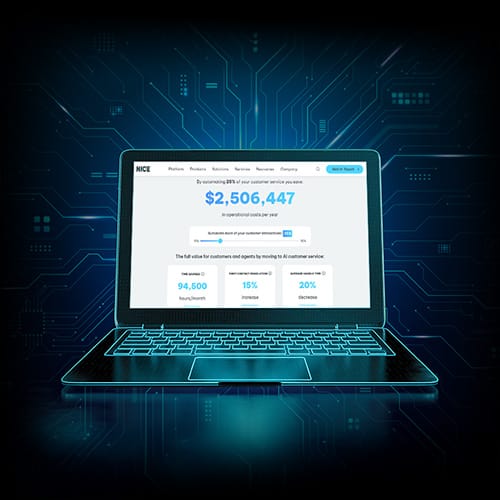
Discover the full value of AI in customer service
Understand the benefits and cost savings you can achieve by embracing AI, from automation to augmentation.
Common outbound dialing approaches
Benefits for businesses and sales teams
- Reduce manual dialing and idle time.
- Reach customers quickly after an event or request.
- Prioritize records using business rules or predictive signals.
- Standardize campaign controls and dispositions.
- Give agents customer context before the conversation.
- Automate simple notifications or confirmations without consuming agent capacity.
Customer experience and compliance matter
More dialing is not automatically better. Poorly timed calls, repeated attempts, unclear caller identity or aggressive pacing can damage trust. Organizations should define attempt limits, local calling windows, opt-out handling and escalation behavior around the customer experience they want to deliver.
Outbound rules differ by country, state, industry and campaign purpose. Legal and compliance teams should determine which consent, disclosure, suppression and dialing requirements apply to each use case.
How AI improves outbound calling
AI can prioritize who to contact, recommend the next best action, summarize prior interactions and personalize agent guidance. Conversational AI can handle routine voice interactions, while agentic workflows can trigger outreach and then continue the process based on the customer's response.
AI should still operate within explicit permissions and business rules. High-impact actions should be confirmed, logged and escalated when the interaction falls outside the approved workflow.
Metrics that show whether outbound automation is working
- Right-party contact rate.
- Connection and answer rate.
- Customer opt-out and complaint rate.
- Conversion or task-completion rate.
- Promise-to-pay or appointment completion where relevant.
- Abandonment and agent wait time.
- Cost per successful outcome.
- Repeat contact or downstream service impact.
Also related
How NiCE is Redefining Customer Experience
NiCE offers the industry’s only unified AI platform for customer service automation. CXone revolutionizes how organizations automate customer service from start to finish—with channels, data, end-to-end workflows, and enterprise knowledge converging to improve customer experience at scale. With domain specific AI trained on the industry’s largest CX dataset, an open framework with endless integration possibilities, and a complete suite of advanced AI applications, CXone is one platform built for organizations of all sizes to deliver seamless customer service experiences, boost operational efficiency, and drive better outcomes.
Agentic Experience Automation
AI Agents for Sales and Marketing
AI Agents for Proactive Engagement
Engagement Orchestration
Workforce Empowerment
Contact us
If you would like to know more about our platform or just have additional questions about our products or services, please submit the contact form. For general questions or customer support please visit our Contact us page.