

Customer Experience Automation
On this page
- What Is Customer Experience Automation?
- Why Organizations Invest in CX Automation
- Core Capabilities of CX Automation
- CX Automation Across Channels & Journey
- CX Automation in Customer Service
- CX Automation in Contact Centers
- CX Systems and Customer Data Integration
- Governance and Control in CX Automation
- Measuring CX Automation Impact
- CX Automation and the Future of CX
- Choosing a CX Automation Platform
- Best Practices for CX Automation
- What Is Customer Experience Automation?
- Why Organizations Invest in CX Automation
- Core Capabilities of CX Automation
- CX Automation Across Channels & Journey
- CX Automation in Customer Service
- CX Automation in Contact Centers
- CX Systems and Customer Data Integration
- Governance and Control in CX Automation
- Measuring CX Automation Impact
- CX Automation and the Future of CX
- Choosing a CX Automation Platform
- Best Practices for CX Automation
How does automation extend beyond individual interactions to improve the full customer experience journey — and what changes when proactive outreach, personalized self-service, and automated follow-ups work together to improve loyalty and lifetime value?
Customer experience automation uses artificial intelligence to automate, orchestrate, and continuously optimize customer journeys across channels, touchpoints, and systems. It enables organizations to deliver consistent, personalized, and outcome-driven experiences at scale while reducing friction, manual effort, and operational complexity.
Customer experience automation (CXA) is a subset of customer experience management (CXM), which is the comprehensive strategy for designing, managing, and optimizing customer interactions across all touchpoints. While customer relationship management (CRM) focuses on organizing and managing client relationships, CXA automates the entire customer journey. Importantly, customer experience encompasses every interaction a customer has with a business—not just customer service events. By enabling businesses to leverage predictive analytics, AI-driven insights, and automation, CXA helps organizations gain a competitive advantage through improved operational efficiency, reduced operational costs, and increased profitability.
As customer journeys span marketing, sales, service, and support, customer experience automation becomes a foundational capability for aligning interactions, decisions, and actions across the entire lifecycle.
What Is Customer Experience Automation?
Customer experience automation applies AI, intelligent workflows, and orchestration to manage customer interactions end to end. Unlike channel-specific automation or isolated self-service tools, CX automation coordinates execution across systems and teams to deliver connected, intentional experiences.
While customer relationship management (CRM) systems function as databases for storing and organizing customer data, customer experience automation (CXA) enables businesses to actively use this data to create personalized, automated experiences throughout the entire customer journey. CXA is not just another marketing tool or a replacement for your CRM system; instead, it leverages CRM data to automate and personalize interactions using tools like AI chatbots and automated email campaigns. Additionally, CXA encompasses the entire customer journey, whereas marketing automation typically focuses on lead generation and nurturing.
Customer experience automation typically includes:
Automated journey orchestration across channels and touchpoints
AI-driven intent, sentiment, and behavior analysis
Context-aware decisioning and next-best-action selection
Backend workflow automation tied to customer interactions
Continuous optimization based on experience outcomes
This allows organizations to move from reactive interactions to proactive, experience-led engagement.
Why Organizations Invest in Customer Experience Automation
Disconnected systems, manual processes, and siloed teams lead to inconsistent experiences and customer frustration. Customer experience automation addresses these challenges by unifying execution around the customer.
Organizations invest in customer experience automation to:
Deliver consistent experiences across channels and teams
Reduce customer effort and friction
Increase engagement, satisfaction, and loyalty
Scale personalization without increasing operational cost
Align marketing, sales, and service around shared CX goals
Automate processes and repetitive tasks, improving operational efficiency and reducing operational expenses by allowing human agents to focus on more complex issues
Automation transforms CX from a series of disconnected interactions into a coordinated journey.
Core Capabilities of Customer Experience Automation
Enterprise-grade customer experience automation platforms provide capabilities that span the entire customer lifecycle.
Core capabilities include:
Journey orchestration and workflow automation
AI-driven decisioning and personalization
Real-time intent, sentiment, and behavior analysis
Integration with customer data and operational systems
Monitoring, analytics, and continuous experience optimization
CX automation tools and CX automation software that help unify customer data from multiple touchpoints and analyze customer data to enable better personalization and segmentation
For more on the latest events and webinars in CX automation, visit our Events Calendar.
These capabilities ensure consistent execution across channels and touchpoints.
Customer data platforms (CDPs) collect and unify customer data from various touchpoints into a single, centralized view, while AI-powered workforce management tools analyze data such as historical demand patterns to optimize staffing and resource allocation.
Automated Customer Experience Workflows
Customer experience automation enables workflows that adapt dynamically to customer behavior and context.
Automated CX workflows can:
Trigger personalized actions based on events or intent
Route customers dynamically across channels and teams
Coordinate actions between marketing, sales, and service
Automate follow-ups, notifications, and resolution steps
Automate data entry and efficiently handle customer requests and customer inquiries, streamlining processes and allowing human agents to focus on higher-value activities
AI chatbots can handle FAQs and basic service tasks, while automated ticketing can route customer support requests based on urgency or topic.
This ensures journeys progress smoothly without manual handoffs or delays.
AI-Driven Experience Orchestration
AI-driven orchestration is central to customer experience automation.
Orchestration enables:
Real-time selection of next best actions
Dynamic journey adjustments based on context and outcomes
Coordination of actions across systems and departments
Consistent enforcement of experience strategies
AI-driven orchestration using machine learning and natural language processing to deliver personalized interactions and improve solution quality
AI ensures customer journeys remain relevant as conditions change.
Machine learning allows AI to learn from data and improve its accuracy over time, while natural language processing enables AI assistants to understand and process human language for tasks such as personalized product recommendations and order tracking.
Customer Experience Automation Across Channels and the Customer Journey
Modern customer journeys span multiple channels, often within a single interaction.
Customer experience automation supports:
Voice, chat, messaging, email, and self-service channels
Seamless transitions between automated and human-assisted interactions
Shared customer context across customer touchpoints
Consistent policies, messaging, and outcomes across channels
Omnichannel communication platforms and CXA integrate AI across all customer touchpoints to improve customer communication and customer engagement
This delivers a unified experience regardless of where customers engage. Omnichannel communication platforms create a seamless customer experience, and CXA ensures uniform service quality and messaging across all channels, building trust and brand loyalty.
Customer Experience Automation in Customer Service
In service environments, CX automation aligns operational execution with experience goals.
Key service-focused use cases include:
Proactive issue detection and resolution
Personalized service interactions based on history and intent
Automated follow-ups and feedback collection
Coordination between virtual agents and human agents
Automation of basic customer support tasks and implementation of self service portals, allowing customer service agents to focus on more complex or nuanced issues
Blended human-AI handoffs enable AI to handle routine tasks through automation and self service portals, while escalating complex cases to customer service agents with full context.
This improves satisfaction while reducing service effort and cost.
Customer Experience Automation in Contact Centers
Contact centers rely on CX automation to manage complex, high-volume interactions without sacrificing experience quality.
Automation supports:
Intelligent routing based on customer value, intent, and sentiment
Real-time agent guidance and assistance
Backend task automation during live interactions
Consistent experience standards across teams and regions
24/7 support availability, enabling customers to contact support and get answers to customer queries at any time, including outside of traditional business hours. Automation tools, such as chatbots and self-service options, efficiently handle queries that do not require human interaction, while escalating more complex issues to human agents.
AI-powered quality assurance automates the evaluation of customer interactions across all channels, ensuring high standards and continuous improvement.
This balances operational efficiency with experience excellence.
Integration With Customer Experience Systems and Customer Data
Customer experience automation depends on deep integration across the CX technology stack.
Common integrations include:
Customer data platforms and CRM systems
Marketing automation and engagement tools
Contact center and service platforms
Knowledge management systems
Billing, fulfillment, and operational systems
CRM software to organize customer information, track interactions, manage client relationships, and support sales and marketing efforts
Integration ensures experiences are informed, consistent, and actionable.
Marketing automation platforms automate repetitive marketing tasks, enabling businesses to scale their outreach while maintaining personalization. Automated feedback surveys gather customer insights about their experiences, helping businesses identify areas for improvement and enhance their services.
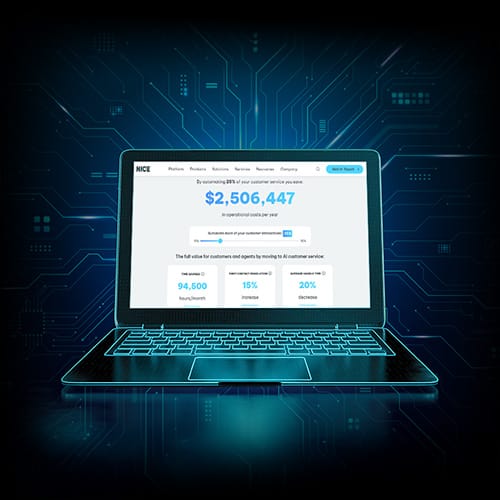
Discover the full value of AI in CX
Understand the benefits and cost savings you can achieve by embracing AI, from automation to augmentation.
Governance and Control in Customer Experience Automation
As automation influences customer-facing decisions, governance becomes essential.
Enterprise platforms provide governance through:
Role-based access and experience controls
Policy enforcement and approval workflows
Monitoring of automated decisions and actions
Auditability and compliance reporting
Alignment with privacy and regulatory requirements
Governed automation ensures trust and accountability in customer interactions.
Measuring the Impact of Customer Experience Automation
Customer experience automation should be measured using experience, operational, and business metrics.
Common metrics include:
Customer satisfaction, loyalty, and retention
Reduction in customer effort
Journey completion and conversion rates
Resolution speed and consistency
Adoption and performance of automated journeys
Analyzing data from automated journeys provides valuable insights into customer issues, enabling businesses to improve services and personalize experiences
Measurement ensures automation delivers measurable CX improvements. AI-driven CXA tools can continuously monitor customer sentiment across multiple channels, helping businesses address issues proactively before they escalate. Automated feedback surveys can gather customer insights about their experiences, supporting ongoing service improvement.
Customer Experience Automation and the Future of CX
As AI becomes more agentic and autonomous, customer experience automation will evolve toward self-directing journey management.
Future capabilities include:
Predictive experience orchestration
Proactive engagement before issues arise
Self-optimizing customer journeys
Scalable collaboration between human and AI agents
Analyzing customer data and automating the entire buying process to deliver seamless, personalized experiences at every stage
Effective customer experience (CX) automation in 2026 will emphasize a shift from reactive bots to predictive, unified intelligence. Situational personalization will adapt to a customer's immediate goal, risk profile, and channel constraints in real-time, while proactive systems will use predictive analytics to anticipate needs or detect potential issues, enabling proactive support.
Customer experience automation is foundational to intelligent, adaptive CX strategies.
Choosing a Customer Experience Automation Platform
Selecting the right platform requires balancing personalization, scalability, and control.
Organizations should evaluate:
Depth of AI and orchestration capabilities
Integration across the CX technology stack
Support for omnichannel journeys
Governance, security, and compliance support
Flexibility to evolve experience strategies over time
Evaluation of solution quality through AI-powered quality assurance
Availability of AI-powered knowledge bases for dynamic knowledge management
AI-powered knowledge bases can automate the creation and maintenance of self-service resources, helping customers resolve issues independently.
The right solution enables consistent, high-quality experiences at enterprise scale.
Best Practices for Customer Experience Automation
To fully realize the benefits of customer experience automation (CXA), organizations should adopt a strategic approach that prioritizes both customer satisfaction and operational efficiency. Implementing experience automation effectively requires more than just deploying automation tools—it demands thoughtful planning, ongoing optimization, and a focus on the entire customer journey. Here are some best practices to guide your CXA initiatives:
Align Automation with Customer Needs: Start by mapping the customer journey to identify key touchpoints where automation can enhance the experience. Prioritize automating routine tasks that reduce friction and free up human agents for more complex tasks, ensuring that every automated interaction contributes to improved customer satisfaction.
Unify and Analyze Customer Data: Integrate data from multiple channels and systems to create a single view of the customer. Use automation tools to analyze customer behavior and feedback, enabling personalized communications and more relevant customer interactions throughout the entire customer lifecycle.
Maintain a Customer-Centric Mindset: Design automated workflows that anticipate customer expectations and deliver value at every stage. Experience automation should support seamless transitions between self-service tools and human support, ensuring that customers always feel heard and valued.
Continuously Optimize Automation Workflows: Regularly review and refine automated processes using real-time data and customer feedback. Leverage CXA to monitor performance, identify bottlenecks, and make data-driven improvements that further enhance customer experience and operational efficiency.
Empower Teams with the Right Tools: Equip customer service representatives and other teams with automation solutions that streamline communication efforts and reduce repetitive tasks. This not only improves the quality of customer interactions but also boosts employee satisfaction and productivity.
By following these best practices, businesses can maximize the impact of customer experience automation, delivering consistent, personalized experiences that drive loyalty and improve customer satisfaction across the entire customer journey.
Explore AI Automation Platform Topics
Learn more about AI contact center platform topics.
Frequently Asked Questions (FAQs)

Ready to experience the power of one platform?
Let us show you how NiCE can unify, automate and elevate your entire customer experience - with AI at the core and outcomes at the forefront.