

AI Automation Integration

On this page
- What Is AI Automation Integration?
- Why AI Automation Integration Matters
- Core Capabilities of AI Automation
- AI Workflow Integration Across Systems
- Automation System Integration at Scale
- API-Driven Automation and Orchestration
- Event-Driven Automation Architectures
- Customer Service AI Automation Integration
- Contact Center AI Automation Integration
- Data Integration and Consistency
- Governance and Security in AI Automation
- Measuring the Impact of AI Automation
- What Is AI Automation Integration?
- Why AI Automation Integration Matters
- Core Capabilities of AI Automation
- AI Workflow Integration Across Systems
- Automation System Integration at Scale
- API-Driven Automation and Orchestration
- Event-Driven Automation Architectures
- Customer Service AI Automation Integration
- Contact Center AI Automation Integration
- Data Integration and Consistency
- Governance and Security in AI Automation
- Measuring the Impact of AI Automation
How do you integrate AI automation capabilities with the enterprise infrastructure your organization has already built — and what API design, connector, and data synchronization approaches make integration rapid and low-risk rather than a multi-year project?
AI automation integration connects artificial intelligence, automation workflows, and enterprise systems into a unified execution layer. It enables AI-driven decisions to trigger actions, orchestrate workflows, and exchange data across applications in real time.
By leveraging automation technologies and intelligent automation, organizations can streamline business functions such as operations, finance, and human resources, automating routine tasks and enhancing decision-making processes across the enterprise.
For enterprises scaling AI automation, integration is what turns isolated use cases into end-to-end operational impact across departments, channels, and systems.
What Is AI Automation Integration?
AI automation integration is the discipline of connecting AI-powered automation platforms with enterprise systems so workflows can execute actions, retrieve data, and coordinate processes without manual intervention.
Unlike basic point-to-point integrations, AI automation integration enables:
AI-driven decisions to initiate and guide workflows
Automated execution across multiple systems of record
Real-time data exchange and synchronization
Orchestration across applications, services, and teams
The ability to automate tasks and perform tasks, including rule based tasks, across multiple systems without human intervention
This allows automation to operate as an embedded layer of enterprise operations.
Why AI Automation Integration Matters
Without integration, AI automation remains siloed and limited in value. Integration is what allows automation to span the full lifecycle of a process.
Organizations prioritize AI automation integration to:
Eliminate manual handoffs and rekeying of data
Ensure automation executes across systems and teams
Maintain data consistency and operational accuracy
Reduce latency between decision and action
Maximize return on AI and automation investments
Realize key benefits such as reducing manual effort and automating time consuming tasks, which streamlines business processes, improves efficiency, and creates greater organizational value
Integrated automation delivers outcomes, not isolated efficiencies.
Core Capabilities of AI Agents in Automation Integration
Enterprise-grade AI automation integration platforms provide flexible, scalable connectivity.
Core capabilities include:
Prebuilt connectors for common enterprise systems
API-based and event-driven integration patterns
Real-time data exchange and synchronization
Workflow-triggered system actions
Error handling, retries, and monitoring
By leveraging automation tools and advanced AI technologies such as machine learning and natural language processing, these platforms enable automated processes that streamline business operations, improve efficiency, and support smarter decision-making across diverse industries.
These capabilities ensure automation remains resilient as scale and complexity grow.
AI Workflow Integration Across Enterprise Systems and Business Processes
AI workflow integration allows a single workflow to span multiple systems without breaking continuity. AI workflows are designed to coordinate actions and data across multiple enterprise systems, ensuring seamless orchestration and execution.
Integrated workflows can:
Trigger actions in CRM, ERP, and service platforms
Retrieve, update, and synchronize data across systems
Coordinate tasks between automation and human teams
Adapt execution based on real-time responses and outcomes
This enables true end-to-end automation across complex environments.
Automation System Integration at Enterprise Scale
Enterprise environments include legacy systems, cloud platforms, and custom applications. AI automation integration is designed to handle this diversity.
Enterprise system integration supports:
Legacy and modern application connectivity
Cloud, on-premise, and hybrid environments
Asynchronous and event-driven processing
High-volume, high-availability requirements
This ensures automation remains reliable under enterprise workloads, and enables automated systems to benefit from robust enterprise integration for enhanced efficiency, scalability, and real-time decision-making.
API-Driven Automation and Orchestration
APIs are foundational to scalable AI automation integration.
API-driven automation enables:
Flexible and reusable integrations
Real-time triggering of workflows and actions
Secure access to enterprise data and services
Faster deployment of new automation use cases
APIs allow automation platforms to evolve as systems and requirements change.
Event-Driven Automation Architectures
Event-driven integration allows automation to respond instantly to changes.
Event-driven architectures support:
Real-time reaction to system and user events
Loosely coupled integrations across platforms
Parallel execution of automated tasks
Automate repetitive actions in response to system and user events, using AI algorithms and machine learning to handle rule-based, data-intensive tasks with minimal human input
Improved scalability and resilience
This model is increasingly critical for AI-driven automation.
AI Automation Integration and Natural Language Processing in Customer Service
Customer service automation depends heavily on integration.
Key integrations include:
CRM and customer data platforms
Ticketing and case management systems
Knowledge management systems
Billing, fulfillment, and backend services
Integration ensures AI-driven workflows can resolve issues from request to completion.
AI Automation Integration in Contact Centers
Contact centers require tight integration to support real-time operations.
Integration enables:
Automated routing and case creation
Real-time agent assistance and guidance
Backend task automation during live interactions
Automation of repetitive tasks, such as data entry and information retrieval, to improve efficiency and reduce manual effort
Consistent updates across systems of record
This reduces agent effort while improving speed and accuracy.
Data Integration and Consistency
AI automation relies on accurate, timely data.
Data integration capabilities include:
Bi-directional data synchronization
Data validation and transformation
Context sharing across workflows
Consistent customer and case views
Effective AI automation integration begins with robust data collection and data preparation. Gathering information from various sources, including unstructured data such as invoices or emails, is essential for training AI systems. Proper data preparation—cleaning, formatting, and organizing data—ensures that machine learning models can accurately analyze large volumes of information. Leveraging historical data further enhances data analysis, enabling predictive insights and improved decision-making.
Strong data integration ensures AI decisions are informed and reliable.
Governance and Security in AI Automation Integration
As automation integrates across systems, governance and security become essential.
Enterprise platforms provide governance through:
Role-based access and permissions
Secure API authentication and authorization
Data privacy and masking controls
Audit logs and monitoring
Alignment with regulatory requirements
Governed integration allows enterprises to scale automation safely.
Ethical Considerations in AI Automation Integration
As organizations adopt AI automation integration, ethical considerations become increasingly important. AI automation systems must be designed to operate transparently and fairly, ensuring that automated decisions are explainable and free from bias. Protecting sensitive data and maintaining privacy are essential, especially as AI systems process large volumes of information across multiple automation systems. Compliance with regulatory requirements is not just a legal obligation but a way to build trust with customers and stakeholders. By embedding ethical principles into AI automation systems, organizations can avoid unintended harm, discrimination, or misuse of technology. Prioritizing ethics in AI automation not only safeguards human values but also strengthens a company’s reputation and provides a sustainable competitive advantage in the marketplace.
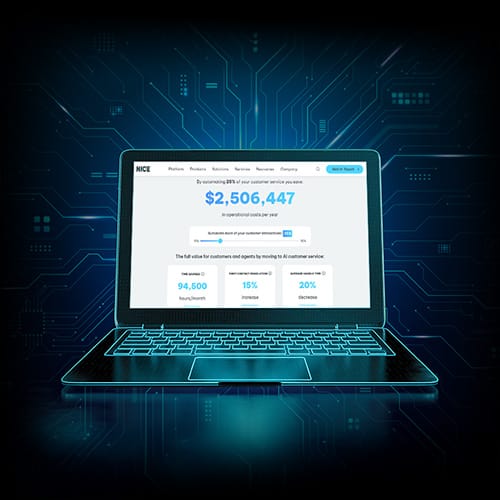
Discover the full value of AI in CX
Understand the benefits and cost savings you can achieve by embracing AI, from automation to augmentation.
Overcoming Challenges in AI Automation Integration
Implementing AI automation integration can present several challenges, from ensuring high data quality to managing organizational change. Data quality is critical—AI automation relies on accurate, consistent, and relevant data to deliver reliable results. Organizations may also encounter resistance to change as employees adapt to new automation systems and workflows. Addressing these challenges requires a clear strategy for implementing AI automation, including robust data management practices and ongoing employee training. Investing in upskilling the workforce ensures that teams are equipped to work alongside AI automation and maximize its business benefits. Fostering a culture of innovation and continuous improvement helps organizations adapt quickly, overcome obstacles, and fully realize the advantages of AI automation integration.
Building Custom Solutions with AI Automation Integration
Developing custom solutions with AI automation integration starts with a deep understanding of your unique business processes and operational needs. By identifying areas where automation can deliver the greatest impact—such as automating routine tasks, streamlining data entry, or enhancing customer satisfaction—organizations can tailor AI automation to fit their specific requirements. Leveraging advanced AI capabilities like natural language processing, machine learning, and robotic process automation enables the creation of intelligent workflows that integrate seamlessly with existing systems. Whether it’s optimizing invoice processing, improving customer service interactions, or automating compliance processes, custom AI automation solutions can drive operational efficiency and deliver measurable business value. This tailored approach empowers organizations to innovate, adapt, and maintain a competitive edge in their industry.
Measuring the Impact of AI Automation Integration
Success should be measured across operational and business metrics.
Common metrics include:
Reduction in manual handoffs and delays
Increased automation completion rates
Improved data accuracy and consistency
Faster cycle times and resolution rates
Scalability across systems and workflows
Organizations can also measure the impact of ai automation offers by tracking advanced outcomes such as predictive analytics, predictive maintenance, and fraud detection. Predictive analytics enables businesses to forecast trends and make data-driven decisions, while predictive maintenance helps prevent equipment failures and minimize downtime. In industries like finance, fraud detection powered by AI automation can identify suspicious activities and reduce financial risk.
Measurement ensures integration efforts deliver sustained value.
Innovation and Growth Through AI Automation Integration
AI automation integration is a catalyst for innovation and business growth. By automating routine tasks, organizations free up valuable human resources to focus on strategic initiatives and creative problem-solving. AI automation enables the analysis of large data sets, helping businesses identify patterns, predict trends, and make data-driven decisions that improve business outcomes. Enhanced operational efficiency, reduced human error, and improved customer satisfaction are just a few of the benefits that come from automating routine and complex tasks. As organizations embrace AI automation, they position themselves to respond quickly to changing market demands, deliver superior customer experiences, and achieve sustainable growth. Leveraging AI automation integration is essential for organizations seeking to stay ahead in a competitive, data-driven world.
AI Automation Integration and the Future of Automation
As AI becomes more autonomous and agentic, integration will play an even larger role.
Future trends include:
Event-driven, real-time automation architectures
Self-adapting integrations based on outcomes
Cross-platform orchestration powered by AI
Deeper alignment between AI agents and enterprise systems
Looking ahead, AI automation integration will increasingly leverage advanced AI models, AI algorithms, machine learning algorithms, and computer vision technologies. These components will enable systems to process and interpret complex data, automate visual tasks, and optimize workflows across industries. By complementing human intelligence, these technologies will drive next-generation automation, allowing businesses to achieve smarter decision-making, greater efficiency, and enhanced productivity.
AI automation integration is foundational to next-generation automation strategies.
Choosing an AI Automation Integration Platform
Selecting the right platform requires balancing flexibility, reliability, and control.
Organizations should evaluate:
Breadth of supported systems and connectors
API and event-driven capabilities
Ease of building, maintaining, and scaling integrations
Governance, security, and compliance support
Ability to support future automation and AI use cases
The right platform ensures automation can grow with the enterprise.
Explore AI Automation Platform Topics
Learn more about AI contact center platform topics.
Frequently Asked Questions (FAQs)

Ready to experience the power of one platform?
Let us show you how NiCE can unify, automate and elevate your entire customer experience - with AI at the core and outcomes at the forefront.