



What are Real-time Customer Insights?
Real-time customer insights refer to the immediate collection, analysis, and delivery of data about customer behavior, preferences, and interactions as they occur. These insights enable businesses to understand and respond to customer needs instantly, enhancing decision-making and improving customer experience. With the help of AI, machine learning, and data analytics, real-time customer insights provide actionable information, allowing businesses to tailor interactions, personalize offers, and resolve issues as they arise.
How Do Real-time Customer Insights Work?
Real-time customer insights work by gathering data from various customer interactions—such as web browsing, mobile apps, social media, phone calls, and live chats—using AI and analytics tools. This data is analyzed in real-time to detect patterns, behaviors, or trends that can inform immediate action. For example, businesses can monitor a customer’s journey through a website, track product searches, or gauge sentiment during a live chat conversation, enabling them to proactively engage with customers and improve their experience.
These insights are often visualized in dashboards or delivered through notifications, helping teams across marketing, sales, and customer service act on the data quickly.
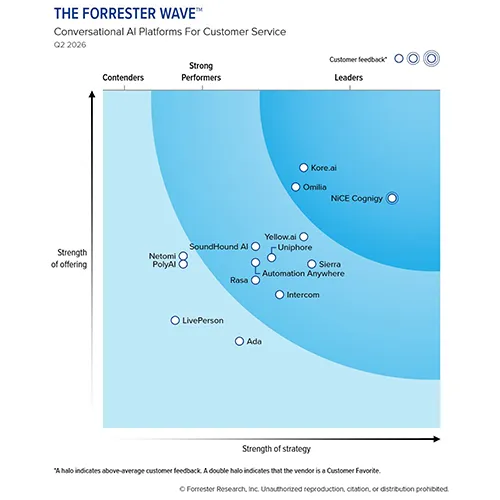
Named a Leader in The Forrester Wave™ 2026
Conversational AI Platforms
Ranked highest in the Strategy category. Above-average customer feedback among evaluated vendors.
Key Features of Real-time Customer Insights:
- Instant Data Collection and Analysis: Real-time insights are drawn from customer interactions as they happen, ensuring that businesses receive up-to-date, actionable information.
- Behavioral Tracking: These tools track customer behaviors such as browsing activity, purchases, and interaction patterns, helping businesses understand preferences and tailor responses accordingly.
- Sentiment Analysis: AI-driven sentiment analysis detects customer emotions in real-time, allowing businesses to adjust interactions based on customer satisfaction or frustration.
- Omnichannel Data Integration: Real-time customer insights aggregate data from various channels—such as social media, email, live chat, phone calls—providing a unified view of the customer journey.
- Predictive Analytics: By analyzing real-time data and past behaviors, businesses can predict future customer actions or preferences, allowing for proactive engagement and support.
Benefits of Real-time Customer Insights:
- Personalized Customer Experience: Real-time insights allow businesses to offer personalized recommendations, services, or support based on individual customer behaviors and preferences.
- Proactive Issue Resolution: By monitoring customer interactions in real-time, businesses can detect potential problems or dissatisfaction early and intervene before they escalate.
- Improved Decision-making: Real-time data empowers businesses to make informed, data-driven decisions quickly, improving customer experience and increasing operational efficiency.
- Increased Customer Engagement: Real-time insights help businesses engage with customers at the right moment, delivering relevant information or offers that drive engagement and conversions.
- Enhanced Customer Retention: By understanding customer needs and behaviors as they happen, businesses can respond effectively, improving satisfaction and loyalty.
Examples of Real-time Customer Insights in Action:
- E-commerce: An online retailer uses real-time insights to track customer browsing behavior, sending personalized offers or recommendations based on the products customers are viewing.
- Customer Service: AI-powered tools analyze real-time customer sentiment during a live chat, prompting the agent to adjust their tone or offer a solution to address customer frustration.
- Telecommunications: A telecom company monitors real-time customer usage data to detect network issues or dissatisfaction and proactively offers support or troubleshooting tips.
- Financial Services: A bank uses real-time insights to monitor customer interactions with their app, providing tailored financial product recommendations based on browsing patterns and past transactions.
- Healthcare: Real-time insights help healthcare providers track patient interactions, enabling them to send personalized health advice, appointment reminders, or follow-up messages based on current patient needs.
Industries Leveraging Real-time Customer Insights:
- Retail and E-commerce: Retailers use real-time insights to monitor shopping behaviors, personalize product recommendations, and offer timely promotions that increase conversions.
- Financial Services: Banks and financial institutions leverage real-time insights to improve customer experiences, offering personalized financial advice and detecting fraud in real-time.
- Healthcare: Healthcare providers utilize real-time customer insights to monitor patient interactions, personalize care recommendations, and ensure timely communication with patients.
- Telecommunications: Telecom companies use real-time insights to monitor customer satisfaction, provide proactive support, and resolve technical issues before they affect service quality.
- Technology and SaaS: Software and technology companies rely on real-time insights to monitor user behavior, improve customer support, and enhance product engagement and adoption.
Challenges and Considerations for Real-time Customer Insights:
- Data Privacy and Compliance: Real-time customer insights require collecting and processing customer data, so businesses must ensure compliance with data privacy regulations such as GDPR and CCPA.
- Data Integration: To effectively deliver real-time insights, businesses need to integrate data from multiple sources and platforms, which can present technical challenges.
- Actionable Insights vs. Data Overload: While real-time data is valuable, businesses need to filter and prioritize the most relevant insights to avoid data overload and ensure that the information is actionable.
- Initial Setup and Costs: Implementing real-time analytics tools requires investment in infrastructure, data processing capabilities, and training, but the long-term benefits often outweigh these costs.
- Customer Expectations: Real-time insights allow businesses to engage customers instantly, but customers may expect faster responses or resolutions as a result, which businesses need to be prepared to deliver.
The Future of Real-time Customer Insights:
The future of real-time customer insights will be shaped by more advanced AI and machine learning technologies, enabling businesses to not only react to customer behaviors as they happen but also anticipate future actions. Predictive analytics will become more integrated with real-time insights, providing businesses with even greater precision in targeting and personalizing customer experiences.
Omnichannel data collection will also evolve, ensuring that businesses can maintain a seamless, real-time view of the customer journey across all touchpoints—whether online, in-app, or in-store. As real-time customer insights become more sophisticated, businesses will be able to offer even more personalized and proactive services that meet customer needs in the moment.
Why Real-time Customer Insights Matter:
Real-time customer insights are essential for businesses looking to enhance their customer experience by responding quickly to changing behaviors, needs, and preferences. By offering personalized, timely interactions, businesses can increase customer engagement, improve satisfaction, and drive conversions. Real-time insights also enable businesses to proactively address issues before they escalate, improving overall operational efficiency and fostering long-term customer loyalty.
Conclusion:
Real-time customer insights allow businesses to track and analyze customer behaviors as they happen, providing valuable data that enhances decision-making, personalizes customer experiences, and resolves issues proactively. By leveraging AI and machine learning technologies, businesses can gain deeper insights into customer needs and deliver timely, tailored interactions that drive satisfaction and loyalty. As real-time analytics tools continue to evolve, companies that embrace these insights will be better equipped to deliver superior customer experiences and remain competitive in the marketplace.
How NiCE is Redefining Customer Experience
NiCE offers the industry’s only unified AI platform for customer service automation. CXone revolutionizes how organizations automate customer service from start to finish—with channels, data, end-to-end workflows, and enterprise knowledge converging to improve customer experience at scale. With domain specific AI trained on the industry’s largest CX dataset, an open framework with endless integration possibilities, and a complete suite of advanced AI applications, CXone is one platform built for organizations of all sizes to deliver seamless customer service experiences, boost operational efficiency, and drive better outcomes.
Agentic Experience Automation
AI Agents for Sales and Marketing
AI Agents for Proactive Engagement
Engagement Orchestration
Workforce Empowerment
Contact us
If you would like to know more about our platform or just have additional questions about our products or services, please submit the contact form. For general questions or customer support please visit our Contact us page.