


Cloud-native direct inward dialing on NiCE CXone enables every remote agent to operate with a dedicated local number, enterprise-grade routing, and full supervisor visibility — regardless of where they work.
Remote and distributed contact center teams depend on reliable telephony that can span cities, countries, and time zones without on-premise hardware at every location. Direct inward dialing for contact centers solves this by assigning each agent a dedicated local or toll-free number, routable over the cloud regardless of where that agent works. NiCE CXone delivers DID provisioning, management, and intelligent routing for distributed teams at enterprise scale — from a single platform that supervisors can monitor in real time.
As hybrid and fully remote contact center models become standard, the telephony layer must keep pace. Organizations maintaining legacy on-premise PBX systems struggle to extend DID to home-based agents without costly site-specific hardware. Cloud-native DID on NiCE CXone eliminates that constraint, enabling teams to add remote agents in minutes, not weeks.
Why Remote Contact Centers Need Purpose-Built DID Infrastructure
A remote agent is only as effective as the telephony supporting them. Without a dedicated DID number, remote agents may share overflow lines, appear with unfamiliar caller IDs, or lose calls during peak volume. NiCE CXone resolves these issues by treating every remote agent as a first-class network node — with full routing intelligence, real-time reporting, and quality management applied uniformly across distributed teams.
- 100+ Countries Supported for DID Provisioning
- Minutes Remote Agent DID Onboarding vs. Weeks for PBX
- 99.99% NiCE CXone Platform Uptime SLA
- 38% Higher Answer Rates with Local DID Numbers
Legacy PBX Limitations for Distributed Teams
Traditional PBX systems were engineered for single physical locations. Extending them to remote workers requires VPN tunnels, softphone configurations, and hardware shipped to each agent's home — a model that proved brittle during large-scale remote transitions. Cloud-native DID on NiCE CXone changes this entirely. The routing logic, number management, and call handling all live in the cloud. Remote agents connect via a lightweight browser-based interface. When a new agent joins the team, a DID number is assigned from the console and the agent is ready to take calls — no IT dispatch, no hardware shipment.
Home Office Agents
Dedicated DID numbers with full routing intelligence, identical to on-site agent experience. No hardware required at the agent's end.
Satellite Offices
Regional DID pools with local number presence in each market, centrally managed and reported from NiCE CXone.
Surge Staffing
Rapidly provision DID numbers for temporary or seasonal remote agents without IT intervention or hardware procurement delays.
Geo-Redundancy and Failover for Remote DID Deployments
Remote contact center environments introduce connectivity variables that don't exist in corporate data centers. Home internet services can degrade during peak hours. Regional ISP outages can affect clusters of agents simultaneously. NiCE CXone addresses this through multiple redundancy layers. The cloud infrastructure is geographically distributed, maintaining routing continuity even during regional disruptions. At the agent level, configurable failover rules automatically redirect calls when agents become unreachable — to a backup queue, different agent group, or voicemail path.
| Scenario | Without failover | With NiCE CXone |
|---|---|---|
| Agent internet outage | Call drops or rings unanswered | Auto-routes to backup agent in <2s |
| Regional ISP disruption | Multiple agents unreachable | Cascade to secondary skill group or site |
| Peak volume surge | Long hold times, abandonment spikes | Dynamic overflow to available remote pools |
| After-hours gap | Calls lost or missed | Time-zone routing shifts to active region |
Supervisor Tools for Distributed DID Agent Management
NiCE CXone's supervisor toolset gives distributed team managers the same visibility available in a physical contact center — through a browser-based interface accessible from anywhere. This includes real-time dashboards showing per-agent and per-DID-number queue status, silent listen and whisper coaching capabilities for any remote DID call, and quality management tools including screen recording and AI-powered interaction analytics applied equally to remote and in-office agents.
AI-Powered Assistance for Remote Agents
Remote agents often lack the informal support networks available in office environments. CXone Copilot, NiCE CXone's real-time agent assistance tool, compensates by monitoring DID calls in progress and surfacing relevant knowledge articles, suggested next steps, and customer history context — without requiring the agent to search or interrupt the conversation. For remote agents, this AI-powered guidance meaningfully reduces the experience gap between new hires and seasoned agents, maintaining consistent service quality across distributed teams. See how enterprise DID deployments leverage these tools at scale.
International DID for Global Remote Operations
Global enterprises operating contact centers across multiple countries need local DID numbers in each market — customers are far more likely to answer or call back a familiar local number than an international one. NiCE CXone's international DID provisioning in 100+ countries provides local caller ID in each market while routing all calls to centrally managed agent pools. Behind that local number, calls are routed to the best available agent anywhere in the world, based on language skills, queue status, and routing policy — not physical location.
For compliance considerations specific to international DID deployments, including number registration requirements and data residency rules, see the DID number provisioning and governance guide.
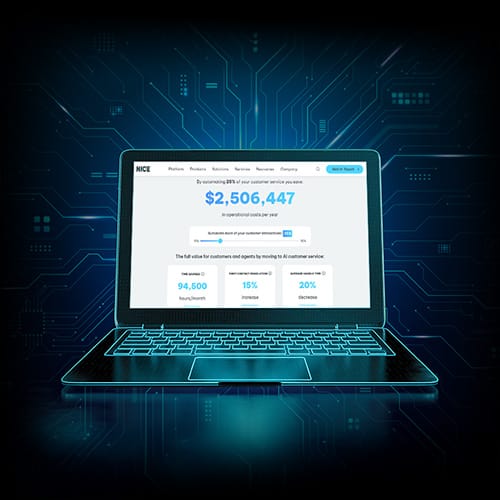
Discover the full value of AI in CX
Understand the benefits and cost savings you can achieve by embracing AI, from automation to augmentation.
Remote DID Use Cases Across Industries
Financial Services
Distributed fraud and claims teams with local DID in each market, centrally managed for compliance and recording requirements.
Healthcare
Remote patient services teams with HIPAA-compliant recording and skills-based routing to agents qualified for specific service lines.
Retail & E-commerce
Seasonal surge staffing with rapid remote DID provisioning for temporary agents during peak periods — no hardware required.
Travel & Hospitality
24/7 remote coverage with time-zone-aware DID routing that shifts call handling across global pools automatically.
Telecommunications
Global support teams with international DID presence in customer markets and AI-assisted agent support tools.
Government Services
Multi-agency remote teams with dedicated DID pools per department, separate routing policies, and centralized oversight reporting.
Related pages
FAQs

See Direct Inward Dialing in Action on NiCE CXone
NiCE CXone delivers enterprise-grade DID number management, intelligent call routing, and AI-powered contact distribution — all on a single unified platform trusted by over 8 million agents worldwide.