
As customer experience leaders start 2026, many are grappling with an uncomfortable reality: organizations believe they’re delivering great service, but customers often disagree. Expectations for speed, personalization, and “make this easy for me” keep rising, and while AI is part of the answer, outcomes vary dramatically depending on how it’s applied.
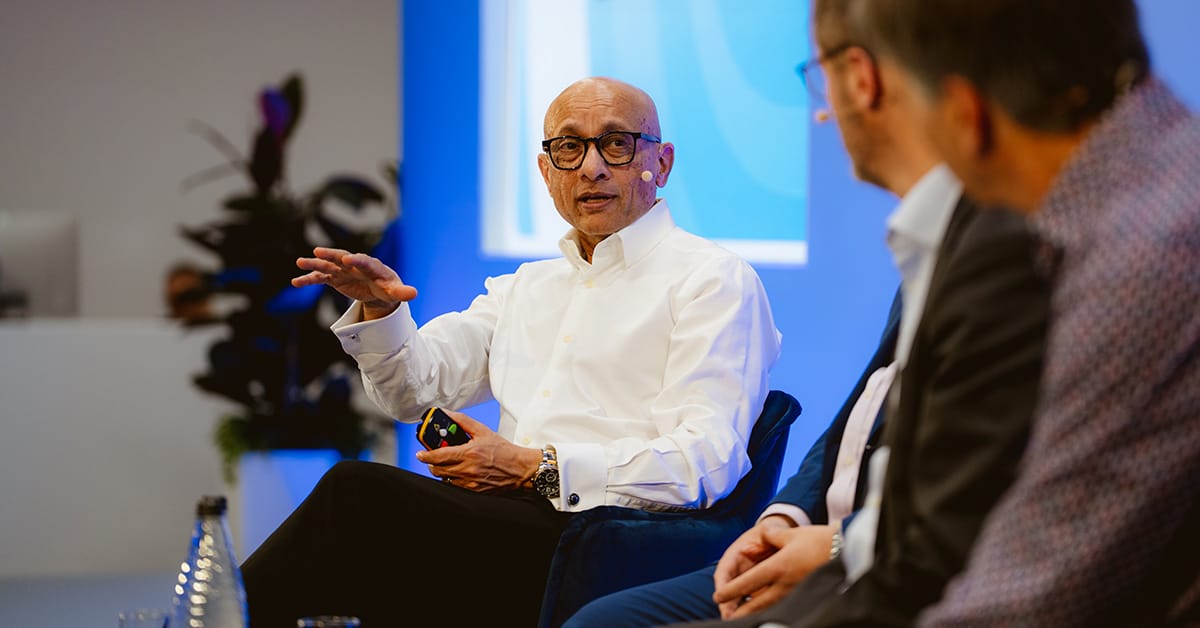
That’s exactly why I recently sat down with Shep Hyken - award-winning CX expert, bestselling author, and one of the most trusted voices in the industry - for The Top AI Trends CX Leaders Must Act On in 2026 webinar. Our goal wasn’t to debate whether AI works. It was to get practical about why some AI-first strategies deliver measurable CX improvements at scale—while others stall or break down in the real world.
Early in the conversation, we focused on a critical insight: AI itself is no longer the hard part. Most vendors are working with the same underlying models and technologies. The real challenge - and the real differentiator is how AI is designed, governed, and operated across the full complexity of an enterprise environment. Running AI at scale is where strategies either compound value or start to unravel.
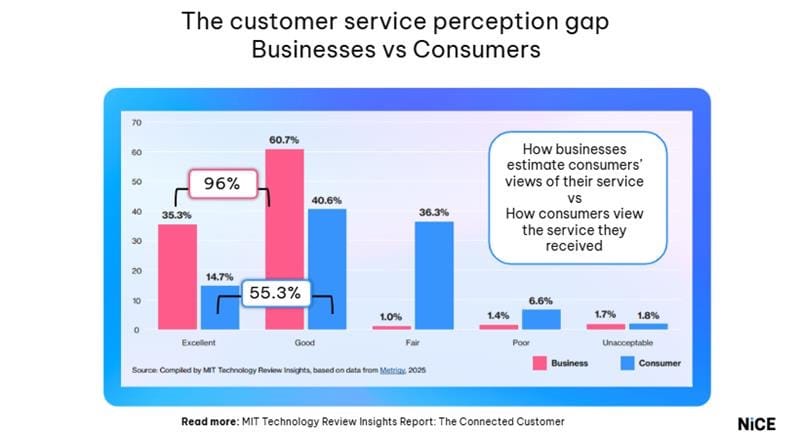
This challenge shows clearly in the data we reviewed in the conversation. Research reveals a substantial perception gap between how businesses think they’re performing and how customers actually experience service. While organizations overwhelmingly rate their service as “excellent” or “good,” customers are far less convinced. The issue isn’t effort - it’s execution. CX breaks down when AI is deployed in pockets instead of orchestrated across the entire experience.
In the webinar, Shep and I explored why the biggest wins come when AI is embedded on an enterprise CX platform - one built to operate reliably across human and AI agents, journeys, channels, and workflows, not just power isolated use cases. When every interaction flows through a unified system of engagement, leaders gain the visibility to see where friction truly exists - and the ability to fix it in ways that scale.
That’s what makes this approach different. A connected AI system learns from every interaction, whether AI-driven or human-assisted. Leaders can modernize the gateway first, prove value quickly, and then expand across teams and channels with confidence - because each improvement builds on the last instead of resetting the system.
Once you see AI as a connected system that learns, the conversation naturally shifts to what’s next.
During our discussion, we covered the top 10 trends shaping customer experience in 2026. Below, I’ll highlight the five AI-first CX trends Shep kept coming back to - the ones he believes leaders should prioritize first. But consider this a preview. The real value comes from hearing how these trends emerge in practice, where they succeed, and where they fail when organizations try to scale without the right foundation.
1. AI-first CX is the standard — but AI-only still misses the mark
Early in the conversation, Shep Hyken and I tackled one of the most common misconceptions around AI-first CX: AI-first does not mean AI-only.
Shep was quick to point out that some brands learned this lesson the hard way: “AI-only is a mistake. The best experiences always give customers a way to get to a human agent.”
AI-first CX means intelligent automation is the starting point - with AI agents handling routine questions instantly and reducing customer effort, while human agents remain readily available for moments that require personal connections, judgment, or creativity. When AI agents are designed to resolve, route, and act (not block or deflect) they create faster outcomes for customers and better moments for human agents.
This distinction becomes even more critical at scale. What works well in a pilot or narrow deployment often breaks when volumes spike, channels multiply, or regulatory and operational complexity increase. AI-first CX only works when the platform behind it is built to consistently handle those realities.
And customers are more ready for this model than many organizations realize. Research highlighted in NiCE’s CX 2026 Trends eBook shows that 72% of consumers say AI and automation have improved their service experiences, while 69% say they trust companies that use AI as much or more than those that don’t.
The frustration customers feel isn’t with AI itself - it’s with dead ends, rigid scripts, and experiences that make it hard to reach a real person.
For CX leaders, the mandate is clear: design AI-first journeys that accelerate service, not block it. That journey begins with a single, unified CX AI platform that runs on scale.
2. Human-centric AI is how trust scales
One of Shep’s favorite topics, and one that came up repeatedly, was trust. AI can accomplish many things: it can respond quickly, it can personalize, it can even recognize sentiment. But customers still care deeply about transparency and honesty.
“AI can act like it cares...but customers know when they’re talking to a machine.”
— Shep Hyken
Human-centric AI doesn’t try to pretend automation is human. At enterprise scale, trust isn’t just emotional; it’s operational. Leaders need confidence that AI decisions are explainable, compliant, observable, and aligned to business standards across every interaction, region, and team. Trust scales only when governance is built into the platform itself, not layered on afterward.
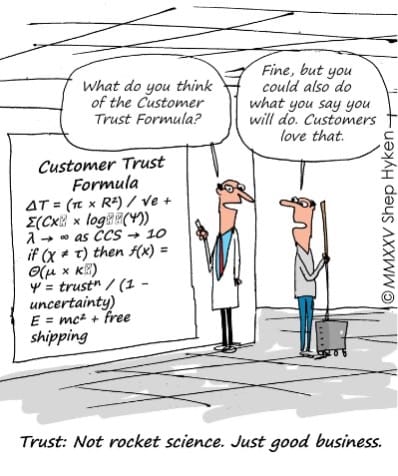
During the webinar, we talked about how this changes the tone of interactions entirely. Customers feel understood faster, agents feel more confident, and trust is built not through perfection, but through responsiveness. This is where AI-first CX stops being about efficiency alone and starts becoming a trust multiplier.
3. Agentic AI and LAMs are replacing the traditional agent desktop
One of the most energizing parts of the conversation came when we talked about what’s actually changing for agents - not sometime in the near future, but now.
For years, the agent desktop has been a patchwork of tabs, tools, and systems that agents are expected to navigate in real time. As Shep put it, that complexity has quietly become one of the biggest sources of friction in customer service.
“This is an entire productivity play...where both customers and employees can experience friction. What agentic AI and LAMs are doing is making everybody more productive, more efficient, getting answers quicker, cutting down steps for both customers and employees.”
— Shep Hyken
Agentic AI and large action models (LAMs) flip that model entirely. But agentic AI only delivers consistent value when it operates within a unified platform that connects systems, data, workflows, and workforce intelligence. Without that foundation, organizations risk creating faster actions, without coordinated outcomes.
Instead of human agents navigating systems, AI agents take on the work itself - understanding intent, deciding the next best action, and executing tasks across systems on the agent’s behalf. The result isn’t fewer agents - it’s better ones. Agents move from managing tools to managing conversations, supported by AI that orchestrates work in the background and adapts in real time.
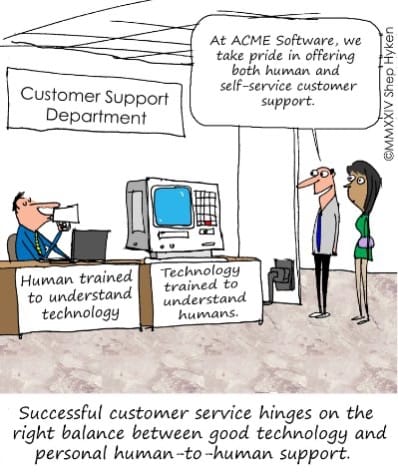
In 2026, this shift will fundamentally redefine the agent role. The traditional desktop gives way to intelligent, goal-driven experiences where AI agents coordinate actions end-to-end, and human agents are free to focus on what they do best: listening, problem-solving, and building trust.
4. Experience memory turns interactions into relationships
One of the more relatable moments in the webinar came when we talked about memory - or, rather, the impact when it gets lost in customer experience. Systems of Record know who the customer is, but Systems of Engagement remember far more than a name or account number.
“Great service remembers. Not just what happened,
but why it mattered.”
— Shep Hyken
Experience memory allows AI agents and human agents to carry context across channels and time. It reduces repetition, shortens resolution, and creates interactions that feel personal - because they’re informed by history. This kind of continuity is nearly impossible to achieve with disconnected tools. A CX AI platform sustains shared memory, learning loops, and context across the full customer journey.
This is also where a customer experience AI platform starts compounding value. Each interaction strengthens the next, helping organizations move from transactional support to relationship-building at scale.
5. AI observability is a leadership requirement
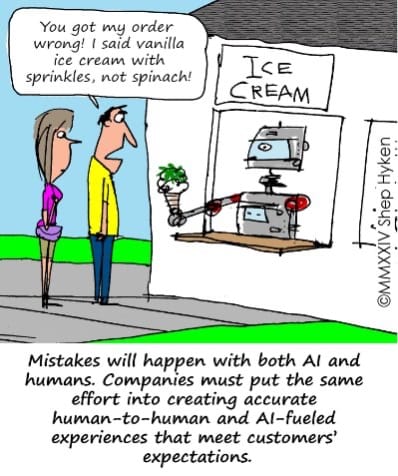
As AI plays a larger role in customer journeys, leaders need more than outcomes - they need visibility into how those outcomes are achieved.
“Executives and leaders are looking at a lot of the bottom line and the ROI that's there. What can we do to prove that we're more efficient, to prove that we're maintaining our customers, growing the customer through information...and AI can take a look and they can say, this is when we first started, here's where we were, here's where we are now.”
- Shep Hyken
AI observability gives CX leaders a clear view into how AI agents are performing across journeys, where automation is driving resolution, and where human intervention still plays a critical role. It allows teams to monitor decisions, measure impact, and continuously refine experiences as customer needs evolve.
Equally as important, observability builds confidence across the organization. When leaders can see how AI is behaving, they can scale it responsibly, align it with business goals, and ensure it delivers consistent experiences customers can trust.
In 2026, observability isn’t just a technical concern. It’s how CX leaders maintain control, trust, and accountability in an AI-first world and it’s only possible with a powerful, AI-propelled CX platform that can grasp the big picture.
Biggest takeaway for CX leaders
If there was a consistent message throughout the webinar, it was this: don’t chase AI trends - pursue outcomes.
AI alone isn't some magical CX fix. But an AI platform is more than AI alone - it can transform customer engagement by putting AI to work in the moments where it actually reduces friction, building a continuous learning system.
Throughout our conversation, Shep emphasized that experimentation matters, but only when it’s grounded in real outcomes for customers and the people who serve them.
Take AI Agents. They’re increasingly viewed as the way to meet rising expectations at scale. But as more organizations put agents into production, a new reality is emerging: agents don’t determine success on their own. The system behind them—how they’re orchestrated, governed, measured, and improved across the CX ecosystem—is what separates momentum from missed expectations. And as we talked through the trends, the power of a connected platform became increasingly clear.
His closing advice captured the spirit of the session perfectly:
“Try it. Do it. Experiment. But always keep the customer in mind...and make sure that whatever you're doing for your customer doesn't make things more complicated for your employee”
— Shep Hyken
The organizations that lead in 2026 won’t be the ones with the most AI - agents and human agents on a single platform to deliver simpler, faster, more human experiences. That’s where NiCE comes in. With AI-first design, experience memory, connected intelligence, and end-to-end orchestration, NiCE turns every interaction into insight and action, so AI agents can take the next best step, human agents can build trust, and customers feel genuinely understood.
Want to hear the full discussion - including all 10 trends and the moments we didn’t cover here?
Watch The Top AI Trends CX Leaders Must Act on in 2026 on demand
and download the 2026 CX Trends eBook