

AI Agent Incident Response for Production AI
Last updated: November 20, 2026
AI agent incident response is the structured process for detecting, investigating, containing, recovering from, and learning from production agent failures. It combines monitoring alerts, traces, session evidence, configuration history, and business-impact data so teams can restore safe service quickly and prevent the same failure from recurring.
What is AI agent incident response?
AI agent incident response is an operating process for managing unexpected or harmful behavior in production AI agents. It applies familiar incident-management principles but expands the evidence set beyond infrastructure. A production agent can be technically online while producing wrong actions, weak answers, policy violations, or abnormal escalation patterns.
That means detection and severity should consider customer and business impact, not just system availability.
Common AI agent incident types
Incidents can include model or API outages, tool integration failures, permission problems, retrieval failures, latency spikes, repeated loops, incorrect actions, broken handoffs, policy violations, quality regressions, or sudden changes in task completion or escalation. Multi-agent systems can also fail at delegation or coordination points.
Not every bad interaction is an incident. Teams should define thresholds that distinguish an isolated session defect from a systemic condition requiring coordinated response.
A practical AI agent incident response workflow
A useful workflow includes detection, triage, containment, diagnosis, recovery, validation, and post-incident learning. Detection may come from monitoring alerts, customer reports, quality reviews, or business analytics. Triage establishes scope and severity. Containment can include disabling a tool, rolling back a version, narrowing permissions, routing an intent to humans, or temporarily pausing an agent.
Diagnosis uses traces, session replay, logs, configuration history, dependency status, and affected-customer data to isolate the cause. Recovery should include validation that the agent is safe and effective before normal traffic resumes.
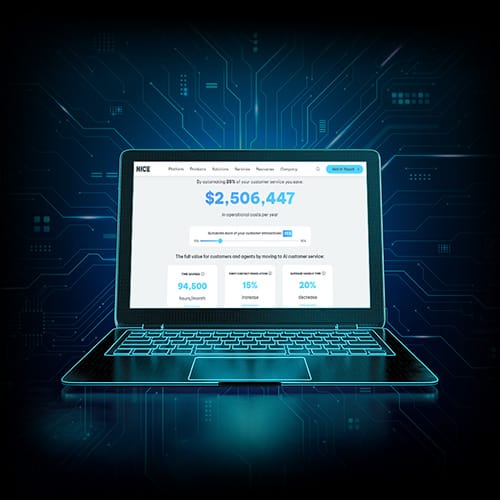
Discover the full value of AI in CX
Understand the benefits and cost savings you can achieve by embracing AI, from automation to augmentation.
Severity and ownership
Define severity levels based on customer harm, business impact, data exposure, transaction risk, affected volume, and duration. A small latency increase is different from an agent taking an incorrect financial action or exposing sensitive information.
Ownership should be explicit. Depending on the incident, response may involve AI engineering, contact center operations, security, compliance, product, knowledge management, and customer support.
Post-incident learning for AI agents
The post-incident review should capture what happened, why existing controls did not prevent or detect it sooner, how impact was mitigated, and which safeguards should change. Improvements might include new alerts, better traces, stronger validation, new tests, revised knowledge, tighter permissions, workflow changes, or clearer escalation rules.
The objective is not just to close the incident. It is to reduce the probability and impact of the next one.
Next step
Prepare for AI agent failures before they become customer-impacting crises by connecting observability to a clear incident-response process.
Explore the AI Agent Observability pillar
Frequently asked questions

Ready to experience the power of one platform?
Let us show you how NiCE can unify, automate and elevate your entire customer experience - with AI at the core and outcomes at the forefront.