

Autonomous AI Agents in Contact Centers
From Point Solutions to End-to-End CX Orchestration
What does running autonomous AI agents in a live contact center actually look like day-to-day — and what agent design, validation, oversight, performance monitoring, and continuous improvement practices are needed to operate them reliably at enterprise scale?
Contact centers in 2026 face a perfect storm. Volumes continue climbing as customers expect immediate, personalized service across voice and digital channels. Regulatory complexity grows with each passing quarter, from evolving data privacy mandates to sector-specific compliance requirements. Meanwhile, the talent market remains tight—experienced agents are hard to find, expensive to train, and prone to burnout when they spend most of their day navigating multiple systems instead of helping customers.
For years, enterprises tried to solve these pressures by scaling headcount. That approach has hit a wall. Rising customer expectations now outpace what any workforce can sustainably deliver when agents must manually search for customer history, toggle between applications, and document every interaction by hand. The economics simply don’t work, and neither does the experience—for customers or employees.
This is where autonomous AI agents in contact centers enter the picture. In plain terms, these are software agents that can understand what a customer needs, take actions across enterprise systems like CRM, billing, and case management, and collaborate with human agents to resolve interactions end-to-end. Unlike traditional bots that follow rigid scripts, autonomous agents pursue goals, adapt to context, and execute workflows without constant human intervention. NiCE, through CXone cloud contact center software, treats this AI as invisible infrastructure—quietly orchestrating journeys, not replacing the people who bring empathy and judgment to complex situations.
By 2024–2025, AI is present in most large contact centers, yet only a minority run truly autonomous agents that act across backend systems to complete transactions. The gap between “AI-assisted” and “AI-orchestrated” remains significant. This article bridges that gap. It walks enterprise CX, operations, and risk leaders through what autonomous agents actually are, how the technology evolved, the building blocks required for safe deployment, high-impact use cases, measurable business outcomes, a practical implementation roadmap, and what the future holds. The goal is grounded insight—data and real world examples over hype.

What Are Autonomous AI Agents in Contact Centers?
An autonomous AI agent is a goal-driven software entity that can understand natural language, decide on the next best action, and execute it across multiple enterprise systems without requiring step-by-step human instruction. These agents perceive inputs through speech-to-text for voice or text analysis for digital channels, determine customer intent and sentiment, plan a sequence of actions, execute those actions via API calls to CRM, billing, logistics, or policy systems, and—when necessary—hand off to a human with full context preserved. Learn more about service automation powered by AI and how conversational AI and chat bot solutions enable scalable, human-like self-service.
This differs fundamentally from traditional IVRs and scripted chatbots. Those earlier technologies follow fixed decision trees: press 1 for billing, press 2 for support. When a customer changes topic mid-conversation or raises multiple issues in one interaction, legacy systems break down. They cannot adapt, reason, or take meaningful action beyond routing or retrieving static FAQ responses.
Autonomous agents, by contrast, handle multi-turn conversations, manage topic switching, and resolve compound requests in a single session. They access customer data in real time, verify identities, update records, process transactions, and generate confirmations—all while maintaining human like conversations that feel natural. Critically, they know their limits. When a situation requires empathy, negotiation, or exception handling, they escalate with complete interaction data so human agents can step in seamlessly.
Consider two concrete examples. A North American telecommunications provider deploys an autonomous agent to handle billing disputes. A customer calls, frustrated about an unexpected charge. The agent authenticates the caller, retrieves their billing history, identifies the disputed item, checks policy eligibility for a credit, processes the adjustment, and sends a confirmation message—all without human intervention. Total resolution time: under three minutes.
In a European public agency, citizens call about benefits inquiries. The virtual agent verifies identity using regulatory-compliant security questions, pulls up the citizen’s case from the benefits system, explains current status, and schedules a callback with a caseworker if the situation requires further review. Routine inquiries are handled instantly; complex issues reach the right specialist with full context.
These examples illustrate what “autonomous” means in practice: not AI that answers questions, but AI that completes work. NiCE’s Enlighten AI and CXone platforms provide the underlying models, orchestration logic, and governance layer that make these agents safe and controllable—especially in regulated environments where every transaction must be auditable and every decision must align with policy.
The human-first framing matters here. Autonomous agents handle predictable, rule-governed work so human employees can focus on what they do best: calming anxious customers, negotiating solutions to unusual problems, and exercising judgment in ambiguous situations. AI takes care of the routine tasks that consume time and energy; people bring the empathy that builds trust.
From Siloed Bots to Agentic Orchestration: How We Got Here
The evolution toward autonomous AI agents unfolded over two decades, each stage solving part of the problem while revealing new limitations.
In the 2000s, contact centers relied on DTMF IVR systems—the familiar “press 1 for sales” menus. These reduced some volume by routing calls, but they forced customers into rigid paths and offered no actual resolution beyond transferring to a human. The 2010s brought basic chatbots and point automation. Companies deployed FAQ bots on websites and simple scripted assistants in apps. These could answer common questions but struggled with anything beyond their predefined responses. They operated in silos, disconnected from customer history and backend systems.
Between 2018 and 2022, early natural language processing virtual assistants emerged. These could understand natural language better than keyword-matching bots and handle more varied phrasing. Yet they still hit walls quickly. They might understand that a customer wanted to “change my address,” but they couldn’t actually update the CRM. They could suggest responses, but human agents still had to execute every action.
The breakthrough came with generative AI around 2022–2023. Large language models trained on vast datasets could suddenly reason over free-form customer language, generate contextually appropriate responses, and adapt when conversations took unexpected turns. This wasn’t just better intent recognition—it was a shift from menu-driven automation to goal-oriented agency. The term “agentic AI” captures this: systems that pursue objectives, break high-level goals into subtasks, and complete workflows without needing a human to click every button.
The distinction between siloed AI and agentic orchestration is fundamental. A siloed chatbot answers a single FAQ or logs a ticket. An agentic system owns an entire outcome—“activate this card,” “dispute that charge,” “reschedule the technician visit”—from start to finish. Before, AI suggested a response and a human completed the workflow. After, AI completes the workflow and documents it, with humans reviewing exceptions.
NiCE positions autonomous agents as part of a broader CX orchestration fabric through CXone contact center solutions. This means shared data across channels, unified intelligent routing, and centralized governance—not disconnected tools bolted onto legacy infrastructure. The platform approach matters because most enterprises in 2025 still run a mix of legacy automation and new agentic capabilities. Transition planning, not just technology selection, determines success.
Core Building Blocks of Autonomous Contact Center Agents
Before enterprises can safely deploy autonomous agents at scale, several foundational elements must be in place. These aren’t optional enhancements—they’re prerequisites for AI that takes action on behalf of your organization and your customers.
NiCE platforms, including AI customer service automation solutions, provide these as an integrated stack rather than a collection of point technologies. Each building block ties directly to business value: better intent understanding drives higher first-contact resolution; a decision engine with guardrails prevents compliance breaches; continuous learning loops ensure the system improves rather than drifts.
Conversation Processing and Understanding
Modern autonomous agents use automatic speech recognition for voice, natural language understanding for intent and entity extraction, and generative AI to maintain context across multi-turn dialogues. This goes far beyond keyword matching. The system captures the full meaning of a customer’s question, their emotional state, and their underlying goal—even when they express it imperfectly.
Handling challenging behaviors separates capable agents from brittle bots. Customers interrupt. They switch topics mid-sentence. They pack multiple intents into one breath: “I need to update my address and also dispute a fee from last month.” Some code-switch between languages. Robust conversational AI adapts to all of this, maintaining coherent understanding throughout.
In NiCE deployments, 100% of customer interactions can be analyzed in real time for intent, sentiment, and customer effort signals using NiCE Interaction Analytics. This allows both AI and human agents to adjust tone and escalation paths dynamically. If frustration is detected, the system might proactively offer a supervisor callback. If the issue is straightforward, it might resolve autonomously in seconds.
Conversation understanding also closes the loop between what customers say and how autonomous agents behave. Post-interaction analysis feeds into quality assurance and training, continuously refining models based on actual outcomes rather than static scripts. Organizations using modern NLU typically see 20–30% improvements in intent recognition accuracy compared to legacy systems, translating directly into fewer transfers and faster resolutions.
Decision-Making, Orchestration, and System Integration
Understanding what a customer wants is only the first step. Autonomous agents must then decide what to do and execute it across enterprise systems—often several systems in a single interaction.
Orchestration flows define the decision logic: verify identity, check account balances, create or update cases, schedule callbacks, trigger outbound SMS confirmations, or transfer with full context when human expertise is needed. These flows encode business rules, eligibility criteria, and compliance requirements so that every automated action aligns with policy.
Integration with CRM, billing, workforce management, knowledge management, and ticketing systems is essential. In practice, this means connecting to platforms like Salesforce, ServiceNow, Microsoft Dynamics, and often homegrown policy or core banking systems. NiCE CXone provides prebuilt connectors and event-driven APIs that simplify these integrations, though customization is typically required for legacy backends.
Consider a concrete workflow: a virtual agent in a UK financial services contact center answers a call about payment difficulties. The agent authenticates the caller using voice biometrics and security questions. It retrieves the account from the core banking system, checks eligibility for a payment arrangement based on internal policy, offers appropriate options, records the customer’s selection, updates the account, and sends a confirmation SMS—all autonomously. If the customer’s situation falls outside defined parameters, the agent transfers to a specialist with the entire conversation history and proposed options already prepared.
Centralized governance distinguishes enterprise-grade orchestration from fragmented automation. In NiCE’s architecture, business rules and compliance policies are enforced before an agent takes action. Changes propagate centrally rather than requiring updates to scattered code. Audit trails capture every decision, every action, and every outcome—essential for regulated industries and useful everywhere.
Continuous Learning, Compliance, and Governance
Autonomous agents improve over time, but only with deliberate oversight. Supervised learning loops allow QA teams, team leaders, and compliance officers to review interactions, flag errors or suboptimal behaviors, and guide refinements. This continuous feedback loop prevents model drift and ensures the system adapts to changing products, policies, and customer needs.
NiCE’s strengths around risk and compliance become particularly relevant here. Policy packs enforce region-specific rules—PCI DSS for payment card handling in North America, GDPR data protection requirements in the EU, sector-specific regulations for financial services and government agencies. Audit trails record every AI action for later review, supporting both internal governance and external audits.
Enterprises must define clear guardrails. Which actions can be fully automated—read and write under strict rules? Which require human approval before execution? Which should remain information-only, where AI can read data but cannot change records? These classifications vary by use case, risk tolerance, and regulatory environment. A password reset might be fully autonomous; closing an account might require human confirmation.
Metrics guide continuous improvement. Key indicators include containment rate (percentage of interactions resolved without human involvement), error rate in automated transactions, compliance incident rate, and impact on customer effort and customer satisfaction scores. Organizations typically review these weekly during initial deployments, then monthly as confidence builds. Monitoring for fairness across customer segments—ensuring different demographics receive equitable service—has become increasingly important as regulators and customers alike scrutinize AI behavior.
High-Impact Use Cases for Autonomous AI Agents in Enterprise Contact Centers
Enterprises should start where volume, repetition, and risk controls intersect. The best first candidates for autonomous handling are “boring but critical” journeys: identification and verification, balance inquiries, order status, appointment changes, and simple claims. These interactions follow predictable patterns, occur frequently, and can be safely automated with well-defined rules.
NiCE sees strongest early adoption in financial services, telecommunications, utilities, and public services—organizations where call volumes are high, compliance requirements are strict, and the cost of scaling human teams is prohibitive. Most deployments between 2023 and 2025 began in North America and EMEA, with accelerating interest in Asia-Pacific markets.
The use cases that follow cover both customer-facing autonomous agents and AI copilots that augment human agents, supported by AI workforce management for contact centers to ensure the right staffing and skills mix. Outcome metrics anchor each example: reduced average handle time, higher first-contact resolution, stronger containment, fewer repeat contacts, and improved compliance adherence.
Autonomous Identification, Verification, and Authentication
Every contact center interaction starts with identification and verification. This makes ID&V the natural “first win” for autonomous agents—the rules are structured, the workflows are auditable, and the impact on downstream handle time is immediate.
Voice or digital agents greet customers, capture identifiers (account numbers, dates of birth, policy numbers), verify against CRM or identity providers, and apply region-specific compliance rules. In banking, this means KYC requirements. In public sector, it might mean specific security questions mandated by agency policy. The agent handles this consistently, every time, without the variability that comes with human execution. Organizations interested in partnering with NiCE can take advantage of these advanced solutions for seamless customer interactions and connect directly with experts via NiCE contact options.
A utility in Western Europe implemented autonomous ID&V in 2024. Average verification time dropped from 60 seconds to under 20 seconds. The AI agent completed verification before routing to a human for complex inquiries or resolved simple requests (balance checks, payment confirmations) outright. Queue times dropped, handle times shortened, and verification policies were applied more consistently than when human agents performed the same steps.
The business impact compounds. Faster verification means shorter queues, which improves customer satisfaction. Consistent policy application reduces security incidents and audit findings. Human agents spend less time on repetitive authentication steps and more time on the substance of customer issues.
Customer Service and Self-Service Virtual Agents
Beyond verification, autonomous agents now handle full self service journeys: balance inquiries, appointment scheduling, basic claims, subscription changes, payment extensions, and more. The difference from legacy chatbots is fundamental. These are multi-turn, goal-driven conversations that adapt to context and manage more than one task in a single session.
A customer might say, “I need to change my address and then send me my new billing schedule.” A legacy bot would either fail to parse this or handle only the first request. An autonomous agent understands both intents, executes the address change in the CRM, regenerates the billing schedule, and delivers it—all in one fluid conversation.
A North American insurer uses NiCE CXone to let customers file simple windshield claims via voice chat or web chat. The virtual agent confirms coverage, guides the customer through uploading photos via a link sent to their phone, checks policy details, creates the claim in the backend system, and provides a confirmation number. Straightforward claims are resolved without human intervention. Complex situations—disputed coverage, injuries, liability questions—route to adjusters with complete documentation already assembled.
These agents operate 24/7 across channels, with the same policies and knowledge articles underpinning them regardless of whether a customer calls, texts, or chats, backed by contact center customer support services that keep operations reliable. Key performance metrics to track include containment rate, deflection of live contacts, net impact on CSAT and NPS, and the shift in agent workload composition. As autonomous agents handle more routine inquiries, human agents spend proportionally more time on complex issues that benefit from their expertise.

Proactive and Outbound Autonomous Engagement
Autonomous agents don’t just wait for customers to call. They can initiate proactive outreach—reminding customers of upcoming renewals, notifying them about service disruptions, or following up on unresolved issues—across voice, SMS, and messaging channels.
Between 2023 and 2024, telecom providers used AI-driven outbound campaigns to notify customers of planned network outages. The autonomous agent called or messaged affected customers, explained the disruption, and offered self-service options for rescheduling technician visits if needed. Inbound spikes during the outage period dropped significantly because customers already had the information they needed.
Compliance considerations shape these interactions. Consent management, regional outbound dialing rules, and contact frequency limits must be enforced systematically. Orchestration engines track channel preferences and ensure customers aren’t overwhelmed with communications. The goal is proactive service that builds trust, not intrusive marketing that erodes it.
Business value appears in smoothed demand peaks, lower inbound volume during disruption events, and improved customer sentiment during what would otherwise be frustrating experiences. Customers appreciate being informed before they have to chase answers.
AI Copilot and Automation for Human Agents
Autonomous agents don’t only serve customers directly—they also take actions on behalf of human agents. Real time agent assistance means retrieving customer data, summarizing prior interactions, surfacing relevant knowledge articles, drafting responses, and suggesting compliant wording based on current regulation and company policy.
During a live call, a copilot in NiCE CXone listens to the conversation, identifies the topic, and proactively displays relevant information. If a customer mentions a specific product, the copilot surfaces the appropriate knowledge article. If the conversation involves sensitive data or regulated disclosures, it suggests approved language. Center agents focus on the customer instead of navigating between systems.
After-call work automation delivers some of the most immediate productivity gains. Auto-generated summaries, disposition codes, and follow-up tasks allow agents to review and approve rather than write from scratch. Organizations typically see wrap-up time reductions of 30–50%, translating directly into improved agent productivity and capacity, especially when paired with AI quality management for contact centers that standardizes scoring and coaching.
This use case often precedes full customer-facing autonomy in highly regulated industries. It builds trust among agents, supervisors, and compliance teams. Agents appreciate the support: “I can now focus on calming the customer instead of typing notes.” Supervisors see more consistent documentation. Compliance teams gain confidence that AI assists rather than undermines their frameworks.
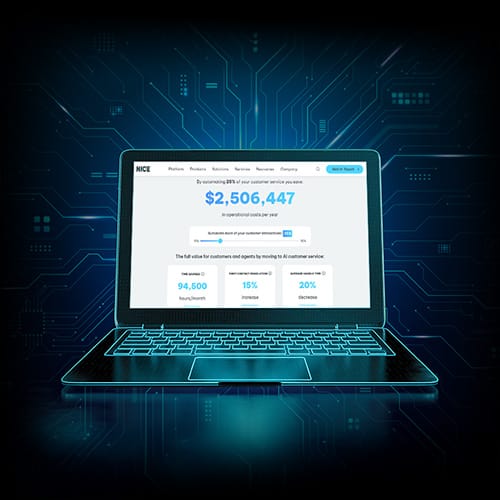
Discover the full value of AI in CX
Understand the benefits and cost savings you can achieve by embracing AI, from automation to augmentation.
Business Impact: How Autonomous Agents Change Contact Center Economics
Industry analyses from 2023–2024 show that organizations using advanced contact center AI see measurable improvements across key performance metrics. Handle times for automated interactions drop significantly. First-contact resolution increases as agents have better information and customers reach resolution without transfers. Containment rates—the percentage of interactions resolved without human involvement—reach 20–40% of eligible interactions within the first year of deployment.
Value appears across three dimensions. For customers, lower effort and faster resolution mean improved customer satisfaction and reduced customer frustration. For agents, less after-call work, real time support with relevant context, and better coaching opportunities improve engagement and reduce burnout. For operations, cost-to-serve decreases, scalability improves, and compliance outcomes strengthen as policies are applied consistently.
Consider a composite example based on typical NiCE deployments: a global bank faced overwhelming volume for password reset requests—simple transactions that consumed agent time and drove long wait times. After deploying an autonomous voice agent, the bank reduced voice volume for password resets by 60% within nine months. Average handle time for remaining human-handled interactions also dropped as agents no longer dealt with the simplest cases. Agent attrition stabilized as work became more varied and interesting.
A public agency faced a claims backlog while subject to strict audit requirements. Autonomous agents handled status inquiries and simple updates, freeing caseworkers for complex determinations. The backlog cleared without hiring additional staff, and audit findings actually decreased because automated interactions followed procedures perfectly.
Secondary benefits accumulate over time. Richer interaction data improves forecasting accuracy. Agents flag scenarios the AI can’t yet handle, revealing broken processes or missing knowledge articles. Intent analysis across channels surfaces emerging customer issues before they become widespread complaints, as showcased in NiCE’s Why NiCE case study and video series.
Key Metrics to Track for Autonomous AI Programs
Effective measurement requires the right key performance metrics from the start:
Set 6–12 month targets per use case rather than generic “AI ROI” expectations. Align targets to baseline data captured before deployment. Monitor model drift and fairness: ensure different customer segments—different demographics, geographies, product holdings—receive equitable service and error rates remain within tolerances.
Implementing Autonomous Agents Safely: A Practical Roadmap for Enterprises
Risk-aware organizations—banks, insurers, government agencies, healthcare providers, large retailers—can deploy autonomous agents with confidence by following a structured approach, often starting from insights surfaced by advanced interaction analytics. This isn’t about moving fast and breaking things. It’s about building trust systematically while delivering value incrementally.
The roadmap involves several stages: assess journeys and data readiness, design guardrails and governance, choose platform and integration approach, pilot with constrained autonomy, scale with monitoring, and continuously optimize. Cross-functional ownership from CX, IT, risk, compliance, and frontline leaders ensures policies and success metrics reflect the perspectives of everyone affected.
NiCE’s role is to provide the orchestration fabric, best-practice playbooks, and domain-specific AI models trained on billions of interactions—not just raw algorithms, drawing on its heritage as a global leader in AI-powered customer experience. The platform accelerates implementation while enforcing the controls that regulated environments require.

Step 1: Prioritize Journeys and Define Outcomes
Start with a concrete inventory of top call and digital volumes over the past 12 months. Identify the top 20 intents by frequency and handle time. Classify each by risk and complexity: high-volume, low-risk journeys are ideal starting points; high-complexity, high-risk scenarios require more preparation.
Focus first on automating routine tasks like order status, password reset, appointment changes, and simple claims rather than “hero” complex cases. These journeys offer clear, measurable impact with manageable risk profiles.
Define SMART goals for each journey. For example: “Reduce average handle time for password reset calls from 5 minutes to 2 minutes by Q4 2026 through 60% autonomous resolution.” Include both customer experience metrics (CSAT, CES) and operational metrics (AHT, cost per contact) in target definitions. This dual focus ensures automation delivers value without degrading the customer journey.
Step 2: Design Guardrails, Policies, and Human Escalation Paths
Classify actions into tiers based on risk and regulatory requirements:
Fully automatable: Read and write under strict rules (e.g., update contact information, process standard credits within defined limits)
Assist-only: AI drafts, humans approve before execution (e.g., payment arrangements above threshold amounts)
Information-only: AI can read but not change records (e.g., displaying account status without modification rights)
Legal, risk, and compliance teams must define which transactions autonomous agents may complete. Changing contact details in a contact center might be fully autonomous; closing an account typically requires human confirmation. These decisions vary by regulation—GDPR in the EU, PCI DSS for payment processing, sector-specific rules in financial services and healthcare.
Design escalation triggers carefully. Define sentiment thresholds that route frustrated customers to humans. Specify intents—complaints, fraud reports, requests for supervisors—that always escalate. Configure failed verification attempts to route appropriately rather than looping indefinitely.
NiCE governance capabilities support this: audit logs of every AI action, replay of interactions for review, and policy-based controls that update centrally rather than requiring code changes across multiple systems.
Step 3: Integrate with Your Contact Center and Data Ecosystem
Technical prerequisites include stable APIs or connectors to CRM, billing, knowledge bases, workforce management, and ticketing systems. You need a clear source of truth for customer data and identity and access management policies that define what the AI can access.
NiCE CXone and CXone are cloud-native CCaaS platforms designed to simplify integration through prebuilt connectors and event streams. However, customization is typically required for legacy backends, homegrown systems, and industry-specific platforms. Plan for this integration work realistically—it’s often the longest phase of implementation.
Take an iterative approach. Start by granting read-only access to existing systems, proving reliability and accuracy. Carefully expand to write permissions as confidence grows and monitoring confirms stable AI performance. Validate that customer requests result in correct updates before expanding scope.
Performance and resiliency considerations matter. Define graceful degradation when downstream systems are unavailable. Ensure fallbacks to human agents work smoothly. Craft transparent messages for customers when automation is temporarily limited—honesty builds trust even during disruptions.
Step 4: Pilot, Monitor, and Scale Responsibly
Launch limited pilots with specific customer segments or channels. Web chat during business hours might be the first deployment, expanding to voice and 24/7 coverage as confidence builds. Constrained pilots allow rapid learning without exposing the entire customer base to early iterations.
Near real-time monitoring is essential during early deployment. Dashboards should display containment rates, error rates, escalations, and customer sentiment. Hold daily or weekly review ceremonies to assess performance and make rapid adjustments. Gather feedback from frontline agents and supervisors—they see edge cases and failure modes that metrics alone won’t reveal.
Frontline involvement goes beyond feedback. Agents and supervisors should be able to flag problematic AI behaviors, propose new intents for automation, and request adjustments to escalation rules. This creates a continuous feedback loop that improves AI capabilities while maintaining agent confidence.
NiCE customers typically scale over 6–18 months, moving from one or two automated journeys to a portfolio of 20+ intents. Each expansion follows the same pattern: define outcomes, configure guardrails, pilot, monitor, and scale. Implementing AI safely is an ongoing program, not a one-time project.
Looking Ahead: The Future of Autonomous Contact Center Agents
By 2026–2030, AI agents will be embedded across all voice and digital channels, remembering context over time and collaborating with human experts in real time, aligning with NiCE’s broader vision of a seamless, intelligent CX world. The question will shift from “where can we use AI?” to “which experiences should be completely effortless—and what role should humans play in them?”
Emerging artificial intelligence capabilities include memory-rich personalization that maintains long-term customer context across months of interactions, cross-journey orchestration spanning marketing, service, and collections, and more nuanced understanding of emotion and customer sentiment. Conversational AI will handle increasingly complex issues while knowing precisely when human expertise is essential.
Organizations that succeed will treat AI as shared infrastructure for personalized customer experiences, not a patchwork of disconnected tools. They’ll measure success by trust, effort reduction, and long-term loyalty rather than narrow efficiency metrics. Knowledge management will evolve to feed AI systems continuously, ensuring virtual assistants always have access to current information.
The most important shift may be cultural. Autonomous agents create space for human agents to become true specialists and advocates. Freed from routine tasks, people focus on moments that require judgment, creativity, and genuine care. Customers experience less friction and more clarity in every interaction. Contact center operations transform from cost centers into engines of trust and relationship-building.
This future isn’t hypothetical—it’s emerging now in organizations that approach AI with clear governance, realistic expectations, and genuine commitment to improving customer interactions. The technology is ready. The question is whether your processes, policies, and people are ready to orchestrate experiences that are calmer, easier, and more effective for everyone involved.
Also related to Agentic AI in CX:
- Agentic AI for Real Time Agent Coaching
- KPIs for Agentic AI CX
- Agentic AI Governance Frameworks
- AI Agents for Quality Management
- Agentic AI in Retail Customer Experience
- Copilot vs Autopilot AI in CX
- Agentic AI in Healthcare Contact Centers
- Agentic AI for CX Operations Management
- Agentic AI Architecture for CX Platforms
- Agentic AI in Financial Services CX
Frequently Asked Questions (FAQs)

Ready to experience the power of one platform?
Let us show you how NiCE can unify, automate and elevate your entire customer experience - with AI at the core and outcomes at the forefront.