

Agentic AI for Real‑Time Agent Coaching
On this page
- What Makes AI “Agentic” in Live Coaching
- From Post-Call to In-Call Coaching
- Core Use Cases for Coaching
- How Agentic AI Coaching Works
- Coaching Workflow Principles
- Governance and Compliance
- Measuring Coaching Impact
- Piloting Agentic AI Coaching
- Avoiding AI Coaching Pitfalls
- Future of Agentic AI for Coaching
- Every Interaction a Coaching Moment
- What Makes AI “Agentic” in Live Coaching
- From Post-Call to In-Call Coaching
- Core Use Cases for Coaching
- How Agentic AI Coaching Works
- Coaching Workflow Principles
- Governance and Compliance
- Measuring Coaching Impact
- Piloting Agentic AI Coaching
- Avoiding AI Coaching Pitfalls
- Future of Agentic AI for Coaching
- Every Interaction a Coaching Moment
How is agentic AI transforming agent coaching from scheduled retrospective sessions into real-time, in-call guidance — and what happens to agent development and performance when AI detects coaching opportunities and surfaces targeted feedback in the moment rather than days later?
Contact centers in 2026 face a reality that would have seemed unmanageable just a few years ago. Interaction volumes continue to rise across voice, chat, email, and messaging. Regulatory requirements grow more complex—from CFPB 2024 guidance on debt collection practices to GDPR and emerging state-level privacy laws. And customer expectations have shifted permanently: people expect immediate resolution, personalized service, and agents who understand their history without asking them to repeat themselves.
Supervisors, meanwhile, are stretched thin. Even the most dedicated team leads can meaningfully review only 1–3% of their agents’ interactions, and that review typically happens days or weeks after the call ended. By the time coaching feedback reaches the agent, the moment has passed. The behavior that needed correction has already repeated dozens of times. The opportunity to reinforce a win has faded.
This is where agentic AI enters the picture—not as another dashboard or analytics layer, but as infrastructure that continuously observes, reasons, and acts across live interactions. An agentic ai system doesn’t wait for a supervisor to pull a sample. It monitors every call, chat, and email in real time, evaluating behaviors against playbooks and policies, and delivering coaching prompts precisely when they matter most.
At NiCE, platforms like CXone contact center solutions already orchestrate real-time insights, workforce engagement management, and compliance monitoring for large enterprises worldwide. Real time coaching powered by agentic AI represents the next evolution—turning every customer interaction into a precise, low-effort coaching opportunity for both human agents and the supervisors who support them. This guide walks through what agentic AI means for live coaching, how it works in practice, and how operations leaders can deploy it responsibly at enterprise scale.
What makes AI “agentic” in the context of live coaching?
The term “agentic” distinguishes a new class of ai systems from traditional analytics or static agent assist tools. Traditional ai once meant rule-based pop-ups that appeared when certain keywords were detected—helpful in narrow cases, but brittle and often ignored. Generative ai added capabilities like summarization and response drafting, but these tools still require human prompting and don’t take action on their own.
Agentic AI is different. In the context of live coaching, it refers to autonomous ai agents that monitor interactions as they happen, evaluate behaviors and risk in real time, propose next-best actions, and adapt to feedback—all with minimal human intervention. These ai agents don’t wait to be asked. They observe, reason, and act based on predefined goals and continuously updated context.
Consider a concrete example: a 7-minute collections call in a financial services contact center. An agentic coaching agent listens to the entire interaction, tracking required disclosures (mini-Miranda, right to dispute), empathy markers (acknowledgment of hardship), and compliance checkpoints. When the agent misses a required disclosure at the 4-minute mark, the coaching system delivers a timely prompt: “Reminder: Disclose the consumer’s right to dispute within 30 days.” The prompt arrives while there’s still time to act—not in a post-call review three days later.
This is the distinction: generative ai might draft a summary after the call, but agentic ai handles the orchestration of goal-setting, decision-making, and intervention during the call. It transforms coaching from a reactive, sample-based process into a continuous, adaptive one.
From post-call review to in-call guidance: the coaching shift
The traditional coaching model in contact centers follows a familiar pattern. Supervisors sample a handful of calls each week—often 1–2% of total volume. They score those calls against a quality form, write up feedback, and schedule coaching sessions. By the time the agent receives guidance, the original interaction is a distant memory.
This model made sense when manual review was the only option. But it creates significant gaps. Agents repeat the same mistakes dozens of times before anyone notices. High performers miss recognition for strong moments that weren’t sampled. And supervisors spend hours in spreadsheets rather than on the floor supporting their teams.
An agentic AI model inverts this entirely. Every call, email, or digital interaction is evaluated in real time against playbooks, policies, and quality standards. Coaching prompts arrive while the interaction is still live—when there’s still time to course-correct. Supervisors receive alerts only when serious cases require human judgment or escalation. The rest of the time, they can focus on culture, strategy, and high-value floor presence.
A before-and-after example: A financial services contact center handling mortgage servicing struggled with repeat complaints about fee disclosures. Under the traditional model, supervisors reviewed a small sample of calls and discovered the issue weeks after complaints spiked. After deploying agentic coaching, the system monitored every call for fee disclosure language, prompting agents in real time when disclosures were missed or unclear. Within one quarter, repeat complaints on this issue dropped measurably—because the coaching happened when it mattered, not after the damage was done.
The result is reduced effort for everyone. Agents receive relevant information in context, without separate coaching sessions to schedule. Supervisors escape the sample-and-score treadmill. And customers feel heard because issues are addressed before they escalate.

Core use cases for agentic AI in real-time agent coaching
Across large contact centers in financial services, telecom, healthcare, and government, several coaching use cases consistently deliver immediate value when powered by agentic AI and AI-powered quality management.
Live compliance adherence remains the highest-stakes application. In regulated industries, a missed disclosure or improper handling of sensitive data can trigger fines, lawsuits, or reputational damage. An agentic coaching agent monitors every interaction for required language, prohibited phrases, and procedural steps—prompting agents the moment a gap appears. The outcome: lower compliance breach rates and reduced risk for the organization.
Real-time sales guidance helps sales reps and retention teams navigate complex offers without fumbling. When a customer mentions a competitor or signals intent to cancel, the coaching agent surfaces the most relevant save offer or upsell opportunity based on CRM data and interaction history. This drives higher conversion rates and revenue retention without requiring agents to memorize every promotion.
De-escalation and empathy coaching addresses one of the hardest skills to teach: staying calm and empathetic when a customer is frustrated. Natural language processing and sentiment analysis allow the coaching agent to detect rising tension and prompt the agent with specific language—acknowledgment statements, active listening cues, or pause recommendations. The goal is calmer interactions and improved customer satisfaction scores.
New-hire ramp acceleration solves a perennial challenge: getting new agents productive quickly. Agentic coaching provides real time support during live interactions, guiding new hires through scripts, policies, and systems while they’re still learning. This reduces ramp time, improves job satisfaction by lowering stress, and ensures customers receive consistent service even from less experienced agents.
Multilingual coaching support extends real-time guidance to agents handling interactions in multiple languages. For contact centers serving global or diverse populations, this means coaching prompts can adapt to the language of the interaction, ensuring consistency across markets and reducing the burden on specialized agents who might otherwise handle overflow.
Each of these use cases targets measurable outcomes: higher first-contact resolution, lower risk, better NPS, faster time-to-competency. The coaching agent operates in the background, augmenting human performance without adding cognitive load.
How agentic AI coaching actually works in the contact center stack
Understanding the technical flow helps operations leaders plan integrations and set realistic expectations. Here’s how an agentic coaching system typically operates within an enterprise contact center.
Step 1: Ingesting live audio and text. The system captures real-time streams from voice calls (via telephony integration) and digital channels (chat, email, messaging). Speech-to-text processing converts audio into analyzable text, often with speaker separation to distinguish the agent from the customer. Additionally, many contact centers utilize text-to-speech (TTS) technology to convert written responses into spoken words for automated voice interactions.
Step 2: Interpreting intent and emotion. Large language models and natural language processing analyze the interaction for intent (what the customer wants), sentiment (how they’re feeling), and key entities (account numbers, product names, competitor mentions). This creates a real-time understanding of where the conversation stands.
Step 3: Matching against coaching rules and playbooks. The system compares the interaction against predefined playbooks, compliance policies, and quality standards. These rules might specify required disclosures, prohibited language, empathy benchmarks, or sales triggers. When a gap or opportunity is detected, the coaching agent activates.
Step 4: Triggering guidance within the agent desktop. The coaching prompt appears in the agent’s workspace—often as a subtle notification, suggested response, or procedural reminder. The design prioritizes minimal disruption: one clear action at a time, not a barrage of pop-ups.
Step 5: Logging and observability. Every coaching recommendation is logged, along with how the agent responded. Supervisors and risk teams can review what the coaching agent suggested, whether the agent followed the guidance, and how outcomes correlated with coaching events.
For NiCE customers, CXone AI customer experience platform and CXone provide native integration with this flow, connecting to CRM systems like Salesforce, knowledge bases, core banking platforms, and ServiceNow for contextual enrichment. An agentic coaching agent doesn’t work alone—it coordinates with specialized agents for knowledge retrieval, compliance detection, and summarization, sharing insights through a communal memory layer that improves system-wide performance over time.
Design principles: building coaching workflows, not just “more agents”
The temptation with any new AI capability is to add more alerts, more widgets, more nudges. But value in real-time coaching comes from rethinking workflows, not from overwhelming agents with notifications. Operations leaders should anchor their approach on a few core principles.
Minimize cognitive load. Agents are already juggling screens, scripts, and customer needs. Every coaching prompt competes for attention. The system should surface only what’s essential—one actionable insight per moment, not a running commentary.
Prioritize a single coaching goal per interaction. Trying to coach everything at once coaches nothing effectively. Define the primary coaching objective for each call type (e.g., compliance for collections, empathy for complaints, upsell for retention) and tune the system accordingly.
Align prompts with QA forms. If the coaching agent emphasizes behaviors that aren’t reflected in quality evaluations, agents receive mixed signals. Coaching prompts should reinforce the same standards supervisors use in post-call reviews, creating consistency.
Connect live coaching to post-call learning. Real-time prompts address the immediate moment, but lasting behavior change requires reflection. Link coaching events to training materials, e-learning modules, or supervisor follow-ups and AI-driven knowledge management so agents can deepen skills after the interaction ends.
Map end-to-end workflows before deploying. Before deciding where the coaching agent should intervene, map the customer journey from intent to resolution. Identify the moments where coaching creates value (e.g., handling objections, delivering disclosures) and where silence is better (e.g., rapport-building phases where prompts would feel intrusive).
A practical example: A retention team redesigned their call flow for high-value account saves. They configured the coaching agent to intervene only on three triggers—save offer timing, compliance checkpoints, and empathy recovery after objections. By limiting scope, they reduced prompt fatigue and increased agent trust in the system.
Governance, trust, and compliance in agentic coaching
Enterprise deployments of agentic AI must address governance directly. Regulatory scrutiny is increasing—SEC 2025 guidance on electronic communications, data privacy requirements, and industry-specific rules all apply to AI-assisted interactions. Operations and risk teams need confidence that coaching prompts won’t create liability.
Explicit policies for AI vs. human intervention. Not every coaching moment should be handled by AI. Define clear boundaries: routine compliance reminders can be automated, but complex exceptions or disciplinary matters require human oversight and human review. Document these policies and enforce them through system configuration.
Approval workflows for coaching templates. Before any coaching prompt goes live, it should pass through compliance and legal review. Treat coaching language like any other customer-facing script—subject to approval, version control, and periodic recertification.
Role-based access controls. Coaching analytics contain sensitive performance data. Restrict access based on role: supervisors see their team’s coaching events, risk teams see compliance patterns, and executives see aggregate trends. Protect individual agent data with the same rigor applied to customer data.
Human-in-the-loop oversight. Supervisors can review, override, and refine coaching behaviors. If a prompt is consistently ignored or creates confusion, the system should surface that pattern for adjustment. Risk teams can audit recommendations, flag anomalies, and validate that coaching aligns with regulatory expectations.
NiCE’s risk and compliance capabilities—including cloud contact center software, real-time interaction analytics and automated policy detection—complement agentic coaching by ensuring prompts don’t conflict with regulations or internal rules. The goal is deploying agentic ai responsibly, not blindly automating guidance that could expose the organization.
Measuring impact: from coaching prompts to business outcomes
Adopting agentic ai for coaching requires rigorous measurement. It’s not enough to track whether agents like the tool—what matters is whether coaching events drive downstream business outcomes.
Key metrics to track:
First-contact resolution (FCR): Are prompts helping agents resolve issues without callbacks?
Average handle time (AHT): Is guidance making agents more efficient, or adding confusion?
Sales conversion: For revenue-focused teams, do coached interactions convert at higher rates?
Compliance breach rates: Are policy violations decreasing as prompts increase adherence?
CSAT and NPS: Do customers notice improvements in service quality?
New-hire ramp time: Are new agents reaching productivity benchmarks faster?
Measurement must connect coaching events to outcomes, not just count prompts delivered. For example, if prompts about fee disclosures reduce payment disputes by 15% over a quarter, that’s a measurable outcome worth celebrating. If prompts about upselling show no impact on conversion, the coaching strategy needs refinement.
NiCE customers typically see patterns emerge within 6–12 weeks of piloting real-time coaching, especially when using CXone dashboards to monitor trends. One anonymized example: A healthcare contact center deployed compliance coaching for HIPAA-sensitive interactions. Within 90 days, they observed a measurable reduction in privacy-related complaints and a corresponding improvement in audit scores.
A/B testing is essential. Run pilot groups with agentic coaching alongside control groups using traditional QA and coaching. Compare outcomes across both cohorts. This rigor ensures that improvements are attributable to the coaching system, not external factors.
Design dashboards that show coaching effectiveness across the entire CX operation—not just individual agent performance. Business leaders need visibility into which coaching behaviors drive the most value, so they can prioritize and refine.
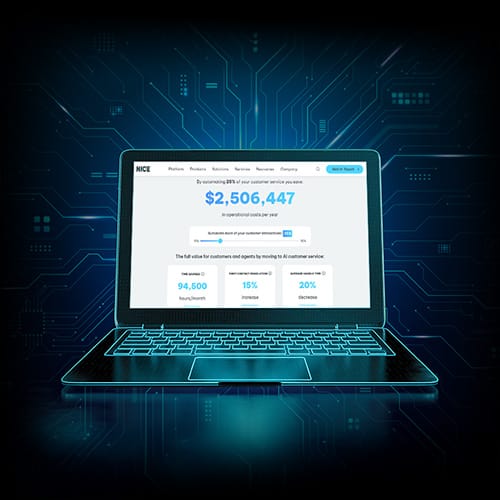
Discover the full value of AI in CX
Understand the benefits and cost savings you can achieve by embracing AI, from automation to augmentation.
Step-by-step: piloting agentic AI for coaching in your contact center
A realistic pilot plan spans approximately 90 days and involves cross-functional collaboration from the start. Here’s how enterprises using NiCE CXone — including the CXone AI cloud contact center platform — or similar platforms can approach it.
Month 1: Define scope and prepare infrastructure. Select one high-impact skill group for the pilot—collections, retention, or technical support are common choices. Define 3–5 specific coaching behaviors to target (e.g., required disclosures, empathy statements, product recommendations). Ensure real-time analytics are integrated with your CCaaS platform and that crm systems are connected for context enrichment. Involve QA, workforce engagement, operations, and compliance teams from day one to avoid misalignment.
Month 2: Configure guardrails and train supervisors. Build coaching templates and route them through compliance and legal review. Set thresholds for prompt frequency to avoid overwhelming agents. Train supervisors on how to review coaching events, override recommendations, and provide feedback to refine the system. Communicate clearly to agents that AI is augmenting their work, not replacing them—this is critical for adoption.
Month 3: Limited rollout and iteration. Deploy the coaching agent to the pilot group. Monitor prompt volume, agent response rates, and early outcome signals. Gather feedback from agents and supervisors weekly. Adjust coaching templates based on what’s working and what’s being ignored. Document wins and share them broadly to build momentum for broader rollout.
Change management deserves special attention. Agents may be skeptical of AI watching their calls. Address this directly: explain that the goal is real time support, not surveillance. Share early wins where coaching helped an agent handle a difficult call. Incorporate agent feedback to refine prompts—people support what they help create.

Common pitfalls and how to avoid “AI coaching slop”
“AI coaching slop” describes the failure mode where coaching prompts become low-quality, noisy, or irrelevant—overwhelming agents and eroding trust in the system. Avoiding this requires deliberate design and ongoing vigilance.
Over-frequent prompts. If the system comments on every utterance, agents tune it out entirely. Set clear thresholds for prompt volume per interaction and prioritize the highest-value coaching moments.
Generic advice not tied to KPIs. Prompts like “Remember to be empathetic” offer little actionable value. Tie coaching language to specific behaviors that correlate with measurable outcomes—the same behaviors your QA forms evaluate.
Misaligned scoring rubrics. If the coaching agent emphasizes behaviors that supervisors don’t reward, agents receive contradictory signals. Align the coaching model with your quality framework and recalibrate regularly.
Ignoring edge cases. Agentic systems can struggle with unusual scenarios—complex complaints, multi-party calls, or highly technical inquiries. Build escalation paths for cases where the coaching agent should stay silent and supervisors should engage.
Lack of supervisor oversight. Even the best AI makes mistakes. Without regular human review, erroneous advice can erode trust. Establish feedback loops where supervisors sample coaching recommendations, flag issues, and refine templates.
Treat coaching agents like new team members: give them clear role descriptions, onboard them properly, evaluate their performance, and improve them continuously. Data scientists and QA leaders should partner to monitor ai outputs and refine ai reasoning over time.
The future of agentic AI for coaching: multi-agent collaboration and beyond
Real-time coaching is evolving rapidly. By 2026–2028, multi-agent systems will become standard in enterprise contact center operations—a coaching orchestrator coordinating with specialized agents for sentiment analysis, knowledge retrieval, compliance detection, and outcome optimization, all operating simultaneously during a single interaction.
Emerging capabilities include proactive coaching before the interaction begins—pre-call briefings that surface relevant information about the customer, their history, and likely needs. Conversation intelligence will extend across channels, so coaching follows agents from voice to chat to email without losing context. Scenario-based simulations powered by historical data will accelerate sales training and skill development before agents ever handle live calls.
NiCE envisions extending real-time coaching across the entire employee lifecycle. From onboarding simulations where new hires practice with virtual customers, to in-the-moment guidance during live calls, to long-term performance development tied to career growth—workforce management and agentic coaching become part of the fabric of how human teams operate effectively.
The human-centered goal remains constant: calmer interactions, more confident agents, and consistent experiences for customers regardless of channel, language, or time of day. Autonomous agents handle mundane tasks and repetitive tasks, freeing human agents to apply human judgment, creativity, and the human touch where it matters most.
This isn’t about replacing people with robots. It’s about intelligent systems that augment human performance, enabling ai agents and human agents to work together seamlessly through AI customer service automation solutions. When agentic ai delivers value, the technology itself becomes invisible—infrastructure supporting people, not a spectacle demanding attention.

Conclusion: Making every interaction a coaching moment
Agentic AI, when treated as underlying infrastructure, transforms coaching from a sporadic, sample-based exercise into a continuous, embedded capability. Every customer interaction becomes an opportunity for precise, low-friction guidance—delivered in the moment when it can still change outcomes.
For agents, this means real time support that reduces stress, accelerates skill development, and increases job satisfaction. For supervisors, it means escape from spreadsheets and sample reviews, freeing time for the strategic and cultural work that only humans can do. For organizations, it means competitive advantage through consistent service, reduced risk, and measurable business value.
The key is thoughtful implementation. Governance, workflow design, and human oversight ensure that coaching feels helpful, not intrusive. Measurement connects coaching events to business outcomes like customer satisfaction, compliance, and efficiency. And change management ensures that support teams and other agents embrace the system rather than resisting it.
By 2027, the vision is clear: supervisors orchestrating strategy and culture, agents supported by silent but intelligent coaching layers, and customers experiencing consistent, trustworthy service every time—regardless of channel, complexity, or the specific tasks involved. The technology fades into the background. What remains is the experience: calmer agents, satisfied customers, and organizations that operate effectively at enterprise scale.
NiCE’s leadership in AI-powered customer experience is grounded in its history and mission, as outlined in the About NiCE company overview.
Also related to Agentic AI in CX:
- KPIs for Agentic AI CX
- Autonomous AI Agents in Contact Centers
- Agentic AI Governance Frameworks
- AI Agents for Quality Management
- Agentic AI in Retail Customer Experience
- Copilot vs Autopilot AI in CX
- Agentic AI in Healthcare Contact Centers
- Agentic AI for CX Operations Management
- Agentic AI Architecture for CX Platforms
- Agentic AI in Financial Services CX
Frequently Asked Questions (FAQs)

Ready to experience the power of one platform?
Let us show you how NiCE can unify, automate and elevate your entire customer experience - with AI at the core and outcomes at the forefront.