
The move away from spreadsheet-driven WFM is already underway. AI is changing how workforce management teams plan, forecast, and adapt — not by automating what spreadsheets already did, but by reshaping how workforce empowerment gets done.
For years, WFM teams held everything together with spreadsheets: detailed models, dozens of tabs, and formulas that quietly powered day-to-day decisions. That worked, until the environment changed.
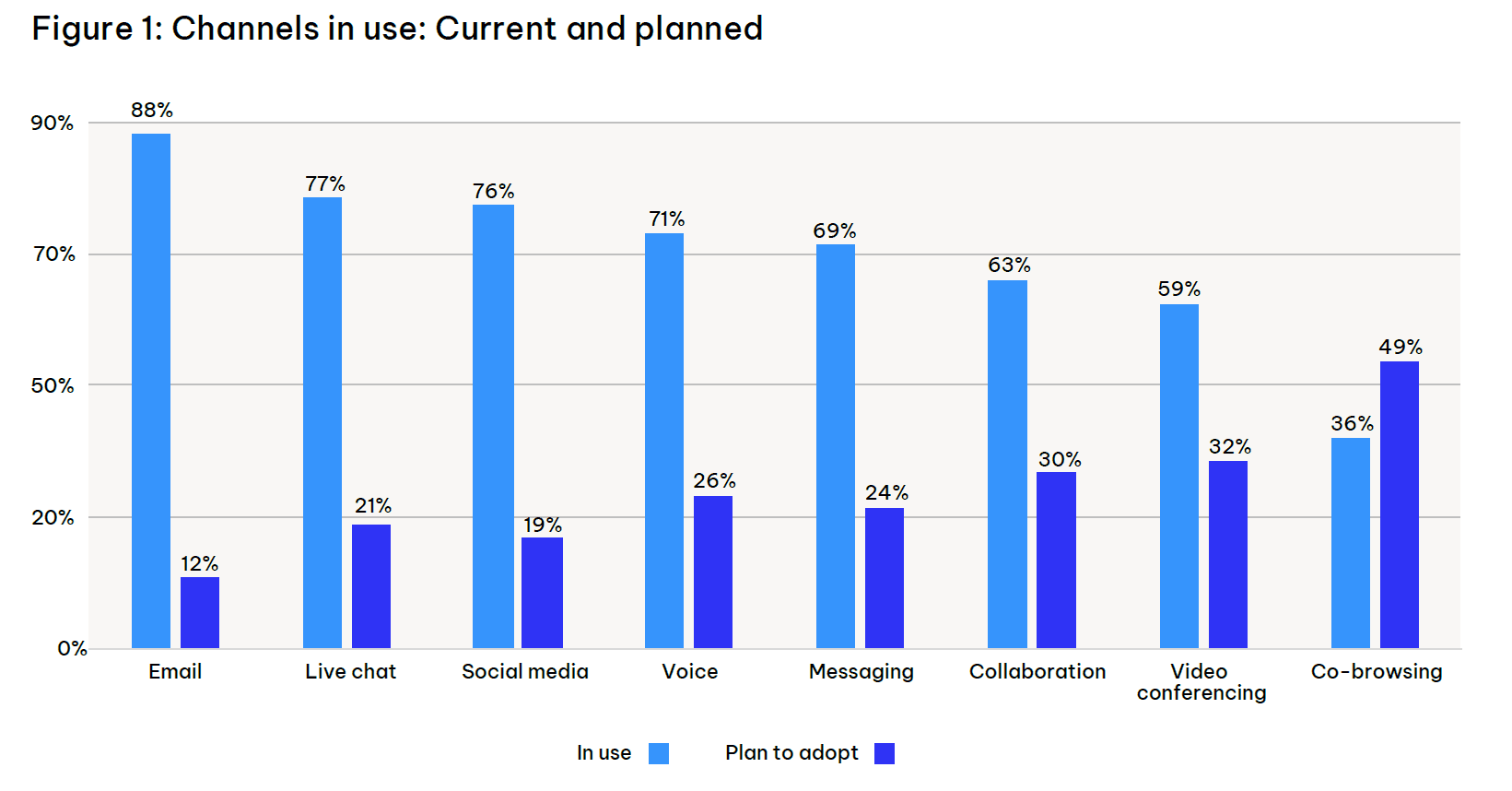
Today’s contact centers are more dynamic, more connected, and far less predictable. Work doesn’t move through a single channel or follow a clean, linear path. It flows across voice, chat, email, and digital messaging. It shifts with customer behavior, marketing campaigns, outages, and seasonality. Teams themselves are more flexible, with a mix of full-time employees, part-time staff, and distributed workforces. CMSWire research finds that 76% of contact center agents are handling multiple channels all or most of the time. Meanwhile, channel adoption continues to expand.
In practice, the limits of spreadsheets show up gradually — through manual workarounds and the growing effort it takes to keep plans aligned with the business.
For executives, that shows up as risk: higher overtime costs, missed service commitments, and less certainty as conditions change. At NiCE World 2026, Troy Plott, Vice President of WFM Product Management, framed the challenge directly: “The real risk isn’t overstaffing — it’s planning the wrong workforce entirely."
When the workforce model no longer matches reality
A spreadsheet was never designed to handle this level of complexity. Spreadsheets depend on stable inputs and predictable patterns, and modern operations don’t offer either. As soon as a new channel is introduced or routing logic shifts, teams find themselves adjusting models midstream while patching together new assumptions, all while trying to keep forecasts aligned with constantly changing conditions. Adding more technology doesn’t automatically solve this. Most contact centers now run on a wide mix of bots, queues, workflow tools, and analytics platforms that each operate independently — creating fragmented operations rather than coordinated ones. What organizations actually need is orchestration, not just more tools.
Over time, that complexity compounds. What started as a working system becomes one that only a few people fully understand — powerful, but harder to trust and harder to scale.
At the same time, expectations continue to rise. Customers expect fast, consistent service across every channel. According to Simpler Media Group, six in 10 contact centers say the number of customer channels they support has increased in recent years. Leaders expect efficiency and accuracy. Employees expect flexibility and balance. Meeting all of those expectations with static tools creates tension that’s hard to resolve.

A different way to approach workforce management
What’s emerging is a different way of thinking about WFM altogether. AI tools don’t simply automate existing processes. They reshape how those processes work. Instead of relying on fixed models that need constant adjustment, teams can work with systems that adapt alongside the operation itself for true workforce empowerment.
Decisions no longer depend entirely on what happened in the past. They’re informed by patterns, signals, and conditions as they evolve. Plans don’t need to be rebuilt from scratch each time something shifts. They can adjust continuously, staying aligned with demand as it changes. The most important distinction here is between automation and orchestration. Automation handles predictable, repeatable work. Orchestration — routing tasks, coordinating workflows, and applying human judgment to exceptions is what actually closes the gaps between teams, systems, and customer outcomes. That’s the capability organizations need as they move from disconnected handoffs to a seamless resolution.
What AI sees: Patterns in demand, emerging gaps, and the real constraints shaping the day.
Why it acts: To keep service and cost on track, reduce disruption, and surface risk early.
How it adapts: Continuously refines forecasts, tests scenarios, and recommends targeted adjustments.
Who owns it: AI handles execution. The WFM team owns the decisions.
With that visibility, the shift reduces friction in ways that are immediately visible. Teams spend less time maintaining models and more time using them. Instead of focusing on upkeep, WFM professionals can focus on applying judgment, interpreting insights, balancing trade-offs, and making decisions that require context. Planning becomes more grounded, and the work of WFM starts to feel more intentional.
How the shift to reduce friction shows up in practice
You can see the impact of this shift most clearly in how work flows across the operation.
Forecasting, for example, is no longer limited to looking backward. Instead of relying only on historical averages, teams can factor in a broader range of signals, from seasonal patterns to upcoming campaigns, building a clearer picture of what’s ahead. Forecasting becomes more continuous rather than episodic, with models that adjust as conditions change and incorporate new inputs without requiring teams to constantly rework assumptions. That same visibility extends further, helping leaders weigh decisions around hiring, upskilling, or automation with a clearer view of how each choice will affect performance. NiCE WFM’s AI best-pick forecasting engine evaluates more than 45 algorithms across 4 statistical models, including Box-Jenkins ARIMA, weighted moving average, exponential smoothing, and multilinear seasonal regression, selecting the best-fit model per day and interval for each scheduling unit, with continuous back-testing to ensure accuracy doesn’t degrade over time.
That forward-looking view carries into scheduling. Rather than locking in plans and adjusting them after the fact, schedules can evolve alongside demand. As conditions shift, workloads can be rebalanced and coverage adjusted in ways that feel more responsive and fair. When unexpected changes happen, whether it’s a spike in volume or a sudden gap in coverage, teams can spot those signals early and take action before they turn into larger disruptions. In digital and chat environments, the scheduling challenge is even more nuanced. NiCE WFM’s scheduling engine uses recurrent neural network (RNN) models to analyze message intensity and average speed of response across concurrent interactions — factors a spreadsheet can’t account for — to produce staffing levels that reflect the actual cognitive load placed on agents.
Workforce decisions also become more informed. It’s easier to understand how different skills, routing strategies, or team structures influence outcomes, and to test those changes before putting them into practice. Instead of relying on assumptions, teams can explore scenarios and see the likely impact, leading to more confident decisions with fewer surprises.
Performance management becomes more connected as well. With a clearer view across teams, channels, and shifts, it’s easier to identify where support is needed and how to provide it. Coaching becomes more targeted, learning paths more relevant, and progress easier to measure. In some cases, teams can even spot early signals of burnout or disengagement, giving them a chance to step in before it affects performance or retention. NiCE WFM’s Copilot for Workforce Managers surfaces this kind of insight conversationally. Managers can ask questions like “Which skill is trending?” or “What caused adherence to drop?” and receive context-aware responses drawn from real operational data — making performance conversations faster, more specific, and grounded in evidence.
As automation becomes more embedded in the workflow, its role becomes clearer. Routine tasks that once required manual effort can be handled in the background, allowing employees to focus on work that requires judgment and empathy, along with deeper problem-solving. Customer-facing bots can take on simpler interactions, while AI surfaces the right context and insights at the right moment, helping agents respond more effectively without adding complexity to their day. When that balance is right, the experience improves on both sides, with faster, more consistent service for customers and work that feels more meaningful for employees.
What changes for people doing the work
The impact of this shift is easiest to see in how people experience their roles.
As manual tasks are reduced and forecasts become more reliable, analysts are no longer stuck maintaining data or constantly reacting to unexpected changes. They have the space to focus on planning, identifying patterns, and improving how the operation runs. Managers gain clearer visibility into performance and can provide more targeted support. Coaching becomes more specific, timelier, and more effective.
That's the exact claim CVS Caremark proves, scaling with AI and automation, the company reduced manual workforce management administrative tasks by 14%.
For employees on the front line, greater flexibility in scheduling can make a meaningful difference. When schedules better reflect both business needs and personal preferences, work becomes more sustainable. That, in turn, supports engagement and retention over time.
As organizations rethink how work gets done, they’re also rethinking how teams grow. Instead of relying solely on hiring to keep pace with demand, many are focusing on building capabilities from within. By identifying skill gaps, supporting targeted learning, and expanding cross‑training, teams become more resilient and responsive to change. Growth becomes less about starting over and more about deliberately extending the skills, support, and capacity that already exist. This calculation is becoming more complex as AI agents enter the workforce. The question is no longer just how many human agents are needed — it’s how to plan capacity for a hybrid workforce of humans and AI agents together. NiCE WFM is built to model both, tracking metrics like containment rate, AI agent capacity, and interaction volume split to keep staffing plans aligned with how work actually gets handled.
Creating a new workforce empowerment plan
This shift is already reshaping how WFM teams operate. Teams are recognizing that the complexity they’re managing today requires a different kind of support. They’re looking for ways to reduce manual effort while improving accuracy and building systems that reflect how work actually happens. This shift was a central theme at NiCE World 2026, where workforce leaders across industries discussed what it actually takes to move from disconnected handoffs to coordinated, front-to-back-office resolution.
As that change takes hold, the role of WFM is evolving with it. It’s no longer just about planning coverage or maintaining schedules. It’s about shaping how work flows through the organization and how people experience that work every day. AI is not replacing WFM — it is making it more complex and more critical. Even as automation takes on more routine work, demand grows and complexity increases. The workforce doesn’t disappear; it shifts. And the teams that plan it well will be the ones that understand both what AI can handle and what still requires human judgment.
This transformation doesn’t happen all at once. But once it begins, it changes how workforce management feels for the people doing the work and for the organizations they support.
Learn more about how NiCE WFM supports this shift in the eBook Evolving Beyond the Spreadsheet With NiCE Workforce Management.