
AI is transforming service demand, making workforce planning more important, not less. It’s not simply reducing the need for human agents, but reshaping workforce management. As AI handles more interactions, there’s a growing assumption that demand naturally declines. In reality, something more nuanced is happening.
AI is absorbing high-volume, low-complexity work while making what remains more complex, more variable, and more dependent on human judgment.
Rather than reducing demand, AI fundamentally reshapes it. This shift elevates the role of AI-enabled workforce management in synchronizing effort across both AI and human resources, requiring a unified platform that provides shared intelligence across the entire service operation.
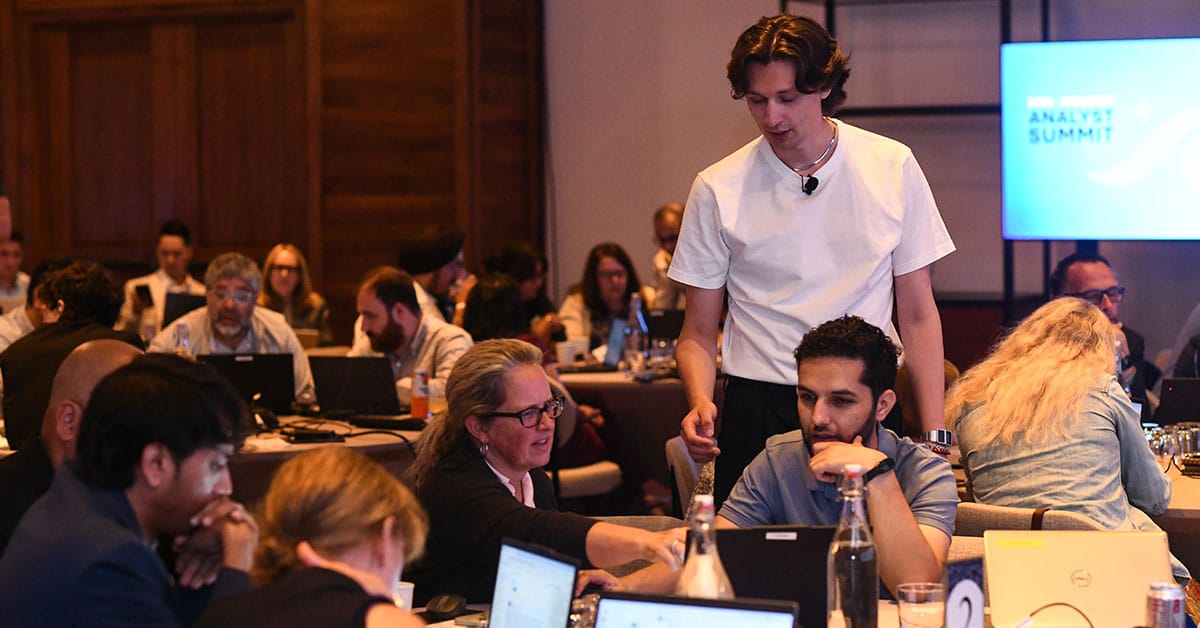
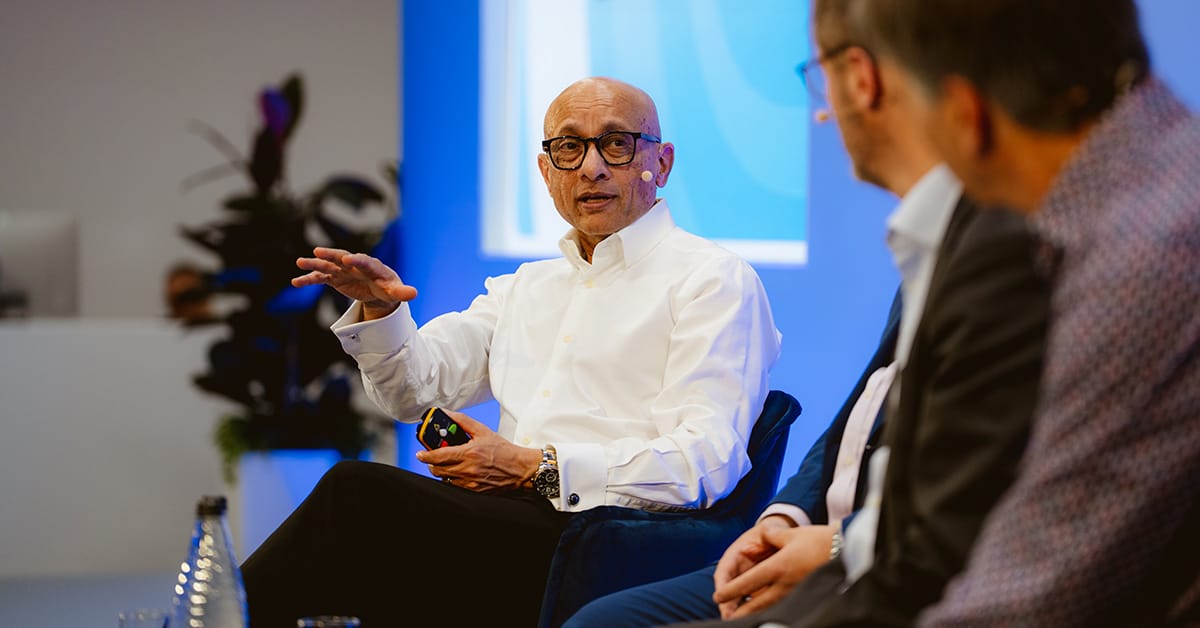
At NiCE World 2026, Troy Plott, Vice President of WFM Product Management, framed the challenge directly: “AI is not replacing WFM—it is making it more complex and critical.”
His session, “What’s Next in AI-Powered Workforce Management,” laid out the staffing and planning implications of CX AI transformation, and set the strategic context for what planning teams need to reckon with now.
For organizations focused on delivering consistent, connected experiences, that shift is refining how AI capacity planning and workforce planning needs to work, requiring a more holistic view of demand across AI and human interactions.
The misconception: AI equals less demand
When AI resolves an interaction, the contact doesn’t disappear. It still represents customer intent. It’s simply handled differently. That’s why leading organizations are shifting from a narrow focus on agent-handled volume to a broader view of total demand, encompassing interactions resolved by AI, escalated to humans, and those that reemerge across channels.
The question is no longer How many contacts reach agents? It’s How is demand distributed across AI and human work, and what does that mean for capacity?
Not all AI outcomes are the same:
- Resolved: Fully completed through AI without human involvement
- Escalated: Partially handled by AI before being transferred to a human agent
- Reopened: Reemerge later, often with greater complexity or urgency
Understanding the full lifecycle is essential to planning accurately—and delivering seamless experiences.
The shift to total demand
Capacity planning must now account for both AI-handled and human-handled interactions, and the relationship between them. This level of variability requires more than static forecasting models. Leading organizations are adopting scenario-based planning approaches, using tools like NiCE WFM's Enhanced Strategic Planner (ESP) to model how shifts in AI performance, escalation rates, and demand patterns impact staffing and service levels over time.
AI brings speed and scale, but it also introduces new dynamics. Performance evolves based on:
- Use case complexity
- Customer behavior and channel preference
- Changes in products, policies, or demand
These factors directly influence how demand flows. One of the most important drivers for planning is escalation rate—the share of AI interactions that require human support. Even small shifts in this metric can significantly impact staffing requirements, service levels, and cost-to-serve. These changes happen quickly, so planning models need to adapt just as fast.

The nature of human work is evolving
As AI takes on simpler interactions, the role of the human agent is shifting. What reaches agents is less routine and more nuanced—conversations that require deeper problem-solving, stronger judgment, and greater empathy. These interactions don’t follow predictable patterns. They vary in complexity, unfold over longer periods, and often carry more emotional weight.
That shift is also taking a toll with 76% of employees report experiencing burnout at least sometimes, underscoring how increased complexity and cognitive load are affecting workforce sustainability and long-term performance.
As a result, how work behaves is changing. Handle times may increase. Variability expands. Cognitive load becomes a more significant factor in both performance and sustainability. So while volume may shift, the effort required to resolve each interaction often rises. Planning for this environment means looking beyond volume—and accounting for how the work itself is evolving.
Workforce planning inputs are no longer static
Workforce planning inputs must evolve alongside the work itself. Factors like average handle time (AHT), occupancy, shrinkage, attrition, and onboarding time are no longer fixed benchmarks. They shift as AI changes the mix of interactions and what reaches human agents.
Planning also requires a new layer of visibility that reflects how work moves between AI and human support. Organizations are increasingly tracking measures like AI penetration rate and AI contact rate to understand how much demand is handled by automation, alongside escalation rate and time to escalation to see how and when work flows back to agents.
This level of visibility becomes even more powerful when paired with scenario modeling. Solutions such as NiCE’s Enhanced Strategic Planner allow planners to test how changes in AI performance, escalation patterns, or workforce capacity affect outcomes before they happen, turning data into actionable insight and enabling more confident, forward-looking decisions.
As variability and cognitive load increase, forecasts become more sensitive and staffing assumptions must adjust. Workforce planning becomes less about maintaining a static model, and more about continuously refining it to reflect how work actually behaves.
Planning that adapts as demand evolves
Troy Plott, NiCE Vice President of WFM Product Management, made this point concrete at NiCE World with a live ESP demonstration: if you don’t model AI impact correctly, accounting for IVA containment rates, AHT reduction, and the shift to a hybrid human-AI workforce, your entire staffing plan is wrong. The numbers look right on paper but reflect a workforce that no longer exists.
As workforce planning becomes more dynamic, organizations need tools that can continuously model and adapt to shifting inputs. Solutions like NiCE WFM's Enhanced Strategic Planner (ESP) make this possible by enabling scenario-based, long-term planning that reflects how demand behaves across both AI and human work.
Planners can model different assumptions from changes in escalation rates and handle times to shifts in automation and attrition, and immediately understand the impact on staffing, service levels, and cost. By combining historical data with AI-driven forecasting and simulation, ESP helps organizations move beyond static plans and make informed, forward-looking decisions that evolve as conditions change.
This kind of approach is already making an impact. For example, SECU used NiCE to transform how it plans and delivers member experiences—gaining clearer visibility into demand and better aligning staffing with real-world needs, resulting in measurable improvements in service consistency and operational performance. By improving how work is forecasted and managed across channels, SECU was able to create a more consistent, responsive service experience while giving planners greater confidence in their decisions.

Why forward-looking workforce planning matters
As AI evolves, planning can’t rely on short-term signals alone. Organizations need to look ahead to understand how demand, complexity, and staffing needs will change over time. Escalation patterns shift. Customer behavior evolves. Workloads adjust across channels and teams.
Short-term trends are often misleading in digital-first environments. What looks like reduced demand today may translate into increased complexity tomorrow.
As Troy Plott said at NiCE World: “The risk isn’t overstaffing—it’s planning the wrong workforce.”
Even with automation, demand grows and complexity increases. The workforce doesn’t disappear—it shifts. Organizations that plan only for volume reduction will find themselves misaligned for the work that actually matters.
This is where AI workforce empowerment plays a more strategic role. It brings structure to a dynamic environment—connecting forecasting, staffing, and ongoing adjustments into a continuous process that reflects how work actually flows. Instead of reacting to change, organizations can plan for it—aligning hiring, onboarding, and staffing decisions with what’s ahead, not just what’s happening now.
Planning for what’s next
AI does not eliminate the need for workforce planning. It makes it more strategic. Organizations that focus only on automation will miss the bigger picture. Those that understand total demand, and plan for it holistically, will be better positioned to scale.
Because the real advantage isn’t automation alone, it’s the ability to anticipate and plan for what automation changes.
Forward-looking workforce strategies are helping organizations stay ahead. With NiCE Enhanced Strategic Planner, teams gain the visibility and scenario-based insight needed to plan with confidence.