
When I get on an investor call, there is nothing artificial about delivering a P&L as the commitments to our shareholders, our board, and our teams remain absolute. We either deliver the numbers, or we don't.
That is the exact standard agentic AI now has to meet: moving beyond slide decks and pilot metrics to prove its worth on the P&L statement, or it simply isn’t ready for prime time.
When the technology hit its tipping point, organizations rushed to find out what it could do. Pilots multiplied. Far fewer started with the questions a CEO and CFO will eventually ask: Is this meant to grow revenue or reduce cost? How does it tie into our financial architecture?
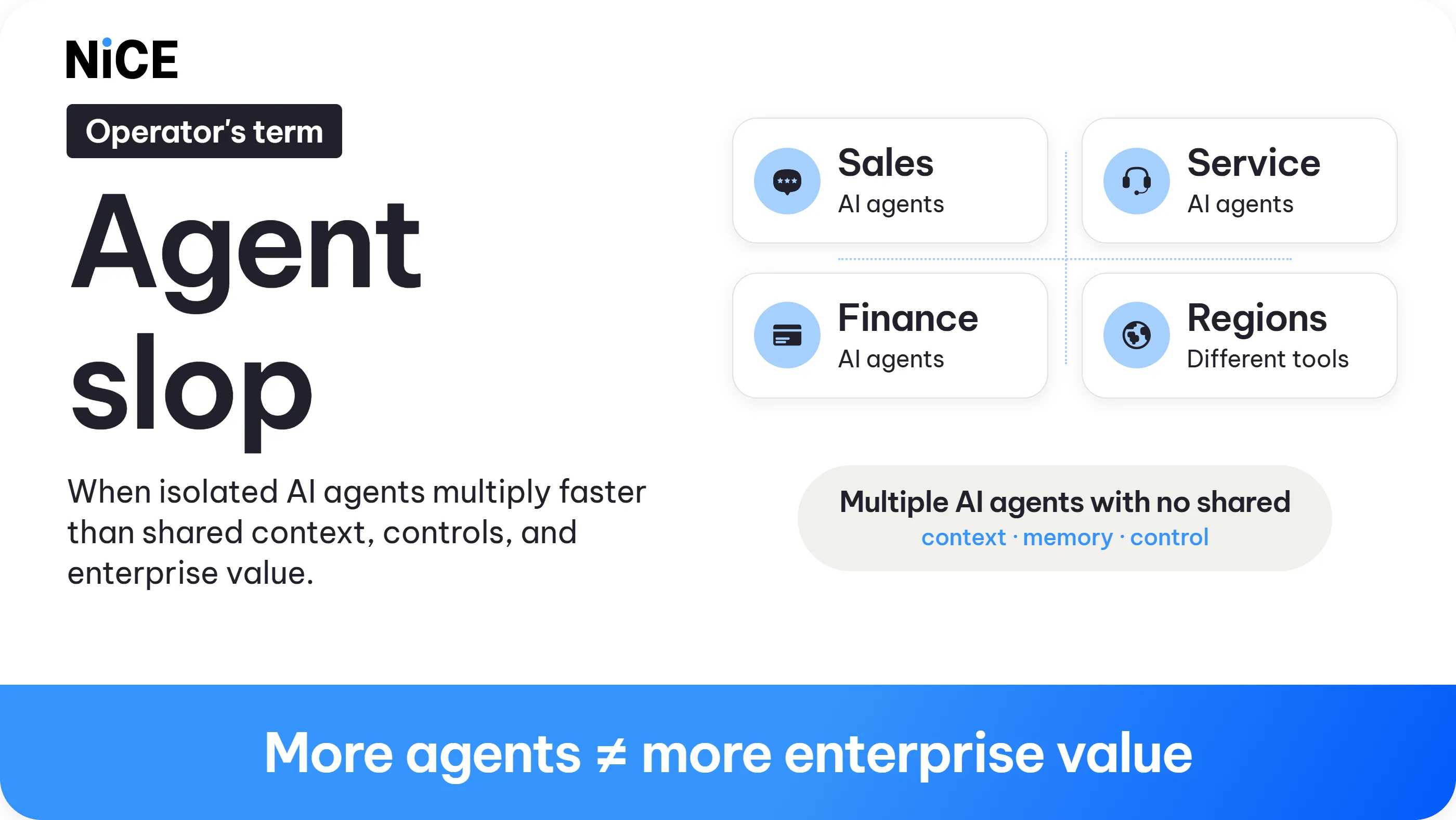
The rush left a second problem behind. Teams across the enterprise each built their own agents, and those agents sit in isolation. They don’t connect with each other.
We’ve all heard of AI slop. This is agent slop.
New fragmentation. New complexity. Value you can’t find. And security, governance, and privacy exposure on top.
I explored how to close that gap with Laurel Ruma in a recent MIT Technology Review Insights interview, Scale Agentic AI Pilots into Enterprise Systems. Here’s where I’ve landed.
Start with the P&L, not the pilot
Scale starts with two imperatives: the strategic one, where the business is trying to go, and the financial one, what it is trying to accomplish. Leaders have to decide up front whether value should land on the top line, the cost line, or both, and then hold every use case to that.
The economics are getting harder, too. We’ve gone from token maxing to token optimizing. An agent may reduce cost by removing human touchpoints, and then the cost of the tokens it consumes offsets the savings. That is an ongoing management discipline, not a one-time business case.
I run NiCE’s own AI transformation, and this is where we started. We built complete visibility across the entire organization into the new cost of tokens and AI, measured against the return we expect.
Some of our customers have pushed the discipline further. They told us they didn’t want to start with the easy use case. They wanted the difficult one, because if they could crack it, they would have solved the complex issues across the company and proven the technology could scale.
That is an executive’s pilot. It tests the enterprise, not just the agent.
I’ve run this equation before
Before NiCE, I led the customer experience program at Disney, where we had deployed multiple AI technologies. Our goal was exceptional experiences at the lowest possible cost to serve. People expect wonderful experiences when they interact with Disney. It was never either-or. It was a BIG AND.
The streaming business made the math unforgiving. On a product that costs $15 to $20 a month, one human interaction gets expensive fast.
The holy grail had two parts. First, bend the cost curve, so that as subscribers grow, service costs flatten out. Second, redeploy the human capacity you free up into relationships, personalization, and top-line growth.
Picture a customer contacting you about a show they’re watching. Say it’s Star Wars, and your agent knows a Star Wars-themed cruise sails in a few months. You resolve their issue and open a new revenue stream in the same conversation.
That is agentic AI on both sides of the P&L.
AI agents are part of the workforce
When we design teams or build an organization, we never think of one person as an island. We ask how that person or team fits into the overall org design and how work gets done.
AI agents need the same thinking. They have to work together as a collection of agents and in harmony with people. My personal belief is that seamless coexistence between humans and AI is what unlocks the true value for the enterprise.
That also means one standard. Humans make errors, and AI agents will make errors. Whatever standards you apply to risk, error rates, and productivity, apply them across the entire workforce, human and AI. This isn’t just another tool. It’s a change in how the workforce itself is designed.
And the people in that workforce have to come with you. AI has created real anxiety in organizations. Leaders need constant communication about what they’re doing and why, plus the upskilling that makes employees AI fluent and shows them what AI means for their own growth.
AI agents are only as good as what you feed them
AI will only be as good as three things you feed it.
Data available across the enterprise, in systems of record like CRM, workforce, and human capital management.
Knowledge, much of it unstructured and living in emails, presentations, PDFs, and people’s heads.
Context between the two, which is what lets an agent actually solve a problem or create value.
Every executive has seen this movie. Deploy a new IT system without changing the workflow or fixing the data, and you end up in a world of hurt. The system is only as good as the workflow it automates and the data it consumes. With AI agents, the stakes are higher.
That is why some organizations are hiring a chief knowledge officer. The top consulting firms have long treated knowledge as their lifeblood. Every enterprise now has to do the same, because knowledge and data architecture matter as much as the AI architecture.
The results show up when enterprises get this right. Lufthansa handles thousands of interactions a day with NiCE Cognigy. It gets real value, higher customer satisfaction, and lower cost, because we worked across the company’s entire value chain to make its data and knowledge available to the agents. At Toyota, 95% of the interactions it handles run through our agents, with a very high resolution rate.
95% of Toyota’s customer interactions handled by NiCE AI agents, with a very high resolution rate.
How we’re scaling AI inside NiCE
At NiCE, transforming our own operations at scale required infrastructure in two forms: technical and programmatic.
The first is programmatic. Our transformation office inventories use cases across sales, finance, and product and technology, and works with each functional owner on how much value they expect to deliver. It gives us a financial approach to where value gets created.
The second is technical. Our AI factory lets us build and deploy agents fast, and do it responsibly and safely.
Neither works alone. IT and the business stay tightly connected, and the wrapper around both is the question that matters most: What are we trying to accomplish as an organization?
Governance sits inside that same discipline. AI agents are conversational by nature, and there is always a risk of hallucination. When a workflow touches personally identifiable information, the agent should switch from conversation to a deterministic, predetermined workflow. My acceptable level of hallucination risk there is zero.
Beyond the technology, AI risk belongs where enterprise risk already lives. The risk function that manages the rest of the organization should manage AI risk too, thoughtfully and systematically.
So governance can’t be a dashboard someone reviews after the fact. It has to be designed from the start, into the solutions you choose and into how every AI agent runs: what it can know, what it can decide, and what it can do.
Autonomy scales only when oversight scales with it.
Pick the building blocks. Keep the full view.
None of this means boiling the ocean.
Start with 5, 10, or 15 major use cases across the organization, in sales, customer experience, and beyond. Then hold each one to five questions:
- What strategic and financial outcome will it change?
- Which workflow must be redesigned, not simply automated?
- What data, knowledge, and context will the agent need?
- What changes will my workforce need to make?
- What will this use case leave behind for the next one?
That last question is the difference between scaling activity and compounding value.
When every use case builds its own stack, its own memory, and its own controls, the next deployment starts from zero. When use cases share data, knowledge, context, and governance, every deployment strengthens the next. And because agents learn from their own interactions, every engagement makes the next one better.
That’s the bet we’re making at NiCE: value comes from the connections, not the components.
The payoff is growing. I’m a technology optimist. AI agents will help govern and coach other AI agents, alongside humans. Costs will come down. Proactive service, like a reminder that your car is due for service, is something we are doing today. Next come agents talking to agents: your personal agent contacting an enterprise’s agent to resolve a billing problem.
The enterprises ready for that future will be the ones that built connected, not isolated.
Have the vision. Have the full view. Then figure out which pieces to tackle, and use them as building blocks. They aren’t isolated. They build toward the bigger picture, strategically and financially.
Because in the end, there’s nothing artificial about the P&L you have to deliver.