


What Is Workforce Optimization (WFO)?
Last Updated September 22, 2026
Workforce optimization, or WFO, is the set of practices and technologies used to improve contact center staffing, quality, employee performance and operational outcomes. It brings workforce planning and performance improvement together so organizations can manage not only how many people are needed, but also how effectively service work is performed.
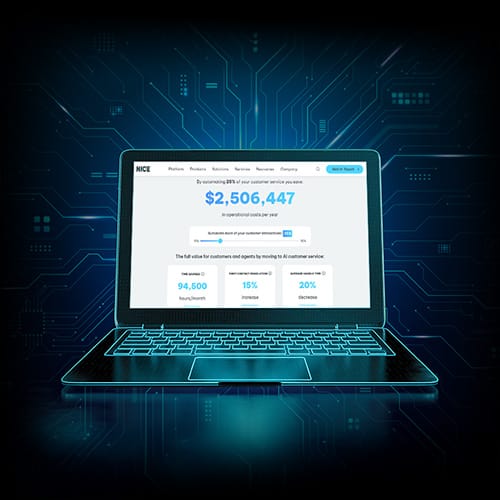
Discover the full value of AI in customer service
Understand the benefits and cost savings you can achieve by embracing AI, from automation to augmentation.
Core parts of workforce optimization
WFO vs. WFM
Workforce management focuses on forecasting, staffing, scheduling, adherence and intraday execution. Workforce optimization includes WFM but adds a broader layer of quality, performance, coaching and analytics.
Many organizations now use the term workforce engagement management for a broader approach that also emphasizes employee development, flexibility and experience. The naming varies, but the operational goal is similar: connect workforce decisions to service outcomes.
Why integrated WFO matters
When planning, quality and performance data live in separate systems, supervisors may see symptoms without the context needed to act. Integrated WFO can show whether a service problem comes from staffing, process design, skill gaps, knowledge or customer-demand changes.
That makes it easier to choose the right response: change the schedule, fix a workflow, coach a behavior or escalate a broader business issue.
Examples of workforce optimization
- Forecast and schedule the right skill mix for expected demand.
- Use interaction analytics to identify a recurring quality problem.
- Route coaching to agents who need help with a specific behavior.
- Measure whether coaching improves both quality and customer outcomes.
- Reforecast during the day when volume or handle time changes.
- Analyze process steps that increase effort for agents and customers.
AI in workforce optimization technology
AI can improve forecast modeling, classify interactions, evaluate quality criteria, summarize coaching opportunities and identify operational patterns. It can also recommend intraday staffing actions and automate routine administrative tasks.
Organizations should avoid turning workforce AI into opaque employee scoring. Important people decisions require transparent metrics, context and human review.
What to look for in a WFO solution
- Strong native WFM and quality capabilities.
- Interaction analytics across voice and digital channels.
- Unified performance and coaching workflows.
- Role-based views for planners, supervisors and agents.
- Explainable AI and configurable measures.
- Employee self-service and schedule flexibility.
- Secure integrations and trustworthy data lineage.
Related Glossary Topics
How NiCE is Redefining Customer Experience
NiCE offers the industry’s only unified AI platform for customer service automation. CXone revolutionizes how organizations automate customer service from start to finish—with channels, data, end-to-end workflows, and enterprise knowledge converging to improve customer experience at scale. With domain specific AI trained on the industry’s largest CX dataset, an open framework with endless integration possibilities, and a complete suite of advanced AI applications, CXone is one platform built for organizations of all sizes to deliver seamless customer service experiences, boost operational efficiency, and drive better outcomes.
Agentic Experience Automation
AI Agents for Sales and Marketing
AI Agents for Proactive Engagement
Engagement Orchestration
Workforce Empowerment
Contact us
If you would like to know more about our platform or just have additional questions about our products or services, please submit the contact form. For general questions or customer support please visit our Contact us page.