On this page
- AI workforce optimization
- What is AI workforce optimization?
- How AI workforce optimization works
- AI workforce optimization capabilities
- Agent engagement and experience
- Benefits of AI workforce optimization
- AI vs traditional workforce mgmt
- AI workforce optimization use cases
- AI workforce optimization best practices
- Choosing AI workforce solution
- When to implement AI WFO
- Future of AI workforce optimization
- Get started with AI WFO
- AI workforce optimization
- What is AI workforce optimization?
- How AI workforce optimization works
- AI workforce optimization capabilities
- Agent engagement and experience
- Benefits of AI workforce optimization
- AI vs traditional workforce mgmt
- AI workforce optimization use cases
- AI workforce optimization best practices
- Choosing AI workforce solution
- When to implement AI WFO
- Future of AI workforce optimization
- Get started with AI WFO
Smarter forecasting, scheduling, and performance management powered by AI
AI workforce optimization is transforming how call centers plan, manage, and support their teams. Call center workforce optimization and center workforce optimization are strategic approaches that unify technology, processes, and people management to drive operational efficiency, agent performance, and customer satisfaction. By using artificial intelligence to forecast demand, optimize schedules, and improve performance, organizations can operate more efficiently while delivering better customer experiences.Workforce optimization (WFO) is the process of aligning people, processes, and technology to improve performance, lower costs, and elevate the customer experience. WFO integrates workforce management, quality management, performance analytics, and coaching into one unified system that drives smarter operations. Workforce optimization connects the dots between people, process, and technology, creating a more productive and compliant contact center. Contact center workforce and contact center workforce optimization focus on managing and optimizing staff within contact centers by leveraging holistic management approaches and advanced AI tools.Instead of relying on static models and manual adjustments, AI-driven workforce optimization enables real-time, data-driven decision-making across every aspect of workforce management.What is AI workforce optimization in a call center?
AI workforce optimization refers to the use of artificial intelligence to manage staffing, scheduling, performance, and quality across call center operations, similar to comprehensive AI workforce management for contact centers.Key components of AI workforce optimization include forecasting, scheduling, quality management, and performance management. Tracking key metrics is essential for measuring the success of workforce optimization initiatives. Workforce optimization integrates these components into a unified system, enabling data-driven decision-making and continuous improvement.Core capabilities include:Demand forecasting using machine learning
Automated scheduling based on real-time conditions
Performance tracking and optimization
Quality management through AI-driven analysis
Real-time adjustments to staffing and resources
Automating manual processes such as scheduling and approvals to improve efficiency
How AI workforce optimization works
AI workforce optimization systems analyze large volumes of historical and real-time data to make accurate predictions and recommendations.The process begins with forecasting. AI models analyze past interaction volumes, seasonal trends, and external factors to predict future demand with greater accuracy than traditional methods. Workforce planners use AI-driven insights to optimize staffing and resource allocation, ensuring the right number of agents are available at the right times.Based on these forecasts, the system generates optimized schedules that align staffing levels with expected demand. Modern systems also take employee preferences into account, improving both employee satisfaction and operational efficiency, while considering agent availability, skillsets, and labor constraints.During operations, AI continuously monitors performance and conditions, leveraging real time insights to support immediate adjustments. If demand changes, the system can recommend or automatically implement adjustments such as reassigning resources or modifying schedules.AI also evaluates agent performance and interaction quality, transforming quality assurance from a manual process into comprehensive, real-time evaluations by analyzing every interaction, especially when integrated into broader AI customer experience platforms that unify analytics, orchestration, and automation. Performance management tracks how effectively agents and teams meet their goals, using performance data to drive continuous improvement and support targeted coaching. Performance management systems provide dashboards that visualize progress on key performance indicators for both supervisors and agents. Interaction analytics and text analytics are used to extract insights from customer conversations and written interactions, identifying trends, sentiment, and compliance risks, making AI-powered customer interaction analytics a critical component of modern workforce optimization. Additionally, AI-driven insights can improve compliance monitoring by automatically flagging interactions that may pose compliance risks.
Two Leaders.
One platform.
At NiCE, we’re setting the standard for AI-first customer experience.
Get the reports
Key capabilities of AI workforce optimization
Modern AI workforce optimization solutions provide a range of capabilities that improve planning, execution, and performance. These capabilities help organizations build an optimized workforce that delivers higher productivity and service quality. By leveraging AI, workforce optimization enhances agent effectiveness and agent efficiency through automated quality evaluation and targeted coaching. Quality assurance teams play a crucial role in monitoring and coaching agents, supported by AI-powered tools that streamline performance management.Quality management ensures that every customer interaction meets your brand's standards, and AI-powered quality management for contact centers can automate scoring, coaching, and feedback to achieve this at scale. It uses AI-driven call recording and analytics to automatically score interactions and highlight trends, eliminating the need for manual quality monitoring. Quality monitoring is essential for maintaining compliance and service standards, as AI-powered quality management helps identify and mitigate compliance risks by flagging potential issues in real time. Quality management encompasses coaching activities and uses automated sentiment analysis to assess factors like compliance adherence and communication skills. By integrating quality management and analytics into the workflow, organizations can enforce compliance standards automatically. WFO tools can automate evaluations, score interactions, and assign coaching based on performance data, driving continuous improvement across the contact center.AI-driven forecasting
Machine learning models predict interaction volumes and workload with high accuracy, enabling better planning. These models provide deep insights into demand patterns, helping organizations monitor agent performance and ensure compliance. AI can predict future contact volumes with up to 95% accuracy by analyzing vast amounts of data, especially when supported by AI-based workforce management platforms built for complex, digital-first environments.Automated scheduling
AI creates optimized schedules that balance business needs, agent availability, and preferences. Self-service scheduling options empower agents to manage their own shifts, increasing flexibility and satisfaction. Additionally, AI automates shift assignments and adjusts schedules in real time, improving efficiency and ensuring agent skills are matched with expected demand, capabilities that are central to advanced contact center workforce management scheduling solutions.Real-time workforce management
The system monitors conditions and adjusts staffing dynamically to maintain service levels, similar to how enterprise workforce management solutions like IEX WFM use omnichannel forecasting and precise scheduling to keep operations on track.Performance management
AI tracks agent performance, identifies trends, and provides insights to improve productivity.Quality management
Interactions are analyzed automatically to assess quality, compliance, and customer experience.Capacity planning
AI helps organizations plan for future growth by modeling different scenarios and resource needs.Agent engagement and experience in AI-optimized call centers
Agent engagement and experience are at the heart of successful AI-optimized contact centers. By leveraging AI-powered workforce management solutions from established AI customer experience platform providers, organizations can significantly enhance agent performance and job satisfaction. Automated scheduling tools ensure agents have balanced workloads and greater flexibility, allowing them to focus on delivering exceptional customer experiences rather than being bogged down by repetitive or low-value tasks. Real-time coaching and feedback, powered by AI analytics, help agents identify strengths and areas for improvement, boosting agent confidence and supporting continuous professional growth, especially when combined with structured contact center training and education programs.These advancements not only improve agent engagement but also reduce turnover rates, leading to lower operational costs and a more stable workforce. When agents feel supported and empowered, their productivity rises, directly contributing to improved customer satisfaction and higher service quality, which aligns with best practices for contact center customer service representatives who manage frontline interactions across channels. Ultimately, AI-driven workforce optimization creates a positive feedback loop—engaged agents deliver better service, which in turn drives customer loyalty and business success.Benefits of AI workforce optimization
Organizations adopting AI workforce optimization see improvements across efficiency, cost, and employee experience.More accurate forecasting and staffing decisions
Improved service levels and reduced wait times
Lower labor costs through optimized scheduling
Increased agent productivity and utilization
Better employee experience with more balanced workloads
Enhanced quality and consistency across interactions
Higher employee engagement and retention through clear expectations, recognition, and support
Drives continuous improvement in agent performance and service quality with AI-enabled analytics and feedback loops
AI workforce optimization vs traditional workforce management
Traditional workforce management relies on historical data, manual adjustments, and static scheduling models. While effective to a degree, it struggles to adapt to real-time changes and complex environments.AI workforce optimization introduces predictive intelligence and automation. It can adjust to changing conditions, identify patterns, and continuously improve outcomes based on data, particularly when delivered through scalable Contact Center as a Service (CCaaS) platforms.This shift allows organizations to move from reactive planning to proactive and adaptive workforce management.Use cases for AI workforce optimization in call centers
AI workforce optimization supports a wide range of operational and strategic use cases.Forecasting call and interaction volumes with greater accuracy
Creating optimized schedules that align with demand
Adjusting staffing in real time to meet service levels
Monitoring and improving agent performance
Automating quality assurance and compliance checks
Planning workforce capacity for growth and seasonal changes
Enhancing back office operations by automating quality management and improving efficiency, compliance, and performance in back-office tasks
Managing and optimizing workforce engagement across digital channels such as SMS, email, web chat, and social media to capture and analyze interaction data for better customer engagement
Leveraging interaction analytics to extract actionable intelligence from customer conversations, including speech and text analytics, sentiment analysis, and pattern recognition
Best practices for implementing AI workforce optimization
To unlock the full potential of AI workforce optimization, contact centers should follow a set of best practices designed to maximize results and ensure a smooth transition. Start by defining clear objectives, such as enhancing customer satisfaction, optimizing agent utilization, or reducing operational costs. Select workforce optimization tools that align with these goals and integrate seamlessly with your existing contact center infrastructure.Comprehensive training for both agents and contact center managers is essential to ensure everyone can effectively use new AI-powered features and align with a broader vision for seamless, intelligent customer and business experiences. Establish a robust system for monitoring key performance indicators (KPIs), such as agent performance, customer satisfaction, and schedule adherence, to track progress and identify opportunities for continuous improvement. Encourage open communication and feedback from agents to foster engagement and ensure the workforce optimization process addresses real-world challenges.By prioritizing transparency, ongoing evaluation, and a culture of continuous improvement, organizations can drive sustained success with AI workforce optimization—resulting in higher agent engagement, improved service quality, and measurable gains in operational efficiency.
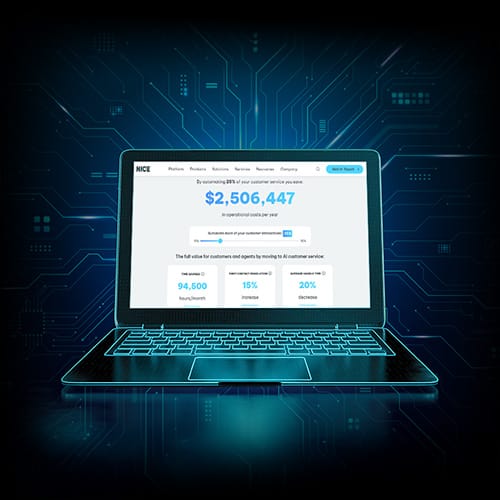
Discover the full value of AI in CX
Understand the benefits and cost savings you can achieve by embracing AI, from automation to augmentation.Calculate your savingsHow to choose an AI workforce optimization solution
Selecting the right solution requires evaluating capabilities that align with operational goals. Effective workforce management (WFM) balances customer service targets, controls labor costs, and respects employee preferences. When evaluating options for AI workforce optimization for call centers, consider how well each solution accommodates employee preferences in scheduling and workforce engagement.Forecasting accuracy
The system should provide highly accurate predictions based on multiple data sources.Scheduling flexibility
Look for solutions that can create and adjust schedules dynamically.Real-time adaptability
The platform should respond quickly to changing conditions.Integration with existing systems
Seamless connectivity with call center platforms and HR systems is essential, including tight integration with call center CRM (customer relationship management) systems that centralize customer data and interaction history.Performance and quality insights
The solution should provide actionable insights to improve agent performance.Scalability
The platform must support large teams and complex operations.When to implement AI workforce optimization
Organizations typically adopt AI workforce optimization when traditional methods no longer meet operational needs.Inaccurate forecasting leading to overstaffing or understaffing
Difficulty maintaining service levels during peak periods
High labor costs and inefficient scheduling
Limited visibility into agent performance and quality
Challenges managing large or distributed teams
Increasing complexity in customer interactions
The future of AI workforce optimization in call centers
The future of AI workforce optimization in call centers is poised to deliver even greater value as technology continues to advance. Next-generation solutions will leverage predictive analytics, real-time data, and intelligent virtual assistants to anticipate customer demand and optimize workforce deployment across multiple channels. As AI-powered chatbots and omnichannel orchestration become standard, contact centers will be able to deliver highly personalized and seamless customer experiences that exceed evolving customer expectations.With deeper insights into agent performance and customer sentiment, contact center managers will be empowered to make data-driven decisions that improve service quality and operational efficiency. The adoption of advanced workforce optimization tools will also enable more flexible scheduling, better work-life balance for agents, and reduced operational costs. As organizations embrace these innovations, they will be well-positioned to deliver superior customer experiences, drive customer loyalty, and maintain a competitive edge in the rapidly evolving contact center industry.Get started with AI workforce optimization for call centers
AI workforce optimization is a critical component of modern call center operations. It enables organizations to plan more effectively, adapt in real time, and continuously improve performance.By adopting AI-driven workforce optimization, enterprises can create more efficient, responsive, and employee-friendly operations while delivering better customer experiences.Also related to Call Center AI:
Frequently asked questions about AI workforce optimization