

AI Call Routing
On this page
How does AI routing improve on traditional skills-based routing — and what changes for customers, agents, and supervisors when predictive models match every caller to the best-fit resource based on intent, sentiment, history, and real-time agent attributes?
Intelligent routing that connects every customer to the right resource, instantly
AI call routing transforms how contact centers manage incoming interactions. Instead of relying on static rules, queues, or basic IVR menus, AI uses real-time data, intent, and predictive models to route each interaction to the best possible outcome. AI powered call routing and automated call routing represent key advancements over traditional systems, enabling intelligent, dynamic distribution of calls for superior customer experiences.
The result is faster resolutions, fewer transfers, improved customer satisfaction, and more efficient use of agent resources. These AI-driven systems deliver efficient call routing and significantly enhance operational efficiency, optimizing both customer outcomes and internal workflows.
What is AI call routing?
AI call routing is the use of artificial intelligence to automatically direct customer interactions based on intent, context, behavior, and predicted outcomes. Advanced call routing systems leverage caller data and customer data to make more accurate, data-driven routing decisions that enhance efficiency and customer satisfaction.
It replaces traditional routing methods with intelligent decision-making that evaluates multiple data points in real time, including:
Customer intent and inquiry type
Interaction history and past behavior
Caller data and customer data analysis
Sentiment and urgency
Agent skills, availability, and performance
Likelihood of resolution
By analyzing these factors simultaneously, AI routing systems ensure that each interaction is handled by the most appropriate resource, whether that is an AI agent, a human agent, or a specific team. Analyzing customer data enables more personalized and effective routing decisions, especially when paired with AI-powered voice bots that can handle routine or conversational interactions autonomously.
How AI call routing works
AI call routing operates as a real-time decision engine within the call center.
When a customer initiates an interaction, AI analyzes the input using natural language understanding and contextual data. Leveraging natural language processing, AI enhances interactive voice response systems to better interpret caller intent and improve call routing, and visual design tools like CXone Studio for routing flows make it easier to orchestrate these complex journeys across channels.
It determines the purpose of the call, the customer’s needs, and the optimal resolution path. AI-powered interactive voice response and call handling processes are improved by automating data collection, streamlining workflows, and enabling more efficient call management.
If the interaction can be handled automatically, the system can route calls and direct incoming calls to an AI agent for self-service. If human support is required, AI selects the best available agent based on skillset, experience, and probability of success.
Throughout the process, the system continuously evaluates conditions such as queue length, agent availability, and interaction complexity to make dynamic routing decisions. AI optimizes call distribution and call handling in real time, ensuring efficient allocation of resources.
Over time, machine learning models refine routing strategies based on historical performance, improving accuracy and outcomes with every interaction. AI-driven routing calls and direct calls significantly enhance overall call handling efficiency.
Types of AI call routing
AI-driven routing can take multiple forms depending on the level of intelligence and optimization required. Advanced solutions include intelligent call routing, intelligent call routing systems, and intelligent contact routing, which leverage AI to optimize call distribution, personalize customer interactions, and enhance cross-channel communication strategies.
Intent-based routing
Routes interactions based on the customer’s intent, ensuring they reach the most relevant resource immediately. By analyzing caller intent—such as speech or keywords—AI call routing enables more accurate routing, matching each caller to the right agent or department for their specific needs.
Predictive routing
Uses historical data, machine learning, and predictive analytics to predict which agent is most likely to achieve a successful outcome.
Skill-based routing with AI enhancement
Combines traditional skill-based routing with AI insights to improve matching accuracy by evaluating agent expertise to ensure callers are connected with the most suitable agent.
Sentiment-based routing
Analyzes customer tone and emotion to prioritize or route interactions appropriately.
Omnichannel routing
Applies AI routing across voice, chat, messaging, and digital channels to ensure consistency. Seamless integration enables unified routing across platforms, especially within modern Contact Center as a Service (CCaaS) solutions, allowing AI call routing to work smoothly with existing communication systems for enhanced operational efficiency and customer experience.
Key capabilities of AI call routing
Modern AI routing systems provide advanced capabilities that go beyond traditional distribution methods. Call routing systems leverage call routing rules, routing rules, and predefined routing rules to optimize call distribution—directing callers efficiently based on caller data, intent, and agent capabilities for improved customer experience and operational efficiency.
Real-time intent detection
AI understands the purpose of each interaction as it happens, enabling accurate routing decisions.
Dynamic decisioning
Routing decisions adapt in real time based on changing conditions such as agent availability and queue status.
Continuous optimization
Machine learning models improve routing accuracy over time by learning from outcomes and performance data.
Integration with call center systems
AI routing connects with IVR, CRM, workforce management, and other platforms to access relevant data, and deep Salesforce CRM integration for contact centers helps surface that data in real time at the agent desktop.
Seamless escalation and transfers
If needed, interactions can be rerouted without losing context, reducing customer frustration.
Omnichannel consistency
Routing logic is applied across all channels, ensuring a unified experience.
Benefits of AI call routing
Organizations implementing AI call routing see immediate and long-term improvements across operations and customer experience.
Faster connection to the right resource
Reduced call transfers and escalations
Improved first contact resolution rates
Improved first call resolution rates, increasing the likelihood of resolving customer issues on the first call
Reduced call handling time and fewer misrouted calls, which boosts customer satisfaction
Shorter wait times and lower call queue volumes
Increased agent efficiency and utilization
Helps meet key performance indicators and improves contact center performance and agent performance
Higher customer satisfaction through more accurate routing
These benefits contribute to both cost reduction and improved service quality, driving better first call resolution and overall customer satisfaction.
AI call routing vs traditional call routing
Traditional call routing relies on predefined rules, menu selections, and basic skill matching. While effective for simple scenarios, it lacks the flexibility and intelligence needed to handle complex or dynamic interactions. Automated call routing and direct routing offer more advanced alternatives, efficiently connecting callers to the most suitable agents or departments based on analytics and customer needs.
AI call routing introduces real-time analysis and predictive decision-making. It can analyze call patterns to optimize routing decisions, adapt to changing conditions, understand customer needs more accurately, and continuously improve performance.
This shift allows organizations to move from static routing models to intelligent, outcome-driven routing strategies.
Use cases for AI call routing
AI call routing delivers value across a wide range of contact center scenarios by intelligently managing inbound calls and incoming calls to improve efficiency.
Routing customer service inquiries to the most qualified agent
Matching callers to the most appropriate agent using AI-driven insights, analyzing caller history, intent, and emotional state
Routing customer calls and incoming calls to connect callers with the right resource, leveraging data analysis to improve the handling of customer calls
Directing high-value customers to specialized teams
Prioritizing urgent or high-risk interactions
Routing technical support requests based on complexity
Managing overflow and peak volumes efficiently
Connecting customers to AI agents for self-service when appropriate
These use cases highlight how AI routing improves both efficiency and customer outcomes, especially when paired with advanced automatic call distribution (ACD) systems that manage large volumes of inbound calls.
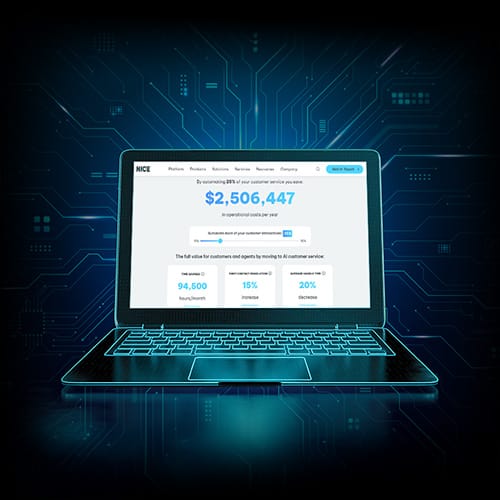
Discover the full value of AI in CX
Understand the benefits and cost savings you can achieve by embracing AI, from automation to augmentation.
How to choose an AI call routing solution
Selecting the right solution requires evaluating key capabilities that impact performance and scalability. It's essential to compare different call routing systems for their advanced features, such as intelligent algorithms, integration with CRM and data sources, and support for skills-based, omnichannel, and predictive routing, to ensure the best fit for your organization's needs.
Accuracy of intent detection
The system should reliably understand customer needs across a wide range of inputs.
Predictive capabilities
Look for solutions that use machine learning to optimize routing decisions over time.
Integration with existing systems
Seamless connectivity with CRM, IVR, and workforce management platforms is essential.
Scalability
The solution must support high interaction volumes across multiple channels.
Real-time adaptability
Routing decisions should adjust dynamically based on current conditions, while AI workforce management for contact centers ensures staffing and schedules stay aligned with those real-time demand shifts.
Security and compliance
Enterprise-grade data protection and regulatory support are critical, particularly when combined with AI call recording software that securely captures and analyzes interactions across channels.
When to implement AI call routing
Organizations typically adopt AI routing when traditional methods no longer meet operational demands. Many organizations seek AI solutions to modernize outdated call handling processes, establishing systematic procedures and clear protocols for routing, escalation, and workflow management on top of an AI contact center platform architecture that can scale with demand.
High call volumes leading to long wait times
Frequent call transfers and low resolution rates
Inefficient use of agent resources
Difficulty matching customers with the right agent
Inconsistent customer experiences
Limited visibility into routing performance
AI call routing addresses these challenges by introducing intelligence and optimization into the routing process.
Get started with AI call routing
AI call routing is a critical component of modern call center strategy. It ensures that every interaction is handled efficiently, accurately, and with the best possible outcome, especially when implemented as part of a comprehensive AI customer service automation solution that spans channels and use cases.
By adopting AI-driven routing, organizations can reduce friction, improve performance, and deliver faster, more personalized customer experiences at scale.
Also related to Call Center AI:
Frequently asked questions about conversational AI call centers

Ready to experience the power of one platform?
Let us show you how NiCE can unify, automate and elevate your entire customer experience - with AI at the core and outcomes at the forefront.