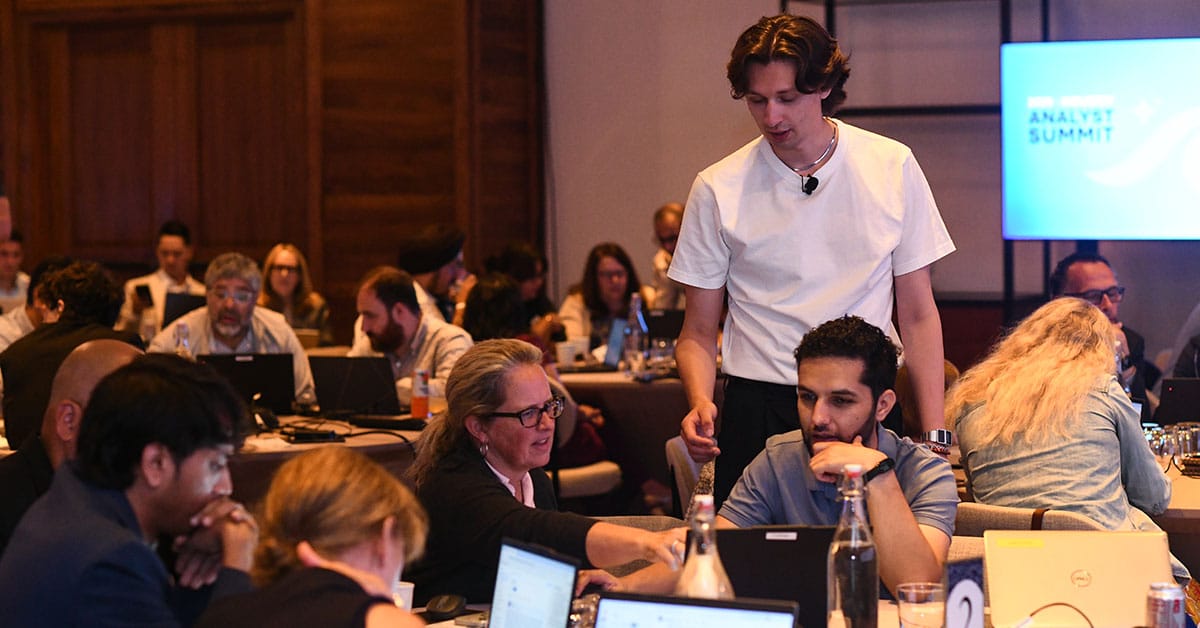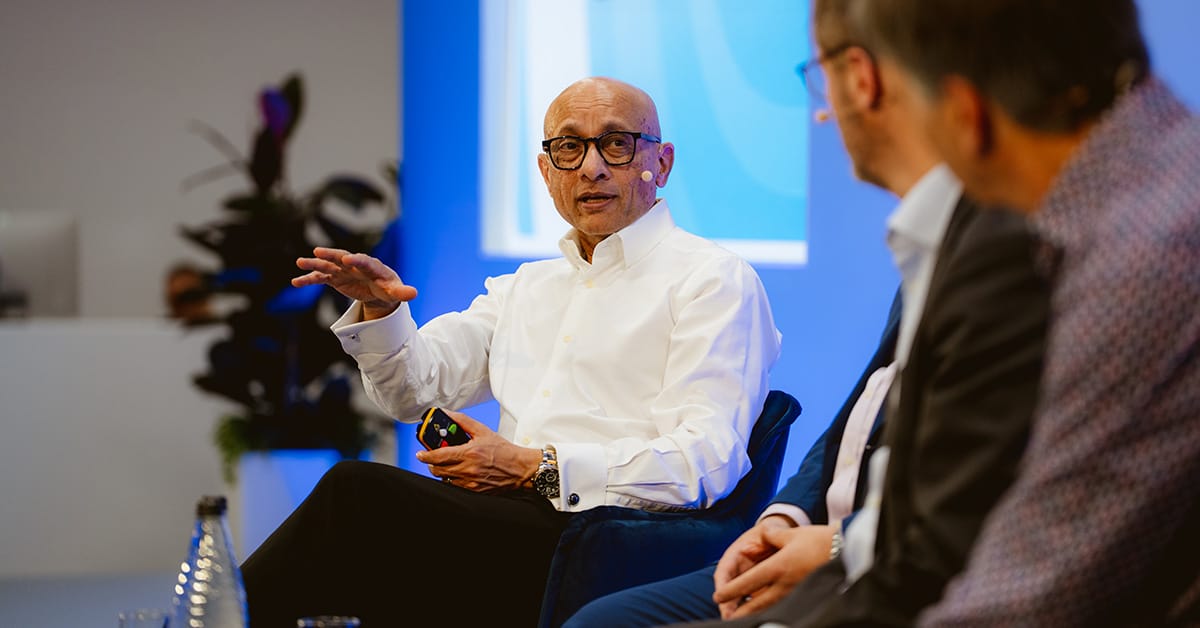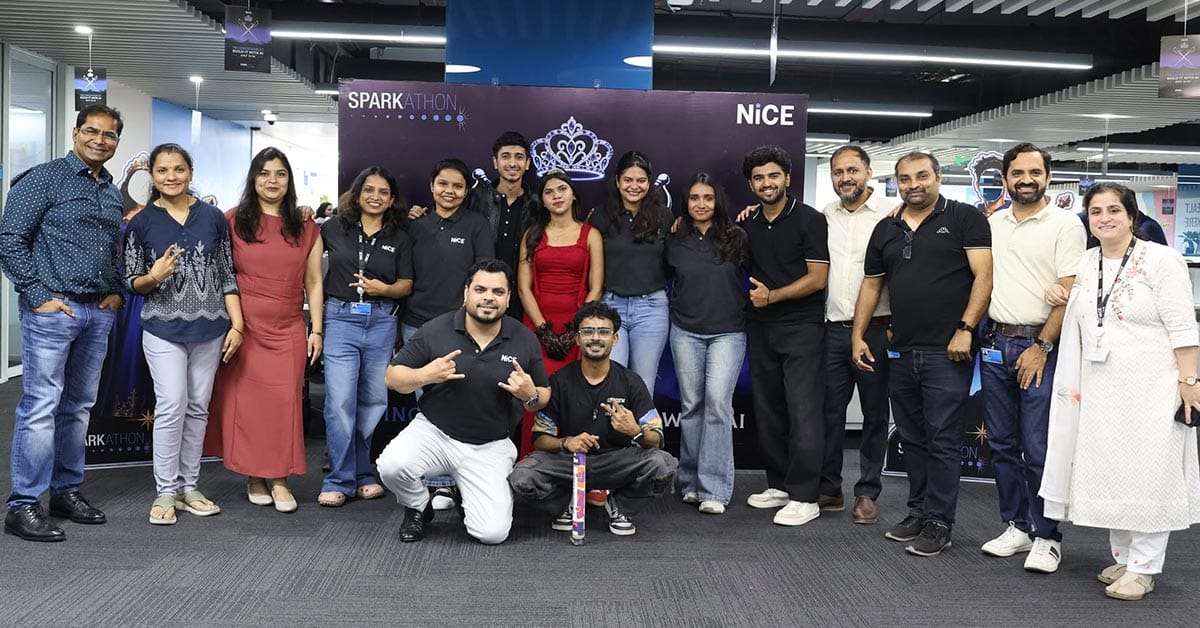

After 12 years of leading NiCE Sparkathon, I thought I knew what to expect: a lot of ideas, a lot of energy, and a lot of code written in a very short time.
But this year felt different.
Over 48 hours, more than 2,300 employees across 21 sites submitted about 800 ideas and turned more than 700 of them into working prototypes. Nearly nine in ten ideas reached the point where teams could run them, demonstrate them, and begin to see where they might lead.
We did not gain more hours, and the pods actually became smaller. What changed was what they were able to build in that time.
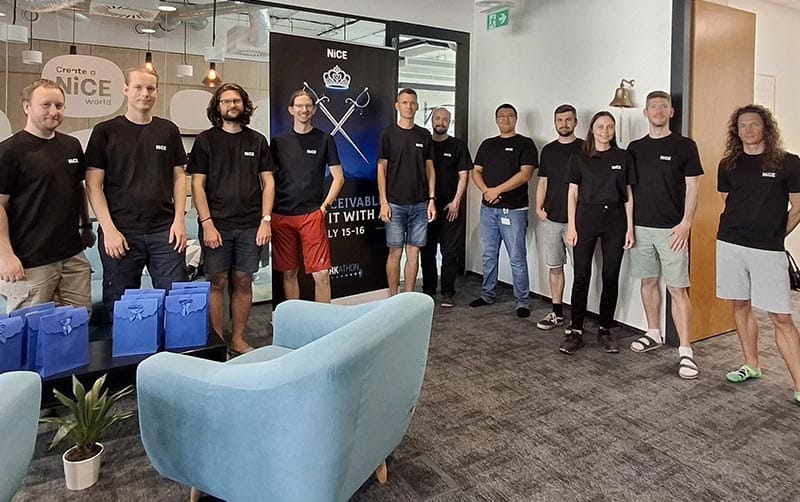
Creating the conditions for that kind of work also requires meaningful organizational investment. This year, Sparkathon was brought to life as a global experience inspired by The Princess Bride, with a teaser, a shared creative language, and an invitation for thousands of engineers across 21 sites to embark on the same AI-building journey. The experience also included thoughtfully planned meals and hospitality throughout the 48 hours, because even the most ambitious technology idea is difficult to build on an empty stomach. Together, these details created the space for people to step outside their daily routines, think bigger, and turn ideas that might once have seemed almost impossible into something they could see, run, and test.
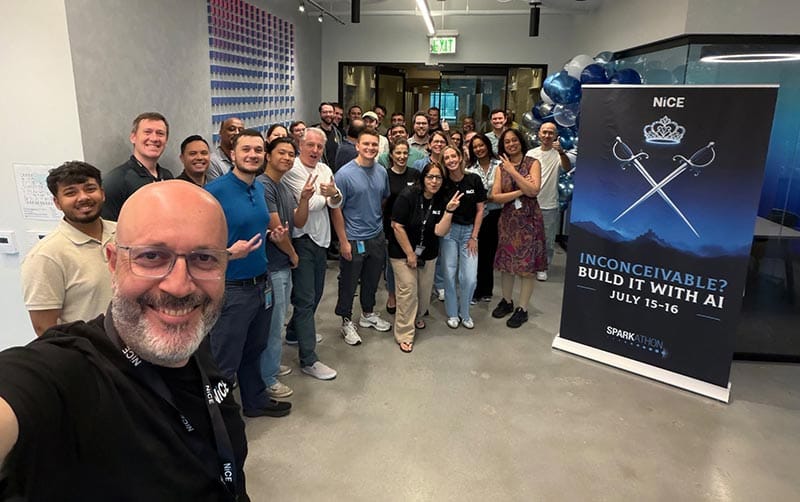
From annual hackathon to global innovation engine
Sparkathon is NiCE's annual company-wide hackathon, but over 12 years it has become much more than an internal innovation event. It gives teams the space to challenge familiar assumptions, solve problems they encounter every day, and explore ideas that may influence how we work and what we deliver to customers.
This year's entries covered internal productivity, process automation, quality, engineering modernization, employee experience, operational resilience, and product innovation. Together, they offered a broad view of where AI-enabled development is heading.
Some teams focused on systems that could identify and resolve service reliability issues before they affected customers. Others explored how workforce data could be used to detect early signs of burnout and improve scheduling decisions. Engineering teams built agents that could modernize legacy test environments, automate repetitive implementation work, and reduce the time required to move from an idea to a functioning workflow.
The value was not in any single project. It was in the range and depth of what teams were able to attempt: autonomous agents, predictive tools, self-healing systems, modernized engineering processes, and new customer-facing experiences. That breadth made the achievement tangible without turning the event into a showcase of isolated demos.

Three signals from Sparkathon 2026
1. Innovation scaled in every direction
Participation, locations, ideas submitted, and prototypes completed all reached a 12-year high. When every major measure rises together, it signals more than a successful event. It shows that experimentation has become part of how teams across NiCE think and work.
2. Pods delivered 6-10x more year over year
A typical Sparkathon pod once included around six people. This year, it averaged fewer than three. Despite that shift, these smaller pods delivered 6-10x more year over year. AI coding agents allowed smaller groups to take on work that previously required a larger roster, without narrowing the ambition or depth of what they attempted.
3. Working software replaced the pitch deck
In earlier Sparkathons, a strong idea might be represented by slides, a screen recording, or a partially built workflow. This year, most teams demonstrated working, end-to-end prototypes. The distance between an idea on Wednesday and functioning software by Thursday became significantly shorter.
AI changed the unit of innovation
AI coding agents were a major reason for that shift. Tools such as Claude Code handled work that previously required additional engineering capacity, from creating the foundations of an application to generating tests and accelerating implementation.
But speed is only part of the story. The more important change is that AI expanded the ambition of each team. A group of two or three people could attempt an idea that might once have required a much larger team, more specialized skills, and considerably more time.
That changes the unit of innovation. Progress is no longer determined only by how many people can be assigned to an idea. It increasingly depends on how clearly a team can define a problem, direct AI tools, validate the result, and apply human judgment where it matters most.
Not a one-off experiment, but a new way to build
For NiCE, the significance goes beyond engineering productivity. We operate in a market where AI is reshaping how organizations engage with customers, support employees, automate decisions, and design the underlying systems that make those experiences possible.
AI is already embedded in the daily development work at NiCE, enabling teams to build, test, and improve at a pace and scale that were not previously possible. Sparkathon was not a first experiment with that way of working. It was a concentrated, highly visible demonstration of it: in 48 hours, we could see just how much AI already influences the way problems are framed, ideas are tested, and people across disciplines contribute to building new solutions.
That matters because the companies that lead in the AI era will not be those that adopt the largest number of tools. They will be the ones that combine deep domain expertise, trusted technology, customer context, and the ability to experiment at speed. NiCE already brings decades of experience in customer experience, workforce engagement, analytics, automation, and enterprise-grade reliability. AI gives us a new way to activate that expertise across more ideas, more teams, and shorter development cycles.
The opportunity is to turn AI from a separate initiative into an everyday operating model for innovation, while maintaining the standards our customers expect around security, reliability, governance, and measurable business value. Sparkathon offered a powerful glimpse of what that model can look like in practice.
What happens after the 48 hours
A hackathon prototype is not a finished product, and it should not be treated as one. It still requires validation, product discipline, security, reliability, and a clear understanding of the customer or business need it serves.
Our product and engineering teams are now reviewing this year's submissions and identifying the ideas with the strongest potential to move forward. The winners will be announced separately. The broader achievement is already clear: Sparkathon 2026 showed how quickly a well-defined idea can become something tangible when human creativity and AI-enabled development work together.
After 12 years, Sparkathon continues to surprise me. It has evolved from its early multi-site editions into a global innovation platform operating at unprecedented scale. More importantly, it has become a powerful reminder that when people are given the freedom to experiment and the right tools to build, 48 hours can be enough to reveal what comes next.