

Virtual Agent Containment Rate: The Metric, Its Traps, and Its Honest Use

- The Quadrant: Contained Is Not Resolved
- Making the Number Honest: Four Verifications
- The Traps: How Containment Corrupts
- The Family: Five Numbers That Read Together
- The Economics: Pricing Containment Correctly
- Using Containment Well: The Operating Rhythm
- Conclusion
- Continue Exploring the AI Virtual Agent Platform
Containment rate is the most quoted number in the virtual agent world and the easiest to corrupt. Defined simply — the share of interactions the virtual agent handles without escalating to a human — it promises exactly what executives want to know: how much of the work does the AI actually carry? The trouble is that “didn't reach a human” has two very different causes: the customer's task was completed, or the customer gave up. A naive containment number counts both as victory, which is how operations end up celebrating a metric their customers experience as a wall. This page is the honest user's guide: what containment measures, the quadrant that separates resolution from disappearance, the four verifications before a contained interaction counts, and the metric family that keeps one number from running the whole program. It goes deep on one metric by design — the broader KPI catalog for agentic CX has its definitional owner, the estate-wide measurement practice its own discipline — and it carries this program's oldest editorial line to its metric-level conclusion: resolution is the product; deflection is just its shadow.
The Quadrant: Contained Is Not Resolved
Containment vs. Resolution: The Quadrant That Keeps the Metric Honest
A call that never reached a human is not automatically a call that went well
Honest containment = contained AND verified-resolved AND no repeat contact within the window
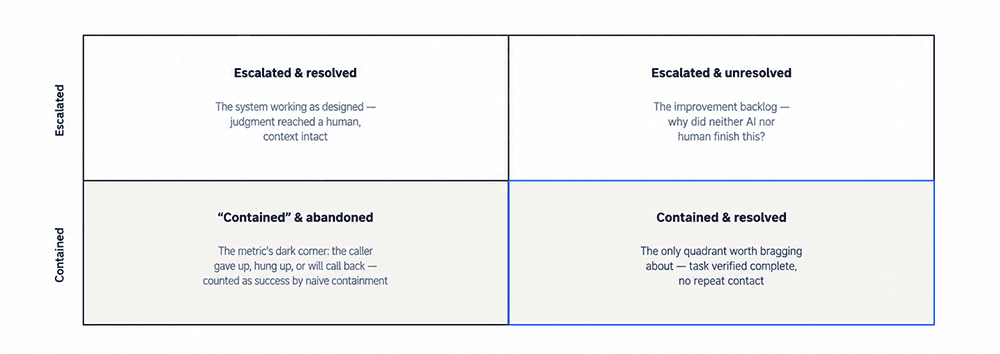
Figure 1. The containment-resolution quadrant. NiCE measurement framework.
Plot every virtual agent interaction on two axes — did it stay with the AI, and did the customer's task actually complete — and the four quadrants tell the whole story. Contained and resolved is the only cell worth bragging about: the task verified done, no repeat contact — the number that genuinely represents work the AI finished. Contained and abandoned is the metric's dark corner: the caller who gave up mid-flow, rage-quit the loop, or hung up to call again tomorrow — counted as success by naive containment, experienced as failure by the customer, and quietly inflating dashboards everywhere. Escalated and resolved is not a failure at all: it's the collaboration design working — judgment reaching a human with context intact — and an operation that punishes this cell teaches its virtual agent to cling to conversations it should release, per the escalation-quality principle the handoff owner established. Escalated and unresolved is the true improvement backlog: the conversations neither side finished, where root-cause work belongs first. The quadrant's lesson compresses to one sentence that should hang over every virtual agent dashboard: *containment is a location, resolution is an outcome, and only one of them is the point.*
Making the Number Honest: Four Verifications
Before a contained interaction counts, four checks separate resolution from disappearance
- Task verified complete
The thing the customer came for demonstrably happened — the booking exists, the payment posted, the change took effect. - No silent abandonment
Mid-conversation drop-offs and rage-quits excluded from the win column — counted, clustered, and studied instead. - No repeat contact
The same customer, same issue window checked across all channels — a callback tomorrow un-counts today’s containment. - Deliberate escalations honored
Intents assigned to humans don’t damage the score — containment is measured against the automatable scope, not against everything.
The same rule every measurement page in this library applies: segmented by intent, language, and hour — never one blended number.
The four verifications. NiCE verification framework.
Task verified complete. The strongest containment evidence is a system-of-record fact, not a conversational vibe: the booking exists, the payment posted, the address changed — completion checked where the work actually lives, which is only possible when the virtual agent executes rather than advises, and is precisely why answer-only bots report beautiful containment they cannot verify. No silent abandonment. Drop-offs, rage-quits, and dead-end exits leave the win column and enter the study queue — clustered weekly as the optimization loop's richest input, because abandonment patterns are customers voting with their thumbs. No repeat contact. The same customer, same issue, within a defined window, checked *across channels* — the chat “contained” at noon that becomes a call at four was never contained, and only a cross-channel context spine can even see that. Deliberate escalations honored. Intents the collaboration map assigns to humans belong outside the denominator: containment is measured against the *automatable scope*, so the metric can't punish the operation for its own good judgment — and so nobody is ever incentivized to automate the vulnerable-moment conversations that were excluded on purpose. Then the standing rule of every measurement page in this program: segment by intent, language, and hour band, because a blended containment number is where a failing intent hides inside a thriving average.
The Traps: How Containment Corrupts
- The trap-the-caller incentive. Teams bonused on raw containment learn to bury the human option, add exit friction, and loop the frustrated — the metric improves as the experience decays.
- The scope shuffle. Containment 'improves' because easy intents were added or hard ones quietly re-routed — movement in the mix masquerading as movement in capability. Freeze the basis or footnote the change.
- The answer-only illusion. A bot that explains how to do things it cannot do reports high containment and generates tomorrow's calls — the completion verification exists precisely for this.
- The abandonment blind spot. Dashboards that can't distinguish a finished conversation from a dropped one — if your platform can't tell you which, that's the first fix.
- The single-number executive summary. One containment figure without its family invites exactly the gaming above — report the quadrant, not the corner.
The Family: Five Numbers That Read Together
Containment Travels with a Family
One number alone misleads — the five-metric dashboard that reads virtual agent health honestly
- Honest containment
Contained + verified resolved + no repeat contact, per intent - Resolution quality
Accuracy against source knowledge; experience signals on contained calls - Escalation quality
Right calls handed off, with context — measured as a success channel, not a leak - Effort & experience
Time to resolution, repair loops, sentiment trajectory — the customer’s side of the score - Scope movement
Intents promoted to automation on evidence — the growth the other four make safe
Managed to containment alone, teams learn to trap callers; managed to the family, they learn to finish jobs — the metric shapes the behavior.
Containment's metric family. NiCE metric family.
Honest containment never travels alone, because any single number managed hard enough becomes a target instead of a measurement. Its family: resolution quality on the contained work — accuracy audited against source knowledge, experience signals read from the conversations, per the every-interaction evaluation discipline — because containing work badly is worse than escalating it. Escalation quality — the right conversations handed off, context intact, received well — measured as a *success channel*, which is what keeps the virtual agent honest about its limits. Effort and experience — time to resolution, repair loops, sentiment trajectory — the customer's side of the ledger, without which containment is a company talking to itself. And scope movement — intents promoted from human to AI handling on accumulated evidence — the growth metric the other four make safe, and the one that connects this dashboard to the value model: containment on a fixed scope is efficiency; containment on a growing scope is transformation. Read together, the family answers the executive question better than the single number ever did: *how much of the work does the AI finish, how well, and how fast is that share safely growing?*
The Economics: Pricing Containment Correctly
Containment earns its board seat because it prices directly — every contained-and-resolved interaction is a human handle-time avoided — but honest pricing requires the same verifications as the honest rate. Price only the verified cell: contained-and-abandoned interactions cost money rather than saving it (the repeat contact, the channel switch, the churn risk carry real prices, and the value model should charge them against the program, not credit them). Price the escalated-and-resolved cell correctly too: an escalation that arrives with full context and a completed verification ladder shortens the human handle it becomes — partial containment value the naive model misses entirely. Net out the operate cost: the weekly loop, the platform, the ownership — real containment has a real cost of goods, and business cases that omit it get corrected by their first renewal. And weight by intent economics: containing a password reset and containing a retention-risk billing dispute are different sums, which is one more reason the blended rate misleads — the program's financial truth lives in the per-intent ledger, where verified containment volume meets each intent's actual handle cost. Priced this way, the metric survives finance scrutiny — and a containment number that survives finance scrutiny is the rarest kind: one the whole company can safely manage toward.
Using Containment Well: The Operating Rhythm
In practice, honest containment becomes useful at three altitudes. Weekly, per intent, it's an operations signal: a contained-and-resolved rate that dips on one intent is a knowledge, policy, or flow problem with a name, routed through the optimization loop; an abandonment cluster is a design flaw announcing itself. Quarterly, per scope decision, it's the promotion evidence: an intent whose verified containment has held above threshold with clean resolution quality is a candidate for less checkpointing; one that never stabilizes argues for redesign or demotion — the metric serving the assignment map rather than replacing it. Annually, for the program, it's the trend that matters: automatable scope growing, verified containment within that scope rising, escalation quality holding — the three-line chart that tells a board the truth. And one cultural rule keeps all three altitudes honest: celebrate the escalated-and-resolved column publicly, every quarter. The operation that applauds its virtual agent for knowing when to hand off is the operation whose containment number can actually be believed.

Discover the full value of AI in CX
Understand the benefits and cost savings you can achieve by embracing AI, from automation to augmentation.
Conclusion
Verify the completion, exclude the abandonments, check the repeat contacts, and honor the escalations — then containment finally means what everyone assumed it meant: work the AI actually finished. Managed inside its family, it's the honest size of the machine's contribution; managed alone, it's a wall with a dashboard. NiCE builds for the first kind — and this page is the scorecard to hold every platform to it.
Continue Exploring the AI Virtual Agent Platform
- AI Virtual Agent Platform hub — The complete guide to the virtual agent platform.
- Agentic AI for customer service — The outcome-driven framing this metric serves.
- Virtual agent testing and optimization — The loop that moves the number honestly.
- IVR modernization — The migration this scoreboard keeps honest.
- KPIs for agentic AI in CX — The full KPI catalog, from its definitional owner.
Frequently Asked Questions About Virtual Agent Containment Rate

Ready to experience the power of one platform?
Let us show you how NiCE can unify, automate and elevate your entire customer experience - with AI at the core and outcomes at the forefront.