

Contact Center Agent Assist
On this page
- What Is Contact Center Agent Assist?
- Why Contact Centers Use Agent Assist
- Core Capabilities of Agent Assist
- How Contact Center Agent Assist Works
- Agent Assist vs Traditional Support Tools
- Agent Assist and Agent Performance
- Agent Assist and Customer Experience
- Agent Assist and Compliance
- Enterprise Requirements for Agent Assist
- Future of Contact Center Agent Assist
- What Is Contact Center Agent Assist?
- Why Contact Centers Use Agent Assist
- Core Capabilities of Agent Assist
- How Contact Center Agent Assist Works
- Agent Assist vs Traditional Support Tools
- Agent Assist and Agent Performance
- Agent Assist and Customer Experience
- Agent Assist and Compliance
- Enterprise Requirements for Agent Assist
- Future of Contact Center Agent Assist
How does agent assist integrate into the broader contact center operation — and what becomes possible when assist data feeds directly into coaching, scheduling, and quality management rather than sitting isolated in a separate tool?
Contact center agent assist uses advanced artificial intelligence to support agents during live customer interactions across voice and digital channels. It continuously analyzes conversations in real time, understands intent, sentiment, and context, and delivers actionable guidance that helps agents resolve issues faster, more accurately, and with greater consistency.
As contact centers scale, handle more complex interactions, and face rising expectations for both efficiency and experience, contact center agent assist becomes a foundational capability for improving agent performance without increasing headcount, training time, or operational cost. By enhancing agent experience and promoting agent empowerment, agent assist enables agents to deliver more personalized and effective customer service.
What Is Contact Center Agent Assist?
Contact center agent assist is an AI-driven capability embedded within modern contact center platforms that functions as an intelligent co-pilot for agents. Instead of relying on static scripts, manual searches, or post-call coaching, agent assist provides live, contextual guidance while the interaction is happening.
Contact center agent assist typically includes:
Real-time speech and text analysis across voice and digital channels
Real time transcription of voice calls and chats for immediate analysis and documentation
Continuous detection of customer intent, sentiment, and key topics
Context-aware knowledge and content recommendations
Next best action and response guidance aligned to workflows and policies
Automated call notes, summaries, and dispositioning
Automated post call summary generation, capturing key points and actions taken
Live policy, compliance, and quality guidance
Agent assist tools, often powered by an AI assistant, can automatically generate summaries of each call or chat, saving agents from manual note-taking and improving documentation accuracy.
This enables agents to focus on the customer while AI manages information retrieval, decision support, and documentation.
Why Contact Centers Use Contact Center Agent Assist
Modern agents are expected to deliver fast, accurate, and empathetic service while navigating complex products, policies, and systems. Without intelligent support, agents experience higher cognitive load, longer handle times, and greater variability in service quality.
Organizations deploy contact center agent assist to:
Reduce average handle time and after-call work
Improve first contact resolution and containment
Increase consistency across agents, teams, and locations
Accelerate agent onboarding by providing real-time support and guidance
Improve response time by surfacing relevant information instantly
Enforce policy and regulatory compliance during live interactions
Implementing agent assist solutions can reduce average handling time (AHT) for customer service calls and help improve employee retention by reducing stress and supporting agents in high-pressure environments.
Contact center agent assist allows agents to perform at a consistently high level regardless of experience or tenure.
Core Capabilities of Contact Center Agent Assist
Contact center agent assist delivers a comprehensive set of real-time capabilities designed to support agents throughout the entire interaction lifecycle.
Core capabilities include:
Live monitoring of conversations across voice, chat, messaging, and email
Contextual knowledge recommendations triggered by customer intent
Next best action suggestions aligned to business rules and service goals
Real-time coaching for tone, empathy, accuracy, and resolution quality
Integration with business intelligence systems for advanced analytics and performance monitoring
Automated feedback mechanisms to help agents and supervisors continuously improve service quality
Automated summaries, notes, and follow-up task creation
Continuous learning driven by interaction outcomes and feedback
Many agent assist solutions use natural language processing (NLP) to analyze customer intent and provide relevant suggestions in real time.
These capabilities reduce manual effort, minimize errors, and help standardize service quality at scale.
How Contact Center Agent Assist Works
Contact center agent assist operates as an intelligent layer alongside agents during live interactions, adapting guidance dynamically as conversations evolve.
A typical interaction flow includes:
Identifying intent, sentiment, and key topics in real time
Leveraging previous interactions, such as purchase history and past conversations, to personalize support and improve efficiency
Providing real time support to help agents quickly find answers to customer inquiries by surfacing relevant information, suggestions, or solutions
Automatically surfacing relevant guidance, knowledge, or actions
Updating recommendations as customer needs change
Capturing outcomes to improve future guidance and recommendations
Real-time AI assistance can also help agents navigate complex workflows and follow compliance requirements, ensuring both efficiency and accuracy.
This closed-loop model ensures contact center agent assist becomes more accurate and effective over time.
Contact Center Agent Assist vs Traditional Agent Support Tools
Contact center agent assist represents a significant evolution from traditional agent support tools.
Traditional agent support tools focus on:
Manual knowledge searches and navigation
Static scripts and training materials
Post-interaction coaching and quality review
Contact center agent assist focuses on:
Proactive, in-the-moment guidance during live interactions
Contextual recommendations driven by live conversation data
Automation of repetitive documentation and administrative tasks
Continuous optimization using AI-driven insights
This shift dramatically improves agent efficiency, consistency, and confidence. Many agent assist solutions can be integrated quickly with minimal disruption and do not require significant changes to existing call handling processes.
Contact Center Agent Assist and Agent Performance
Contact center agent assist has a direct and measurable impact on agent productivity and effectiveness.
Performance improvements include:
Faster issue resolution and reduced average handle time
Reduced after-call work and administrative burden
Greater consistency across agents, shifts, and locations
Increased confidence handling complex or unfamiliar scenarios
Faster time-to-proficiency for new agents
Enhanced agent coaching through real-time coaching features that help agents improve their performance based on past interactions
Empower agents with real-time guidance, checklists, and tools to handle complex scenarios confidently and deliver personalized support
Support for both new and experienced agents to deliver high-quality customer service and identify upsell opportunities
Agents benefit from having intelligent guidance embedded directly into their workflows rather than relying on memory or manual searches.
Agent assist can also improve agent well-being and retention by reducing stress associated with high-pressure environments.
Contact Center Agent Assist and Customer Experience
By improving agent performance in real time, contact center agent assist delivers better customer experiences across every interaction.
Customer experience benefits include:
Handling customer inquiries more efficiently with agent assist technology
Improving customer support through AI-powered tools
Achieving faster resolutions to customer issues
Creating happier customers through real-time support
Faster and more accurate responses
Fewer transfers, escalations, and callbacks
Consistent service quality across channels and agents
Reduced customer effort and frustration
Higher satisfaction, trust, and loyalty
Customers experience smoother, more efficient interactions that feel informed, responsive, and personalized. Real-time AI assistance can lead to happier customers by enabling agents to resolve issues more efficiently, and agent assist technology can improve customer satisfaction scores (CSAT) by providing agents with timely information and support.
Contact Center Agent Assist and Compliance
Compliance and quality assurance are critical requirements in many contact center environments, particularly in regulated industries. Contact center agent assist supports compliance by guiding agents during live interactions rather than correcting issues after they occur.
Contact center managers can leverage analytics and insights from agent assist to monitor customer trends, analyze KPIs, and identify coaching opportunities to improve agent performance and customer satisfaction.
Compliance capabilities include:
Real-time alerts for required disclosures and statements
Guidance on approved language and responses
Detection of potential policy or regulatory violations
Support for quality assurance, audits, and reporting
This reduces operational risk while preserving natural, customer-friendly conversations.
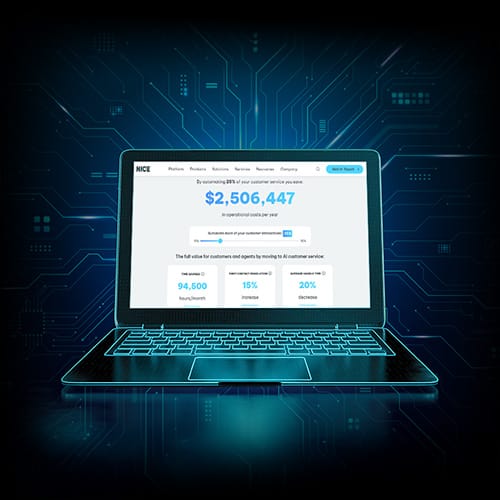
Discover the full value of AI in CX
Understand the benefits and cost savings you can achieve by embracing AI, from automation to augmentation.
Enterprise Requirements for Contact Center Agent Assist
Enterprise contact centers require agent assist solutions that can operate reliably at scale and support mission-critical operations.
Key enterprise requirements include:
Low-latency performance for real-time guidance
Secure handling of customer conversations and sensitive data
Seamless integration with contact center platforms and CRM systems
Support for global, multilingual, and omnichannel operations
Role-based access controls and auditability
Leveraging modern contact center software with AI-enabled features such as conversation analysis, automated response suggestions, and next-best-action recommendations to enhance agent performance
Integrating intelligent automation to streamline workflows and improve frontline capabilities
Supporting large-scale call centers with robust, scalable agent assist solutions
Meeting these requirements ensures contact center agent assist can support complex, high-volume service environments.
Implementation and Onboarding
Successfully implementing agent assist technology in a contact center starts with a clear strategy tailored to the organization’s unique needs. The process begins by assessing current workflows and identifying key performance indicators such as customer satisfaction, first call resolution, and average handling time. These metrics help define the goals for agent assist and set benchmarks for improvement.
Once objectives are established, the agent assist platform is configured to deliver real time guidance that aligns with the contact center’s specific requirements. This ensures agents receive the right support during customer interactions, enabling them to resolve customer issues efficiently and deliver exceptional service. Comprehensive training is essential, equipping agents with the skills to leverage agent assist technology for faster, more accurate responses. By focusing on targeted onboarding and ongoing support, contact centers can maximize agent performance and consistently boost customer satisfaction from day one.
Business Outcomes Enabled by Contact Center Agent Assist
When implemented effectively, contact center agent assist delivers clear and measurable business outcomes.
Agent assist technology supports customer calls and voice calls by providing real-time guidance and automation, leveraging conversational AI, speech recognition, and call transcription to optimize call handling and enhance customer service efficiency. Agent assist technology can reduce average handling time (AHT) for customer service interactions, and real-time AI assistance can improve employee retention and further reduce AHT.
Organizations commonly achieve:
Reduced average handle time and operational costs
Higher first contact resolution and containment rates
Lower training and onboarding expenses
Improved agent productivity, satisfaction, and retention
More consistent service quality at scale
These outcomes directly improve efficiency, reduce risk, and strengthen customer relationships.
Measuring Success and ROI
To determine the effectiveness of agent assist technology, contact centers should track a comprehensive set of metrics that reflect improvements in customer satisfaction, agent performance, and operational efficiency. Key indicators such as first call resolution, average handling time, and customer satisfaction scores provide valuable insights into the impact of agent assist on daily operations.
Evaluating reductions in operational costs, particularly those related to manual effort in resolving customer issues, is essential for calculating return on investment (ROI). Both direct benefits—like cost savings and increased revenue—and indirect benefits—such as improved customer loyalty and brand reputation—should be considered. Regular feedback from agents and customers, gathered through surveys and performance reviews, can highlight areas for further optimization. By adopting a data-driven approach to measuring success, contact centers can ensure their agent assist technology delivers meaningful business outcomes and supports ongoing improvement.
Agent Assist Technology Integration
Seamless integration of agent assist technology with existing contact center systems is vital for delivering real time guidance and enhancing agent performance. Connecting the agent assist platform with CRM systems allows agents to access customer history and preferences, while integration with knowledge bases ensures the delivery of accurate, up-to-date information during customer interactions.
Utilizing APIs and SDKs streamlines the integration process, enabling the agent assist solution to draw from multiple data sources and communication channels. Incorporating quality assurance tools further enhances the ability to monitor agent behaviors and provide actionable insights for coaching and improvement. By prioritizing robust integration, contact centers can unlock the full potential of agent assist technology, resulting in improved customer experience, greater agent efficiency, and stronger business outcomes.
Contact Center Agent Assist and the Future of Contact Centers
Contact center agent assist is a foundational capability in the evolution toward intelligent and autonomous contact center operations. As AI capabilities mature, agent assist will increasingly move beyond guidance to support decision-making and workflow execution. While AI-powered tools are advancing rapidly, human agents remain essential for handling complex issues that require empathy, advanced problem-solving, and real-time intervention. Agent assist technology empowers human agents by providing real-time insights and support, enabling them to deliver personalized and effective customer service even in challenging scenarios.
This evolution enables:
Proactive and predictive service delivery
Closer alignment between agent behavior and CX objectives
Continuous optimization driven by AI insights
A pathway toward agentic and autonomous service environments
Contact center agent assist is becoming a standard expectation for modern contact centers.
Best Practices for Agent Assist
To fully realize the benefits of agent assist technology, contact centers should follow a set of proven best practices. Integrating the agent assist platform with the existing knowledge base and CRM systems is crucial, as it provides agents with instant access to relevant information during customer interactions. Keeping the knowledge base updated ensures that agents always have the most current and accurate resources at their fingertips.
Continuous monitoring of agent performance, combined with regular coaching and feedback, helps identify opportunities for improvement and reinforces best practices. Empowering agents to make informed decisions based on real time guidance not only enhances agent satisfaction but also improves the overall customer experience. By prioritizing these strategies, contact centers can reduce operational costs, optimize agent assist technology, and create a more empowered and effective support team.
Common Challenges and Solutions
While agent assist technology offers significant advantages, contact centers may encounter challenges during adoption and daily use. One common hurdle is agent resistance, as some may perceive the technology as intrusive or a threat to their expertise. Involving agents early in the implementation process and clearly communicating how agent assist supports their role can foster acceptance and improve engagement.
Ensuring the accuracy and relevance of information provided by the agent assist platform is another challenge. Regularly updating the knowledge base and leveraging advanced machine learning and natural language processing capabilities help the system better understand customer intent and deliver precise guidance. Technical integration with existing systems and ensuring scalability can also pose difficulties. Collaborating closely with technology vendors and investing in thorough quality assurance and testing can address these issues. By proactively managing these challenges, contact centers can ensure smooth integration and maximize the value of agent assist technology in enhancing customer interactions.
Choosing a Contact Center Agent Assist Solution
Selecting the right contact center agent assist solution requires evaluating both immediate impact and long-term scalability.
Organizations should consider:
Accuracy and responsiveness of real-time guidance
Depth of AI across intent detection, sentiment analysis, and recommendations
Integration with existing contact center platforms and backend systems
Security, governance, and compliance support
The right solution delivers immediate agent performance improvements while supporting long-term transformation.
Explore AI Contact Center Platform Topics
Frequently Asked Questions (FAQs)

Ready to experience the power of one platform?
Let us show you how NiCE can unify, automate and elevate your entire customer experience - with AI at the core and outcomes at the forefront.