

24/7 Customer Service with AI: Always On, Honestly Designed
- The Coverage Model: AI Carries the Clock
- The Overnight Question: Four Honest Paths
- Quality Parity: The 3 a.m. Bar Is the Same Bar
- The Economics of the Clock
- Standing Up Genuine 24/7: The Sequence
- The Global Dimension: When 3 a.m. Is Someone's 3 p.m.
- Conclusion
- Continue Exploring Customer Service AI
For most of service history, “24/7 support” was either a luxury (follow-the-sun operations across three continents) or a fiction (an after-hours voicemail promising a callback). AI ended the dichotomy: understanding, resolution, and completed work are now available at every hour for roughly the cost of electricity, and always-on availability has quietly become table stakes in customer expectations. But the interesting design problem was never answering at 3 a.m. — AI settled that. It's everything around the answer: what happens when the 3 a.m. conversation needs a human, how quality holds in the hours nobody's watching, and what the clock does to the economics. This page is the honest 24/7 guide: the coverage model, the four overnight escalation designs, the quality-parity discipline, and the arithmetic — with the collaboration assignment as its foundation and the hub's always-available positioning as its premise.
The Coverage Model: AI Carries the Clock
The Always-On Coverage Model
Al carries the clock; humans are tiered to the hours where judgment earns its cost.
AI layer — 24/7/365: Understanding, resolution, and completion on every channel, every hour, every language tier.
- Peak hours: Full human bench: complex cases, revenue conversations, oversight.
- Shoulder hours: Reduced bench, priority-routed: high-stakes and vulnerable-moment intents.
- Overnight: On-call tier + queued-for-morning paths — designed, not improvised.
The design question isn't “can we answer at 3 a.m.?” — AI settled that. It’s “what happens when 3 a.m. needs a human?” — and that must be designed, honestly, per intent.
The model has two layers with different physics. The AI layer runs flat: every intent assigned to AI resolution operates identically at noon and 3 a.m. — same understanding, same completion, same guardrails — across channels and the language tiers each market is promised. This layer is why modern 24/7 is economically ordinary rather than heroic: for the routine majority of intents, the hour simply stops mattering. The human layer tiers to the clock: a full bench at peak for complex cases, revenue conversations, and oversight; a reduced, priority-routed bench at shoulder hours concentrating on high-stakes and vulnerable-moment intents; and overnight, an on-call tier plus designed queue-for-morning paths — staffed by workforce planning that now forecasts *post-automation* demand, the planning discipline workforce management tooling runs. The model's first design artifact is therefore the same assignment map the collaboration page prescribes, with one column added: *what this intent does at 3 a.m.*
The Overnight Question: Four Honest Paths
Designing the Overnight Escalation Path
Four honest options for the moment Al meets its limit at 3 a.m. - assigned per intent, stated to the customer.
- Resolve by AI anyway: For intents whose full path is automated — most routine requests never notice the hour. Examples include order status, rebooking, payments, and resets.
- Wake the on-call tier: For the short list where stakes justify a human now: safety, fraud, outage command, vulnerable moments. Defined intents only, with a paging SLA.
- Queue with a promise: Case opened, confirmation sent, first-of-morning callback booked — the customer sleeps; the promise is kept. Best for complex-but-not-urgent escalations.
- Bridge with interim action: AI takes the safe holding step now — freeze the card, extend the deadline — and hands the rest to morning. Best for time-sensitive cases with a reversible first move.
Every intent that can escalate needs an overnight answer chosen in daylight. Resolve by AI anyway covers most of the docket honestly: rebooking, payments, resets, status — intents whose complete path is automated never notice the hour, which is the quiet majority of 24/7's value. Wake the on-call tier is the short list where stakes justify a human *now* — safety signals, suspected fraud, outage command, customers in visibly vulnerable moments — defined per intent, with a paging SLA and a tested chain, never left to an overnight bot's improvisation. Queue with a promise handles the complex-but-not-urgent: the case opens, the confirmation sends, the first-of-morning callback books itself — and the promise is an operational commitment tracked to completion, because a queued promise kept builds more trust than a groggy 3 a.m. human, while a queued promise broken poisons the whole always-on claim. Bridge with interim action is the elegant middle: where a safe, reversible first step exists — freeze the card, extend the deadline, hold the reservation — the AI takes it immediately and hands the remainder to morning with context intact, converting an overnight emergency into a daytime task. The assignment among the four is per intent, published to the team, and stated plainly to the customer in the moment: “I've frozen the card now; a fraud specialist will call you by 9 a.m.” beats both false urgency and false reassurance.
Quality Parity: The 3 a.m. Bar Is the Same Bar
Quality Parity: Holding the Bar at Every Hour
Always-on only counts if the 3 a.m. experience would survive daylight review.
- Measure by hour band: Resolution, escalation, and satisfaction segmented by time of day — overnight quality hides in daily averages.
- Audit the night transcripts: Sampled review of overnight conversations — the hours nobody watches are where drift settles first.
- Test the escalation paths: Regularly fire test escalations at 3 a.m. — a paging chain that fails silently is a promise already broken.
- Keep promises measurable: Every queued-for-morning commitment tracked to completion — the overnight promise kept is the trust engine.
Always-on only counts if the 3 a.m. experience would survive daylight review, and parity is a discipline, not a hope. Measure by hour band: resolution, escalation, and satisfaction segmented by time of day — the always-on version of the no-blended-averages rule the analytics practice applies everywhere, because overnight decay hides comfortably inside daily aggregates. Audit the night transcripts: sampled human review of overnight conversations specifically, since the unwatched hours are where drift settles first and where edge cases concentrate (the 3 a.m. docket skews toward travel disruption, urgent anxiety, and time-zone-displaced customers — a different mix than noon's). Test the escalation paths on a schedule: fire synthetic escalations through the on-call chain at genuinely unsociable hours, because a paging chain that fails silently is a promise already broken. And track every promise: the queue-for-morning commitments measured to completion, individually — the single metric that most directly converts overnight design into customer trust.
The Economics of the Clock
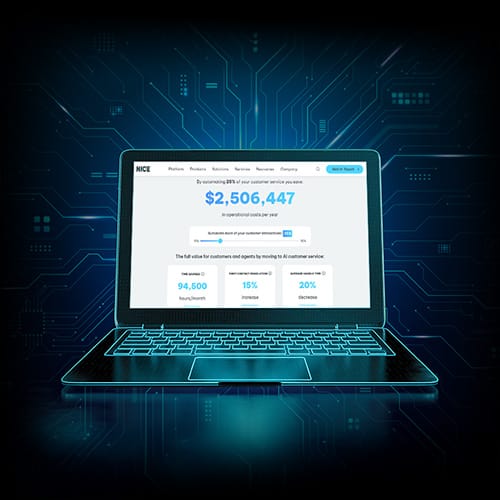
The arithmetic that once made 24/7 a luxury now mostly favors it, but it deserves honest accounting. On the cost side: the AI layer's marginal hour is nearly free; the on-call tier is cheap insurance if its list is genuinely short; and the expensive failure mode is scope creep — an on-call list that grows until it's a night shift by another name, or overnight human coverage added for intents the four paths already handle. On the value side: the after-hours demand you currently can't see (customers who gave up at the voicemail) typically appears within weeks of genuine availability; global customers and time-shifted workers move contacts to *their* convenient hours, flattening peak load; and prevented morning pile-ups — the overnight issues resolved or bridged before they compound — return capacity to the day shift. Model it against your own volumes with the AI value calculator, and resist the vanity version: 24/7 exists for customers' clocks, not for the availability badge — which is why the design starts from intent stakes, not from marketing's wish to say “always.”
Discover the full value of AI in CX
Understand the benefits and cost savings you can achieve by embracing AI, from automation to augmentation.
Standing Up Genuine 24/7: The Sequence
- Extend the assignment map with the overnight column. Every top intent gets one of the four paths, chosen in daylight, with reasons.
- Automate the resolve-anyway majority first. The intents that never notice the hour are the program's foundation and most of its value.
- Define the wake-list ruthlessly. Stakes-justified intents only, a tested paging chain, and a standing review that prunes it — short is the feature.
- Build the promise machinery. Queue-for-morning with booked callbacks, tracked to completion, reported weekly.
- Wire hour-band measurement before launch, then audit the nights like they're the front page — because to the customers living in them, they are.
The Global Dimension: When 3 a.m. Is Someone's 3 p.m.
For global operations, always-on isn't an after-hours feature — it's the baseline condition, because the clock never stops being business hours somewhere. Two intersections deserve design attention. Hours × languages: the language tiers each market is promised must hold across that market's waking hours, which is when your headquarters is asleep — a Tier 1 language whose human escalation exists only in headquarters time is a Tier 2 language wearing a Tier 1 badge. The coverage model's honest artifact is therefore a grid, not a line: intent × hour × language, each cell assigned one of the four paths. Hours × load: genuine availability redistributes demand — time-shifted workers and global customers move contacts to their convenient hours within weeks — which flattens the peaks workforce planning was built around and changes the shoulder-tier math; re-forecast quarterly during the first year, because the demand curve you launched with is not the one you'll be running by spring. The compensation is real: a globally flattened load is cheaper to serve than a spiked one, the on-call tiers can follow the sun across regional teams rather than paging one exhausted rota, and the estate's quality evidence arrives continuously instead of in daily batches. Always-on, done globally, stops being a coverage cost and becomes the operating advantage.
A last word on the badge itself: publish what always-on actually means. A short, honest availability statement — what resolves instantly at any hour, what wakes a specialist, what queues with a promised morning callback — sets expectations the operation can keep and turns the 3 a.m. experience from a gamble into a contract. Customers forgive a stated boundary far more readily than a discovered one; the operations that lose trust overnight are rarely the ones with limits, but the ones that hid them.
Conclusion
AI made the greeting hour-proof; the four overnight paths, the kept promises, and the night-shift audits make the whole experience hour-proof — which is what customers actually mean by always on. Design the 3 a.m. column in daylight, test it in the dark, and let NiCE's platform carry the clock.
Continue Exploring Customer Service AI
- Customer Service AI hub — The complete guide to customer service AI.
- Human-AI collaboration in customer service — The assignment map the overnight column extends.
- Proactive customer service with AI — Always-on sensing, pointed outward.
- AI customer service solutions — The solution categories behind the coverage model.
- AI-to-human handoff in autonomous service — The escalation mechanics every overnight path uses.
Frequently Asked Questions About 24/7 Customer Service with AI

Ready to experience the power of one platform?
Let us show you how NiCE can unify, automate and elevate your entire customer experience - with AI at the core and outcomes at the forefront.