
Many enterprise AI in customer experience have delivered exactly what they promised: lower costs, fewer contacts, and faster handle times.
Now the same technology is ready to do something more, and the organizations pulling ahead in customer retention, revenue growth, and operational resilience are asking a fundamentally different question: what if AI could identify and resolve a customer’s problem before they ever thought to reach out?
That shift from reactive support to proactive, anticipatory engagement is not a distant aspiration. It is a strategic operating capability that leading organizations are running at scale today – and a cornerstone of the Agentic Experience Automation neighborhood and accompanying sessions, customer stories and demos at NiCE World 2026 from June 8-10 in Orlando.
For CX executives, COOs, CIOs, and CEOs navigating simultaneous pressure from boards, customers, and competitors to demonstrate tangible AI outcomes, NiCE World is structured to do something that most AI conferences do not: move the conversation from the drawing board to operation.
We’ve compiled a taste of the valuable takeaways senior leaders will gain at NiCE World to help them finalize AI strategy.
Why 91% of CX leaders are under executive pressure to deliver AI results in 2026
A Gartner survey released in February 2026 of customer service and support leaders found 91% of respondents are under executive pressure to implement AI.
That pressure is not originating from CX teams alone. It is coming from CFOs examining cost structures and from CEOs watching competitors advance with AI faster than their own organizations currently can. Yet for many enterprises, executive ambition for AI and organizational readiness to execute remain misaligned.
The gap is rarely technical. Most large organizations have access to the data, the platforms, and the vendor relationships they need. The gap is strategic: leaders have not yet clearly defined what a fully mature AI-enabled CX operation looks like, what it requires to build, what it produces in measurable business outcomes, and how it connects to customer trust at scale.
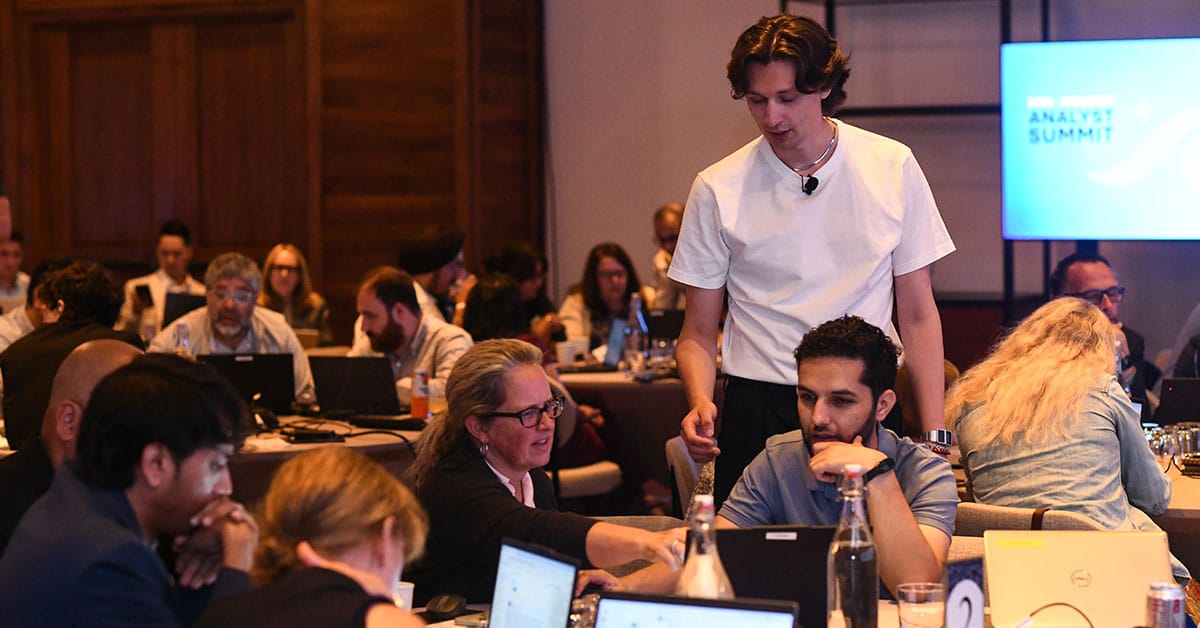
This is the kind of clarity NiCE World 2026 is structured to deliver. More than 2,500 CX and enterprise technology leaders will gather across three days to examine evidence from organizations that have already navigated this transition, with access to more than 150 presentations, hands-on AI labs, and direct briefings from analysts at Forrester, IDC, Opus Research, and Frost & Sullivan, among others.

What proactive customer experience looks like at enterprise scale
The defining idea at NiCE World 2026 is around agentic experience automation: AI systems that read signals, anticipate needs, and act before friction becomes a complaint or a churn event.
Arizona State University moved from reactive student support to proactive journey orchestration, deploying AI agents to resolve issues before students ever reached out. At NiCE World, ASU will walk through how they identified which students needed outreach, how they structured the engagement cadence, and what changed in their support operation once that model was running.
A cross-industry panel featuring Santander, Western Governors University, and Verizon will explore how proactive, personalized engagement has become a competitive differentiator across financial services, higher education, and telecommunications. See a demo on how agentic AI shifts organizations from reactive containment to proactive outcome orchestration at scale.
Gartner’s August 2025 research found that self-service and live chat will surpass traditional channels as the most valuable customer service technologies by 2027. That transition is being driven by customers who increasingly expect intelligent, frictionless resolution, and by organizations learning to anticipate what customers need before they ask for it. For senior leaders, the strategic implication is clear: CX capabilities considered advanced two years ago are rapidly becoming baseline expectations.
An Opus Research session at NiCE World makes the commercial argument directly: most organizations measure AI success by what it saves, but the organizations pulling ahead are asking what it creates, including revenue, loyalty, and competitive differentiation across every interaction in the customer lifecycle.
Why your CX AI strategy is only as good as the knowledge behind it
AI agents are only as good as the knowledge they run on. An agent that resolves a case with outdated policy information, routes a customer based on a stale account record, or surfaces an offer that no longer applies does more damage than no intervention at all. The quality of every automated interaction traces directly back to the quality of the knowledge underneath it. This is one of the most underestimated challenges in enterprise AI deployment, and NiCE World addresses it directly through a cluster of sessions on knowledge management, data unification, and AI governance.
Model N audited its help center and found what many knowledge audits surface: content spread across systems, articles that hadn't been updated in years, and AI tools drawing from information nobody fully trusted. It consolidated it into a single governed source. Today, 99% of customer searches run through AI-enabled knowledge capabilities, and both human agents and AI systems pull from the same base. Its session at NiCE World will cover how it structured the consolidation, what governance decisions had to be made before anything could go live, and what that foundation made possible.
Bosch's results look like an AI story: customer complaints down 70%, search time down 80%, $100,000 returned in a single quarter. The actual story is about what it built before the AI went live. Its Bosch Answers agent, built on NiCE Cognigy, only hit those numbers because the knowledge layer was built to support it first. At NiCE World, Bosch will walk through the build sequence, what had to be right in the knowledge infrastructure before the agent could perform, and more.
A dedicated session on knowledge and AI will show how fragmented organizational information can be consolidated into a unified, governed base that serves human and AI agents simultaneously.
The pattern is consistent across every strong AI outcome in this agenda: organizations seeing the most measurable returns are those that invested in the knowledge infrastructure first, then built AI on top of it. For leaders whose AI is underperforming, this is where the gap is most often hiding.
It is also the dimension that connects most directly to customer trust. Gartner research from 2025 found that 64% of customers would prefer companies avoid AI altogether if it compromises service quality. The organizations earning customer confidence with AI are those treating accuracy, consistency, and governance as design requirements from the outset, not as refinements added after deployment.

Who runs the contact center in 2030? The workforce question every CIO needs to answer now
There is a tendency in boardroom discussions about AI to frame workforce impact as a purely operational or HR question. The evidence suggests it is about both strategy and culture. A Gartner survey found that while more than 80% of organizations anticipated some reduction in customer service headcount over the next 18 months, nearly 80% of those same organizations also planned to transition agents into new roles. The workforce is being redefined, not simply reduced.
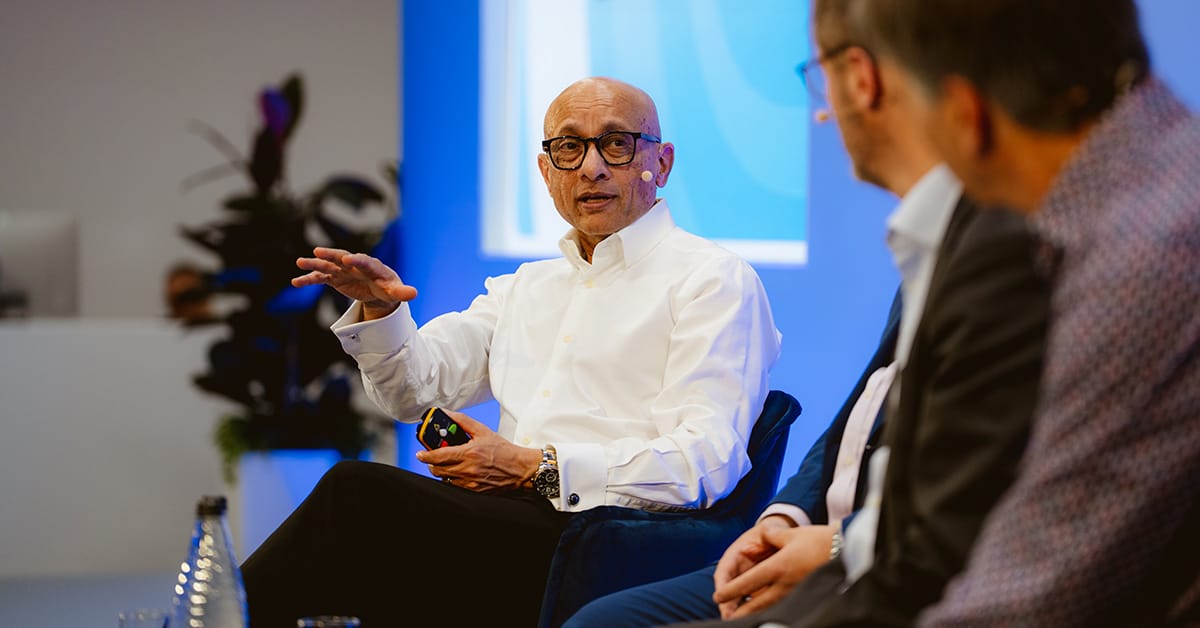
Forrester’s session at NiCE World, titled “Who Runs the Contact Center in 2030?,” will examine what that redefinition looks like in practice. What skills will human agents need as AI handles higher-volume, lower-complexity interactions? How do organizations build effective human-AI collaboration? What leadership capabilities are required to manage a workforce that includes both people and AI agents operating in parallel?
For CIOs, COOs, and CHROs, this is something to be addressed sooner rather than later. The contact center of 2030 is being designed in operating decisions made today. Organizations that approach workforce transformation as a strategic design challenge, investing in coaching infrastructure, performance intelligence, and AI copilot capabilities alongside automation deployment, will retain top talent, earn customer trust, and deliver consistent experience quality at scale.
How to close the gap between pilots and the enterprise operating model
Hayley Sutherland of IDC, presenting alongside LexisNexis, will address what remains the most common failure point in enterprise AI programs: the distance between a successful pilot and enterprise-wide transformation.
That gap is widening for far too many organizations, driven by three recurring problems:
- Unclear frameworks for identifying genuinely high-value use cases
- Underinvestment in the data and integration layer
- A habit of measuring AI performance against cost metrics before it has been deployed at meaningful scale
Gartner predicts that by 2029, agentic AI will autonomously resolve 80% of common customer service issues without human intervention, delivering a 30% reduction in operational costs. Reaching that outcome requires a different kind of planning than leveraging a single bot or automating one workflow.
A key NiCE World session will present how the architecture of enterprise-scale agentic AI is developing, covering proactive orchestration across channels and systems, agent-to-agent communication, simulation and testing capabilities, and the multimodal experiences that move seamlessly with customers across every touchpoint.
Executives should be asking whether the organization is building toward that outcome with the architecture, governance, and talent it requires - or simply reacting to it after competitors have already made the move.
NiCE World 2026 is where to focus your enterprise CX AI strategy
There are moments in a technology cycle when the path forward stops being theoretical and becomes the industry standard. Enterprise CX AI is having that moment right now.
The organizations focused on Agentic Experience Automation at NiCE World 2026 have already crossed from experimentation to execution in proactive engagement at scale. AI agents can resolve complex journeys end-to-end with knowledge infrastructure that makes every interaction smarter than the last. The roadmap exists. The evidence backed by ROI results is here. NiCE World (June 8-10 in Orlando) is where you see it firsthand, map it to your own organization, and leave with a clear line of sight to what comes next.