
The question sounded simple: “I need a quick root cause on Platinum churn.”
In many enterprise CX operations, that request still lands like a fire drill. The data sits in the ACD, WFM, CRM, AI agent logs, transcript tools, customer systems, and web analytics. Each system defines “resolved” differently. By the time the business understands the churn signal, the most valuable customers may already be gone.
That was the tension at the center of NiCE World 2026 Orlando presentation, “The CX AI Platform Advantage: One foundation, every experience”. The NiCE Roadmap session made a direct case for CX leaders: the next competitive advantage in customer experience comes from unifying customer engagement data, human and AI work, orchestration, and governance on one platform so every experience becomes intelligence the business can act on.
The market pressure is already here. There’s an “interaction explosion” across voice, chat, social, video, and AI-agent-initiated service. Gartner predicts that 50% of all service requests will be initiated by machines – AI agents – by 2030, while human-initiated interactions also continue to grow. This points to a new operating reality: volume is changing shape.
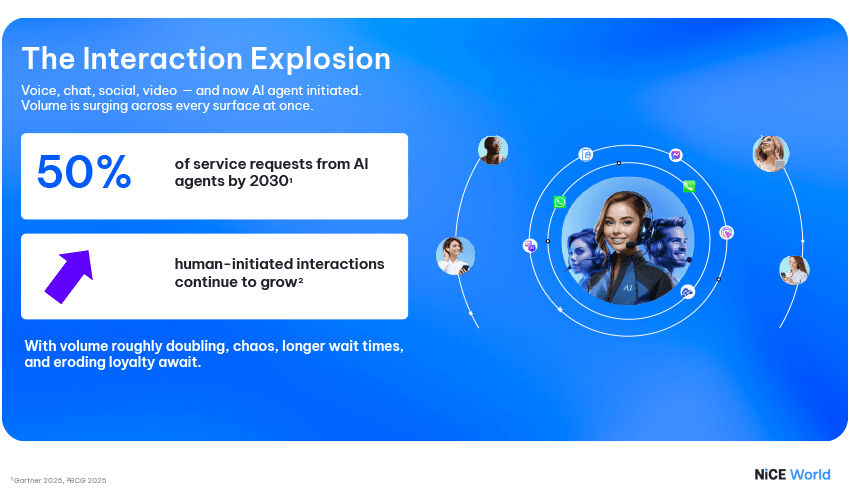
Figure 1. The Interaction Explosion — Why the future of CX is a volume-and-context challenge, not just a channel problem.
For executives and brands, interaction growth can become chaos, or it can become an enterprise asset. The difference is whether every interaction feeds a shared intelligence layer that understands context, chooses the right action, and learns from the result to improve the next interaction, compared to fragmented tools that can do none of the above.
The Frankenstack vs. a unified CX AI platform
The enemy is what David Gustafson, NiCE General Manager, and Larry Skowronek, NiCE Vice President of Product Management, called the Frankenstack: point solutions connected by brittle integrations, inconsistent governance, and long lead times, driving recurring costs and multiplying complexity. In this model, AI doesn’t accelerate transformation; it becomes an integration program. McKinsey made the same point in April 2026, stating that, “While companies have often muscled through issues of fragmented and siloed data, those issues are impossible to manage at scale.”
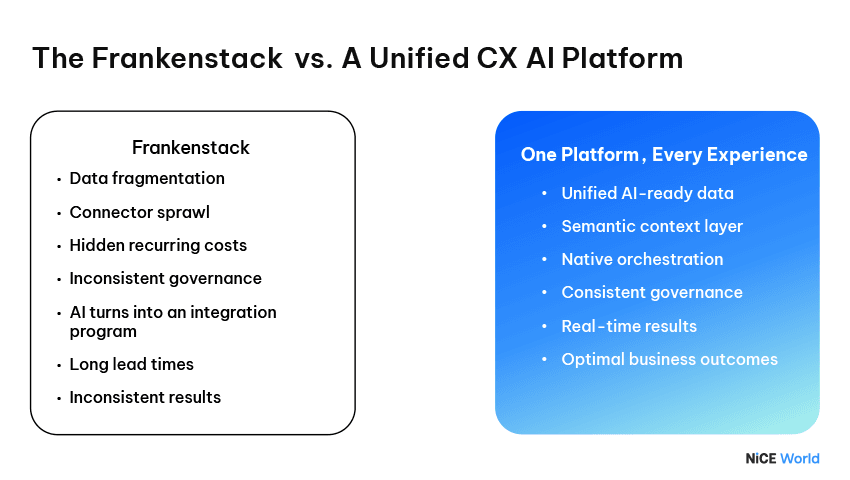
Figure 2. The Frankenstack Problem — Disconnected tools turn AI ambition into integration work.
Agentic AI breaks at scale when the enterprise asks it to act without comprehensive, contextual, real-time data. In the Frankenstack world, enterprises contend with fragmentation, connector sprawl, hidden cost, and uneven governance. In the platform world, CX leaders operate with unified AI-ready data, a semantic context layer, native orchestration, and consistent governance. Results are delivered in seconds and minutes, not days and weeks.
Data: The fuel of agentic experience at scale
Every vendor can access the same foundational models: GPT, Claude, Gemini, and others. Those models are powerful, but they are increasingly table stakes. The differentiator is not the generic reasoning engine. It is the data foundation that tells the AI what is happening, what matters, what it is allowed to do, and how success will be measured.
NiCE CXone operates as one foundation for every customer engagement data type: voice and chat transcripts, screen and video data, agent activities, web clickstreams, human and AI agent interactions, operational data, telephony data, and customer data. This matters because the AI can see more than a transcript. It can connect what the customer tried before contact, what happened during the interaction, what the agent did on screen, what systems were touched, and whether the outcome held.
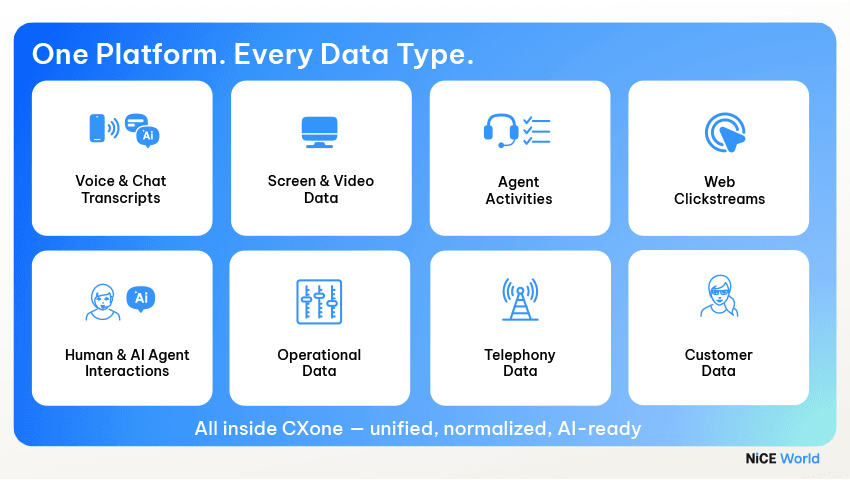
Figure 3. One Platform. Every Data Type. — CXone unifies engagement signals into one AI-ready foundation.
On CXone, AI sees the full engagement context. It acts because that context reveals intent, risk, constraints, and next best resolution. It adapts because the outcome flows back into the platform. NiCE agentic AI can reason, plan, and resolve: identify the issue, select an action, execute across systems, and track whether the customer outcome improved. But that only works because the AI and human workforce operate from the same intelligence layer.
Thus, the NiCE CX AI platform turns rising interaction volume into a learning advantage that drives compounding value over time. Gustafson described closed learning loops across AI and human agents, knowledge, orchestration, quality, and workforce management. Every AI and human interaction strengthens future performance. Knowledge gaps become visible. Journey signals refine workflows. Evaluations improve consistency. Workforce insights feed staffing, coaching, and operational automation. Human intelligence, artificial intelligence, customer intelligence, and operational intelligence become connected intelligence – no longer operating in separate lanes.
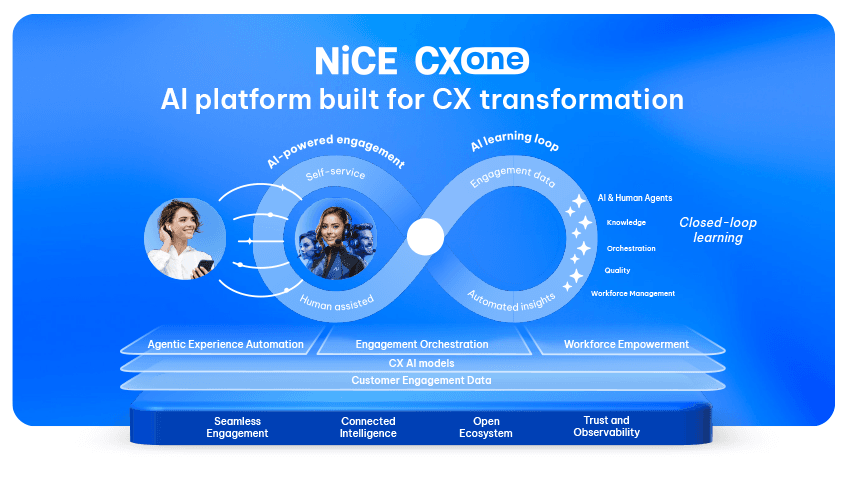
Figure 4. AI platform built for CX transformation — Closed learning loops connect human, artificial, customer, and operational intelligence.
Measurement and governance from day one
For NiCE, observability and governance form a built-in decision infrastructure. CXone measures three layers: engagement, performance, and outcomes. Leaders can see what the AI is doing, how well it is doing it, and what it means for the business. That includes intents handled, drop-off points, AI agent failure detection, resolution rates, containment, escalation patterns, latency, CSAT, effort, and business KPIs.
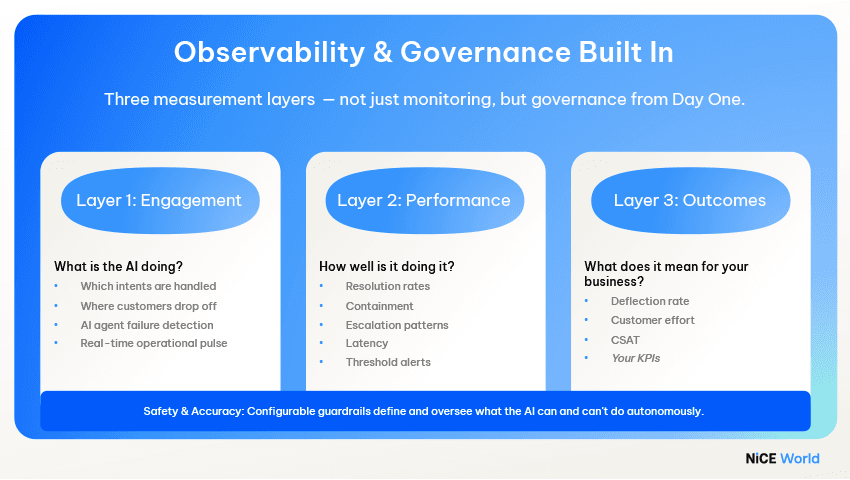
Figure 5. Observability & Governance Built In — Enterprise AI requires measurement and governance from Day One.
This is critical for enterprise-scale adoption. Autonomous AI cannot be governed as an afterthought. Guardrails must define what the AI can and cannot do, and observability must translate performance into action. The NiCE CX AI platform advantage is unified governance, unified accountability, and enterprise wide consistency – at scale.
A disjointed world vs. a NiCE world
Gustafson and Skowronek teamed up to deliver a compelling demo contrasting a Disjointed World vs. a NiCE World. In the Disjointed World, the prompt was simple: “I need a quick root cause on Platinum churn.” Answering it required data from the ACD, WFM, AI agent logs, CRM, customer data, and transcript processing. The estimated time to assemble and normalize the data was two to three days before analysis could begin.
With NiCE, the same question became a 30-second workflow. The CXone platform, powered by agentic AI at the core, had already detected a Platinum churn signal: churn probability was 4.2 times baseline, and booking activity had dropped to zero after a February 22 disruption. Agentic Analytics drew from transcripts, human and AI agent interactions, operational data, web clickstreams, and customer data. No point tool could have produced that signal because no point tool could see the full journey.
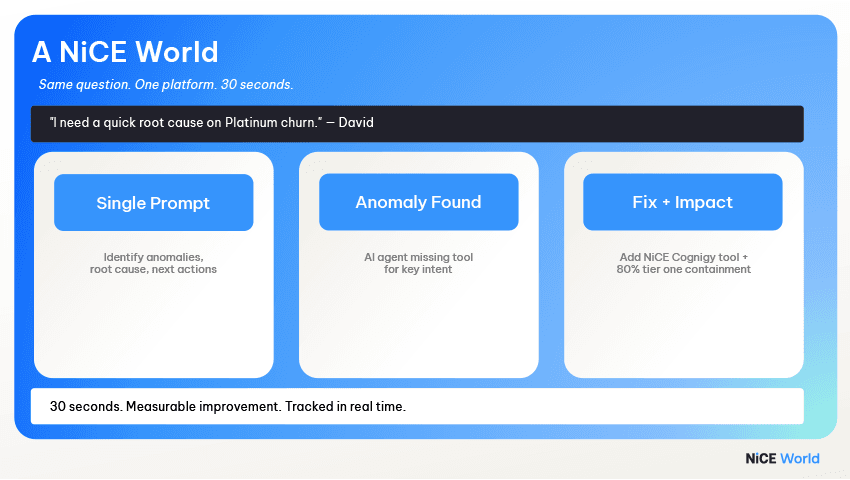
Figure 6. A NiCE World — Root-cause question moves from days of wrangling to a 30-second workflow.
CXone went even further, it explained why action was required. The root cause was not generic dissatisfaction. It was a structural resolution gap: customers arrived angry because prior commitments had not been honored, and a significant portion of the gap was traced to three policy categories. The recommended response included automation, orchestration, and workforce action.
First, in this travel scenario, CXone identified 727 at-risk travelers and gave an AI agent authority to resolve exactly the three policy categories driving most escalations: fare-class overrides, goodwill credits, and supplier refunds under $400. The success metric was not containment alone. The platform tracked confirmed resolution and post-interaction booking activity: whether the customer came back.
The second workflow moved from reactive service to proactive recovery. The platform selected personalized goodwill offers based on loyalty tier and lifetime booking value, delivered outreach through preferred channels, and monitored rebooking. The projected impact was $2+ million in retained Platinum revenue. Result? Measurable customer and business recovery.
Seven days later, agentic analytics showed the result: 612 travelers retained, 84% recovery, and $2.6 million in confirmed Platinum revenue. Further, the platform learned and recommended improvements. Most recoveries were in the first 48 hours, the recommended action was to reduce trigger time to under 12 hours. It also discerned segment performance, and recommended that one- to three-year Platinum customers required prioritization.
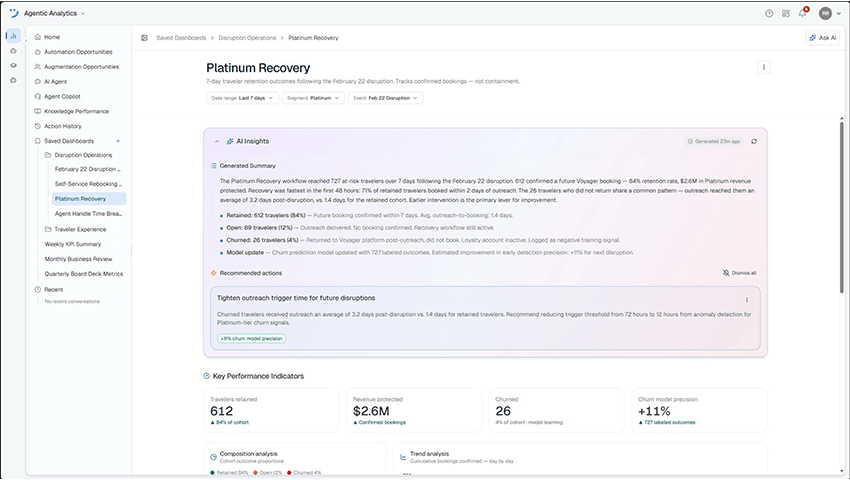
Figure 7. Platinum Recovery — The demo measured recovery by business outcome, not interaction closure.
This is what “one foundation, every experience” means in practice. AI agents do not simply close interactions. They execute against strategic priorities, track whether the business outcome occurred, and feed the next decision.
NiCE’s CX AI platform roadmap extended that logic. Gustafson framed three strategic goals: complete context, compounding intelligence, and global orchestration. Complete context means every signal, from pre-contact clickstream activity to resolution outcome, is unified and AI-ready in real time. Compounding intelligence means the platform becomes more precise as it processes more engagement data. Global orchestration means AI-to-human engagement can move across languages, geographies, and channels without losing context and the customer journey.
Roadmap futures included unified screen, video, outbound, and AI agent engagement data; enriched classification models for agent activities and complaints; pre-contact clickstreams; end-to-end journey visualization; and multilingual AI-to-human orchestration. Strategically, the direction is clear: the NiCE CX AI platform advantage expands as more signals, workflows, and governance controls share the same foundation.
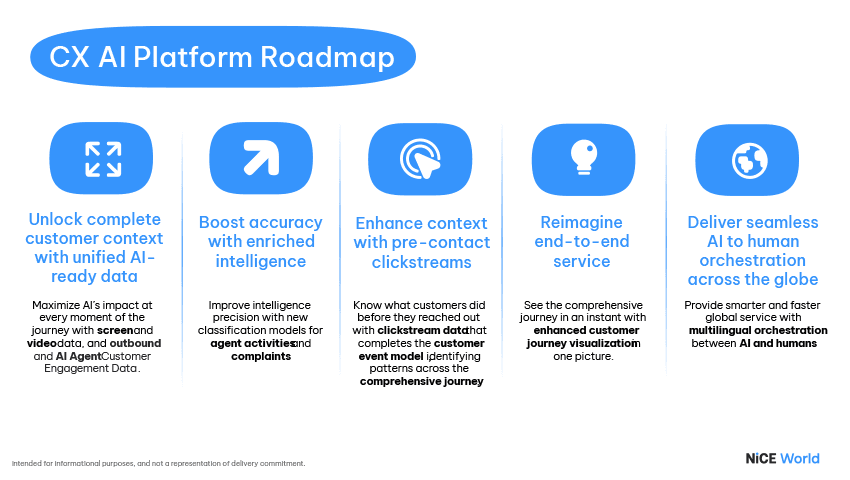
Figure 8. CX AI Platform Roadmap — The roadmap extends the platform advantage across context, intelligence, and global orchestration.
The winners in CX AI will not be the companies with the most tools. They will be the companies that can turn every interaction into trusted intelligence, every intelligence signal into governed action, and every action into a measurable business outcome.
That’s the CX AI platform advantage: one foundation, every experience, with a learning system that gets stronger with every customer moment.
Explore how NiCE CXone unifies engagement data, orchestration, and governance to help enterprise CX teams scale agentic AI with confidence.